THE CLASSIC COLLECTION✦The Bishop’s purseCLASSIC FREE BOOKS
The Bishop’s purse
Cleveland Moffett & Oliver Herford
THE CLASSIC COLLECTION · 1909
"Through the Wall" by Cleveland Moffett is a novel written in the early 20th century. The story centers around Paul Coquenil, a renowned French detective who finds himself embroiled in a complex and dangerous criminal case after an inexplicable encounter with a mysterious candle seller in Notre-Dame. This encounter awakens his instincts and thrusts him into a web of intrigue involving love, suspicion, and a plot that could threaten his life and career. The opening of the book sets the stage for Coquenil's internal struggle, showcasing his faith in intuition and uncanny knowledge that often guide his investigations. As he walks through Paris, reflecting on his past as a celebrated detective now facing personal turmoil, he encounters a distressed girl who unknowingly shares a dream that is deeply interconnected with his own history. This moment propels him into a series of unforeseen events, including his upcoming appointment in Brazil, a sudden murder, and a romantic tension with Alice, the candle seller. Meanwhile, Alice grapples with her feelings for Lloyd Kittredge, an American, whose life becomes entangled with Coquenil’s investigation as he is accused of murder. The opening chapters create an atmosphere filled with suspense and foreshadow the twists that await.
Introduction adapted from the source catalogue; source summaries may be automatically generated.
Free to read · English · 101,703 words · No account needed
MAKE TIME FOR A GOOD BOOK
On by default. Untick to stop anonymous reading totals. Each page counts after 10 seconds in view. How this works.
Anonymous counting is on unless you have switched it off.
"Yes, but not recently. It seems that Kittredge moved to the Hôtel des Étrangers about seven months ago, and soon after that the lady came to see him. Rose says she came three times."
"Did she go to Kittredge's room?" put in Coquenil.
"Yes."
"Can the chambermaid describe her?" continued the judge.
"She says the lady was young and good-looking--that's about all she
remembers."
"Hm! Have you anything else to report?"
Gibelin chuckled harshly. "I have kept the most important thing for the last. I'm afraid it will annoy my distinguished colleague even more than the loss of the leather fragments."
"Don't waste your sympathy," retorted Coquenil.
Gibelin gave a little snort of defiance. "I certainly won't. I only mean that your début in this case hasn't been exactly--ha, ha!--well, not exactly brilliant."
"Here, here!" reproved the judge. "Let us have the facts."
"Well," continued the red-haired man, "I have found the owner of the pistol that killed Martinez."
Coquenil started. "The owner of the pistol we found in the courtyard?"
"Precisely. I should tell you, also, that the balls from that pistol are identical with the ball extracted from the body. The autopsy proves it, so Dr. Joubert says. And this pistol belongs in a leather holster that I found in Mr. Kittredge's room. Dr. Joubert let me take the pistol for verification and--there, you can see for yourselves."
With this he produced the holster and the pistol and laid them before the judge. There was no doubt about it, the two objects belonged together. Various worn places corresponded and the weapon fitted in its case. "Besides," continued Gibelin, "the chambermaid identifies this pistol as the property of the American. He always kept it in a certain drawer, she noticed it there a few days ago, but yesterday it was gone and the holster was empty."
"It looks bad," muttered the judge.
"It looks bad, but it's too easy, it's too simple," answered M. Paul.
"In the old school," sneered Gibelin, "we are not always trying to solve problems in difficult ways. We don't reject a solution merely because it's easy--if the truth lies straight before our nose, why, we see it."
"My dear sir," retorted Coquenil angrily, "if what you think the truth turns out to be the truth, then you ought to be in charge of this case and I'm a fool."
"Granted," smiled the other.
"Come, come, gentlemen," interrupted the judge. Then abruptly to Gibelin: "Did you see about his boots?"
"No, I thought you would send to the prison and get the pair he wore last
night."
Your reading position is saved on this browser. Take it to another device with a library code. Reading pages adapt to text, rather than matching a printed edition.
Cleveland Moffett & Oliver Herford
Cleveland Moffett
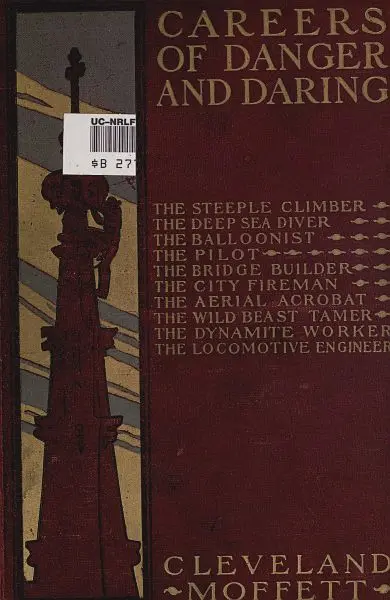
Cleveland Moffett
Cleveland Moffett
BEHIND THE BOOK
This eBook is for the use of anyone anywhere in the United States and most other parts of the world at no cost and with almost no restrictions whatsoever. You may copy it, give it away or re-use it under the terms of the Project Gutenberg License included with this eBook or online at www.gutenberg.org. If you are not located in the United States, you will have to check the laws of the country where you are located before using this eBook. Read the source licence.
The original source file, including credits and licence, is retained by this library. Request an original-format copy at no charge. Please include the book title and Project Gutenberg identifier #11373.
KEEP YOUR CURIOSITY GOING
Coulson Kernahan

Maurice Baring
Frances Wright
Cécile Tormay

Frederic Jesup Stimson

W. H. P. (William Henry Pope) Jarvis