THE CLASSIC COLLECTION✦Eight or Nine Wise Words about Letter-WritingCLASSIC FREE BOOKS
Eight or Nine Wise Words about Letter-Writing
Lewis Carroll
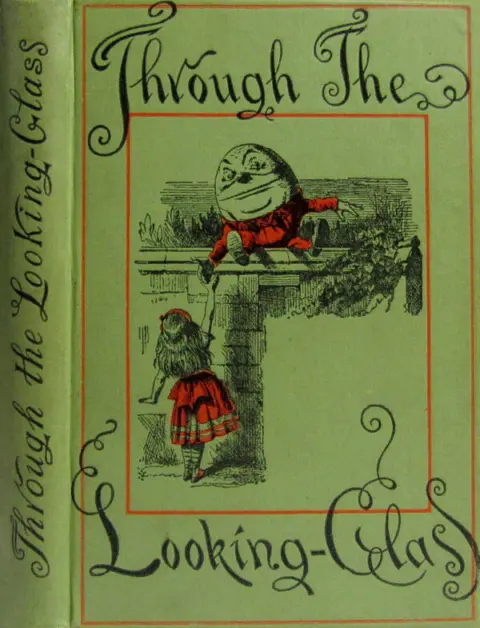
THE CLASSIC COLLECTION · 1871
"Through the Looking-Glass" by Lewis Carroll is a novel published in 1871. When Alice climbs through a mirror into a fantastical world, she discovers everything is reversed—including logic itself. In this chess-themed realm, running keeps you stationary, walking away brings you closer, and nursery-rhyme characters come alive. Alice encounters peculiar beings including the severe Red Queen, quarrelsome twins Tweedledum and Tweedledee, and the opinionated Humpty Dumpty. Like its beloved predecessor, this sequel blends absurdist adventure with unforgettable imagery and phrases that remain part of our language today.
Introduction adapted from the source catalogue; source summaries may be automatically generated.
Free to read · English · 30,856 words · No account needed
MAKE TIME FOR A GOOD BOOK
On by default. Untick to stop anonymous reading totals. Each page counts after 10 seconds in view. How this works.
Anonymous counting is on unless you have switched it off.
“Well, ‘outgrabing’ is something between bellowing and whistling, with a kind of sneeze in the middle: however, you’ll hear it done, maybe—down in the wood yonder—and when you’ve once heard it you’ll be quite content. Who’s been repeating all that hard stuff to you?”
“I read it in a book,” said Alice. “But I had some poetry repeated to me, much easier than that, by—Tweedledee, I think it was.”
“As to poetry, you know,” said Humpty Dumpty, stretching out one of his great hands, “I can repeat poetry as well as other folk, if it comes to that—”
“Oh, it needn’t come to that!” Alice hastily said, hoping to keep him
from beginning.
“The piece I’m going to repeat,” he went on without noticing her remark, “was written entirely for your amusement.”
Alice felt that in that case she really ought to listen to it, so she sat down, and said “Thank you” rather sadly.
“In winter, when the fields are white,
I sing this song for your delight—
only I don’t sing it,” he added, as an explanation.
“I see you don’t,” said Alice.
“If you can see whether I’m singing or not, you’ve sharper eyes than most.” Humpty Dumpty remarked severely. Alice was silent.
“In spring, when woods are getting green,
I’ll try and tell you what I mean.”
“Thank you very much,” said Alice.
“In summer, when the days are long,
Perhaps you’ll understand the song:
In autumn, when the leaves are brown,
Take pen and ink, and write it down.”
“I will, if I can remember it so long,” said Alice.
“You needn’t go on making remarks like that,” Humpty Dumpty said: “they’re not sensible, and they put me out.”
“I sent a message to the fish:
I told them ‘This is what I wish.’
The little fishes of the sea,
They sent an answer back to me.
The little fishes’ answer was
‘We cannot do it, Sir, because—’”
“I’m afraid I don’t quite understand,” said Alice.
“It gets easier further on,” Humpty Dumpty replied.
“I sent to them again to say
‘It will be better to obey.’
The fishes answered with a grin,
‘Why, what a temper you are in!’
I told them once, I told them twice:
They would not listen to advice.
I took a kettle large and new,
Fit for the deed I had to do.
My heart went hop, my heart went thump;
I filled the kettle at the pump.
Then some one came to me and said,
‘The little fishes are in bed.’
Your reading position is saved on this browser. Take it to another device with a library code. Reading pages adapt to text, rather than matching a printed edition.
Lewis Carroll
Lewis Carroll
Lewis Carroll
Lewis Carroll
BEHIND THE BOOK
This eBook is for the use of anyone anywhere in the United States and most other parts of the world at no cost and with almost no restrictions whatsoever. You may copy it, give it away or re-use it under the terms of the Project Gutenberg License included with this eBook or online at www.gutenberg.org. If you are not located in the United States, you will have to check the laws of the country where you are located before using this eBook. Read the source licence.
The original source file, including credits and licence, is retained by this library. Request an original-format copy at no charge. Please include the book title and Project Gutenberg identifier #12.
KEEP YOUR CURIOSITY GOING
Coulson Kernahan

Maurice Baring
Frances Wright
Cécile Tormay
Francis Greenleaf Allinson & Anne C. E. (Anne Crosby Emery) Allinson

Frederic Jesup Stimson