THE CLASSIC COLLECTION✦Slavery and the slave trade in AfricaCLASSIC FREE BOOKS
Slavery and the slave trade in Africa
Henry M. (Henry Morton) Stanley
THE CLASSIC COLLECTION · 1878
"Through the Dark Continent, Vol. 1 (of 2): or, The sources of the Nile around..." by Henry M. Stanley is a historical account written in the late 19th century. The book documents Stanley's extensive expedition across Central Africa, focusing on mapping the sources of the Nile and the regions around the great equatorial lakes, while confronting geographical, cultural, and logistical challenges. It also examines the impact of European exploration and subsequent colonial interests in Africa during a period of rapid change and expansion. The opening of "Through the Dark Continent" details the origins and motivations behind Stanley's expedition. It begins with his personal reaction to the death of the famed explorer David Livingstone, which inspires Stanley to resolve to complete Livingstone’s unfinished work in Africa. The initial chapters outline the organizational efforts for the journey, including recruiting companions, gathering supplies, and the role of major newspapers in sponsoring the mission. Stanley provides historical context around the Nile’s mystery, recounts prior explorations, and sets the stage for his quest to solve geographical puzzles regarding Africa’s great lakes and rivers. The opening establishes both the personal and scientific ambitions that drive the narrative forward.
Introduction adapted from the source catalogue; source summaries may be automatically generated.
Free to read · English · 161,436 words · No account needed
MAKE TIME FOR A GOOD BOOK
On by default. Untick to stop anonymous reading totals. Each page counts after 10 seconds in view. How this works.
Anonymous counting is on unless you have switched it off.
The chiefs arranged themselves in a semi-circle on the day of the shauri, and I sat à la Turque fronting them. “What is it, my friends? Speak your minds.” They hummed and hawed, looked at one another, as if on their neighbours’ faces they might discover the purport of their coming, but, all hesitating to begin, finally broke down in a loud laugh.
Manwa Sera, always grave, unless hit dexterously with a joke, hereupon affected anger, and said, “You speak, son of Safeni; verily we act like children! Will the master eat us?”
Wadi, son of Safeni, thus encouraged to perform the spokesman’s duty, hesitates exactly two seconds, and then ventures with diplomatic blandness and graciosity. “We have come, master, with words. Listen. It is well we should know every step before we leap. A traveller journeys not without knowing whither he wanders. We have come to ascertain what lands you are bound for.”
Imitating the son of Safeni’s gracious blandness, and his low tone of voice, as though the information about to be imparted to the intensely interested and eagerly listening group were too important to speak it loud, I described in brief outline the prospective journey, in broken Kiswahili. As country after country was mentioned of which they had hitherto but vague ideas, and river after river, lake after lake named, all of which I hoped with their trusty aid to explore carefully, various ejaculations expressive of wonder and joy, mixed with a little alarm, broke from their lips, but when I concluded, each of the group drew a long breath, and almost simultaneously they uttered admiringly, “Ah, fellows, this is a journey worthy to be called a journey!”
“But, master,” said they, after recovering themselves, “this long journey will take years to travel—six, nine, or ten years.” “Nonsense,” I replied. “Six, nine, or ten years! What can you be thinking of? It takes the Arabs nearly three years to reach Ujiji, it is true, but, if you remember, I was but sixteen months from Zanzibar to Ujiji and back. Is it not so?” “Ay, true,” they answered. “Very well, and I assure you I have not come to live in Africa. I have come simply to see those rivers and lakes, and after I have seen them to return home.” “Ah, but you know the old master, Livingstone,” rejoined Hamoidah, who had followed the veteran traveller nearly eight years, “said he was only going for two years, and you know that he never came back, but died there.” “That is true enough, but if I were quick on the first journey, am I likely to be slow now? Am I much older than I was then? Am I less strong? Do I not know what travel is now? Was I not like a boy then, and am I not now a man? You remember while going to Ujiji I permitted the guide to show the way, but when we were returning who was it that led the way? Was it not I, by means of that little compass which could not lie like the guide?” “Ay, true, master, true every word.” “Very well, then, let us finish the shauri, and go. To-morrow we will make a proper agreement before the consul;” and in Scriptural phrase, “they forthwith arose and did as they were commanded.”
Your reading position is saved on this browser. Take it to another device with a library code. Reading pages adapt to text, rather than matching a printed edition.
Henry M. (Henry Morton) Stanley
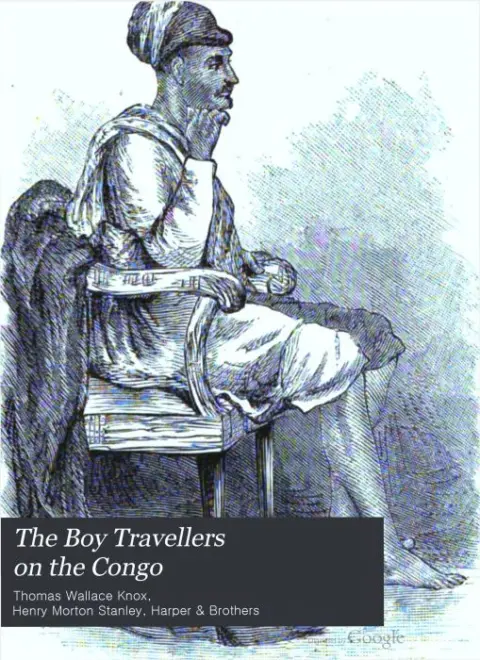
Thomas Wallace Knox & Henry M. (Henry Morton) Stanley
Henry M. (Henry Morton) Stanley
Henry M. (Henry Morton) Stanley
BEHIND THE BOOK
This eBook is for the use of anyone anywhere in the United States and most other parts of the world at no cost and with almost no restrictions whatsoever. You may copy it, give it away or re-use it under the terms of the Project Gutenberg License included with this eBook or online at www.gutenberg.org. If you are not located in the United States, you will have to check the laws of the country where you are located before using this eBook. Read the source licence.
The original source file, including credits and licence, is retained by this library. Request an original-format copy at no charge. Please include the book title and Project Gutenberg identifier #75926.
KEEP YOUR CURIOSITY GOING
Wilfrid Scawen Blunt
Wilfrid Scawen Blunt

E. W. (Edgar Watson) Howe
Cécile Tormay

Moritz Busch
John L. Ransom