THE CLASSIC COLLECTION✦In the Heart of the Vosges and Other Sketches by a “Devious Traveller”CLASSIC FREE BOOKS
In the Heart of the Vosges and Other Sketches by a “Devious Traveller”
Matilda Betham-Edwards
THE CLASSIC COLLECTION · 1868
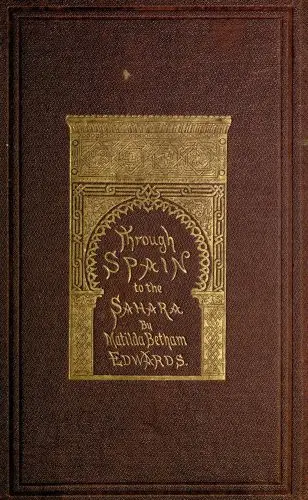
"Through Spain to the Sahara" by Matilda Betham-Edwards is a travel narrative written in the late 19th century. The book chronicles the author’s journey from France into Spain and eventually towards the Sahara, exploring the landscapes, cultures, and societal nuances she encounters along the way. Edwards seems particularly interested in the Moorish influences within Spain and the interactions she has with local people, setting the stage for a deeper exploration of culture and history. The opening of the narrative introduces readers to the author's journey as she reflects on her anticipation before traveling from England to Spain. Starting in Tours, she finds joy in the beautiful French landscape, mingling with church-goers and visiting a reformatory for boys, which highlights themes of redemption and education. The author expresses her thoughts on the Saracen influence in European history while preparing for her trip across the Pyrenees into Spain. Through her keen observations and encounters, she sets a tone of curiosity and reflection, suggesting that her travels will be filled with both personal growth and discoveries of the rich cultural tapestry of the regions she visits.
Introduction adapted from the source catalogue; source summaries may be automatically generated.
Free to read · English · 61,116 words · No account needed
MAKE TIME FOR A GOOD BOOK
On by default. Untick to stop anonymous reading totals. Each page counts after 10 seconds in view. How this works.
Anonymous counting is on unless you have switched it off.
“I don’t think we have, Señora,” she replied; “I’ll see by-and-by.”
“Have you chocolate?” I asked, when the by-and-by had come.
“I don’t think we have, Señora,” was the answer a second time; “I’ll see by-and-by.”
I waited a little while, and then repeated the question, always in the politest way possible. This time I added that the Señora with me was very tired, and sadly in need of refreshment, and that if there was chocolate to be had I should be very much obliged.
“The mistress of the Fonda is gone to bed, and I don’t know where she keeps the chocolate,” was the reply this time; ‘but I have sent to hear, and if there is any you shall be served.’
About two hours from the time of my first inquiry came two delicious little cups of chocolate, which, I am sure, we should never have got except by means of patience and pretty speeches. The traveller who has not a goodly supply of both these things would, I fear, fare very ill. After a time the sleepers woke up, and began to talk in very lively fashion. A smart young lady, who seemed to belong to the station, soon came in, wished everybody “buenas noches,” and sat down, evidently with the intention of being amused. The young lady and her maid did not hold aloof from the conversation, the grave-looking guard joined in occasionally, and the two English ladies were not excluded.
The young women, who wore black silk mantillas, and chignons as large as cocoa-nuts, were immensely inquisitive about English ladies in general, and ourselves in particular. When we had satisfied their curiosity, we talked of Cosas de España, mantillas, fans, bull-fights, &c.
“Now, tell me,” I said to the young lady belonging to the station, “do you really like bull-fights or no? I have never heard the opinion of a Spanish lady on the subject.”
“That is, because foreigners make such a fuss about bull-fights,” she replied, archly; “people are afraid to speak their minds about it. For my part, I own that the sight is a horrid one, but it amuses me.”
“It don’t amuse me,” put in one girl; “I get sick and frightened, and want to come away.”
“Well,” added another, “it’s all very well for people to say they don’t like it; they go all the same. These English Señoras went, I’ll be bound; and yet they’ll go back to England and talk about us.”
My companion shook her head. I pleaded guilty.
Your reading position is saved on this browser. Take it to another device with a library code. Reading pages adapt to text, rather than matching a printed edition.
Matilda Betham-Edwards
Matilda Betham-Edwards
Matilda Betham-Edwards
Matilda Betham-Edwards
BEHIND THE BOOK
This eBook is for the use of anyone anywhere in the United States and most other parts of the world at no cost and with almost no restrictions whatsoever. You may copy it, give it away or re-use it under the terms of the Project Gutenberg License included with this eBook or online at www.gutenberg.org. If you are not located in the United States, you will have to check the laws of the country where you are located before using this eBook. Read the source licence.
The original source file, including credits and licence, is retained by this library. Request an original-format copy at no charge. Please include the book title and Project Gutenberg identifier #56260.
KEEP YOUR CURIOSITY GOING
Wilfrid Scawen Blunt
Wilfrid Scawen Blunt

E. W. (Edgar Watson) Howe
Francis Greenleaf Allinson & Anne C. E. (Anne Crosby Emery) Allinson
Cyrenus Cole

John Martineau