THE CLASSIC COLLECTION✦In the Heart of the Vosges and Other Sketches by a “Devious Traveller”CLASSIC FREE BOOKS
In the Heart of the Vosges and Other Sketches by a “Devious Traveller”
Matilda Betham-Edwards
THE CLASSIC COLLECTION · 1868
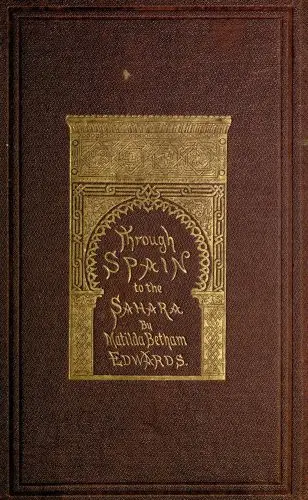
"Through Spain to the Sahara" by Matilda Betham-Edwards is a travel narrative written in the late 19th century. The book chronicles the author’s journey from France into Spain and eventually towards the Sahara, exploring the landscapes, cultures, and societal nuances she encounters along the way. Edwards seems particularly interested in the Moorish influences within Spain and the interactions she has with local people, setting the stage for a deeper exploration of culture and history. The opening of the narrative introduces readers to the author's journey as she reflects on her anticipation before traveling from England to Spain. Starting in Tours, she finds joy in the beautiful French landscape, mingling with church-goers and visiting a reformatory for boys, which highlights themes of redemption and education. The author expresses her thoughts on the Saracen influence in European history while preparing for her trip across the Pyrenees into Spain. Through her keen observations and encounters, she sets a tone of curiosity and reflection, suggesting that her travels will be filled with both personal growth and discoveries of the rich cultural tapestry of the regions she visits.
Introduction adapted from the source catalogue; source summaries may be automatically generated.
Free to read · English · 61,116 words · No account needed
MAKE TIME FOR A GOOD BOOK
On by default. Untick to stop anonymous reading totals. Each page counts after 10 seconds in view. How this works.
Anonymous counting is on unless you have switched it off.
We reached Blidah early in the morning, and found the town as deserted as if stricken by a plague. The large, prosperous hotel where we had often stayed before, was shut up. The streets were silent, the shops were all closed; thankful enough were we to get a little coffee and a morsel of bread at a little cabaret before taking the early train to Algiers. All Blidah was encamped outside the town, and the long lines of tents, and the unwonted aspect of hundreds of wealthy families turned out of house and home, and shifting for themselves in the best way they could, was sad and strange. It was breakfast-time. Coffee was boiling on every little camp-fire, children were running about borrowing a neighbour’s cup or pitcher; ladies were making their toilettes as best they could; men were wandering hither and thither, smoking away their disturbed thoughts.
The Arabs alone looked unmoved. “It is the will of God,” they say when any evil happens, and they resign themselves to it, outwardly calm as statues.
In about an hour and a half we reached Algiers. The weather was glorious; and as we drove up to the well-known villa on the green height of Mustapha Supérieure, and looked down upon the bright, blue sea, and the glistening shore, and the white Moorish city crowning the sunny Sahel, we said that Spain had showed us no fairer prospect.
And yet we were sorry--who would not be?--that our journey had come to an end. May all those who follow in our track find the same bright skies and pleasant faces, and bring home from Spain and Oran as many happy memories as we did.
Printed by STRANGEWAYS AND WALDEN, 28 Castle St. Leicester Sq.
[1] “La puissance paternelle, il faut le reconnaître, perd chaque jour, de son autorité. L’esprit d’independance qui se manifeste de plus en plus dans la société, a penétré jusque dans la famille. Les tendances de la jeunesse à devancer l’époque de son émancipation devaient naturellement amener ce triste résultat, dont les fatales conséquences ne nous out été que trop souvent révelées pendant l’exercice de nos fonctions de magistrat. Nous avons donc considéré comme un devoir de conscience de remédier à un tel état de choses, en cherchant les moyens de ramener dans la voie du bien les enfants que l’inexpérience de l’âge ou la précocité des inclinaisons mauvaises conduisaient à s’en écarter. Tel est le but que nous avons cru pouvoir atteindre en fondant une nouvelle institution, véritable collége de répression, comme l’a si bien definie Monseigneur l’Evêque d’Orléans, où des jeunes gens sont placés sous une discipline sévère, pendant le temps nécessaire pour réprimer chez eux l’esprit d’insubordination et les fâcheux penchants qu’ils out manifestés. N’ayant entre eux aucun rapport, ils n’ont point à subir l’influence d’un contact trop souvent pernicieux. (Le système de la séparation est si rigoureusement observé que les élèves ne sauraient s’apercevoir, même à la chapelle.) Leur instruction se poursuit donc dans les conditions les plus favorables, les études ne sont pas interrompues; les élèves peuvent même continuer à composer, comme par le passé, avec leurs condisciples au moyen des devoirs que nous sont communiqués par leurs anciens professeurs. De cette manière, l’émulation ne se ralentit pas, et, accompli en dehors de toute distraction, le travail est des plus profitables. On enseigne aussi les sciences, les langues étrangères, et les arts d’agrément. Avant la fondation de notre maison, le seul parti extrême auquel les chefs d’institution pussent recourir, était l’expulsion du collége; cette mesure compromettait l’avenir de l’enfant sans le guères de ses mauvais penchants. D’ailleurs la crainte de l’expulsion était inefficace à ramener dans le désir certaines élèves insubordonnés qui faisaient tous leurs efforts pour provoquer un renvoi. L’approche des vacances multiplie les demandes d’admission de la part des familles. Qui ne comprend le danger qu’il y aurait a récompenser un enfant, qui, pendant toute l’année, n’a mérité que des reproches? et cependant les parents se résigneraient difficilement à transformer leur maison en un lieu de répression, au moment où tout est joie et fête dans la famille, surtout lorsqu’il s’y trouve d’autres enfants dont on n’a qu’à se louer.... Les heureux résultats obtenues depuis plus de dix ans nous ont déterminé à signaler aux parents les incontestables services que notre fondation est appelée à leur rendre. Nous ne saurions trop recommander aux familles d’apporter la plus grande sollicitude à combattre de bonne heure chez l’enfant toute la tendance à l’indiscipline et à la paresse, dont les conséquences sont beaucoup plus graves qu’on ne serait porté à le croire. On commence par être mauvais élève, on finit par devenir mauvais sujet.”
Your reading position is saved on this browser. Take it to another device with a library code. Reading pages adapt to text, rather than matching a printed edition.
Matilda Betham-Edwards
Matilda Betham-Edwards
Matilda Betham-Edwards
Matilda Betham-Edwards
BEHIND THE BOOK
This eBook is for the use of anyone anywhere in the United States and most other parts of the world at no cost and with almost no restrictions whatsoever. You may copy it, give it away or re-use it under the terms of the Project Gutenberg License included with this eBook or online at www.gutenberg.org. If you are not located in the United States, you will have to check the laws of the country where you are located before using this eBook. Read the source licence.
The original source file, including credits and licence, is retained by this library. Request an original-format copy at no charge. Please include the book title and Project Gutenberg identifier #56260.
KEEP YOUR CURIOSITY GOING
Wilfrid Scawen Blunt
Wilfrid Scawen Blunt

E. W. (Edgar Watson) Howe
Francis Greenleaf Allinson & Anne C. E. (Anne Crosby Emery) Allinson
Cyrenus Cole

John Martineau