THE CLASSIC COLLECTION✦My diaries, being a personal narrative of events 1888-1914, Part 2 (1900-1914)CLASSIC FREE BOOKS
My diaries, being a personal narrative of events 1888-1914, Part 2 (1900-1914)
Wilfrid Scawen Blunt
THE CLASSIC COLLECTION · 1847
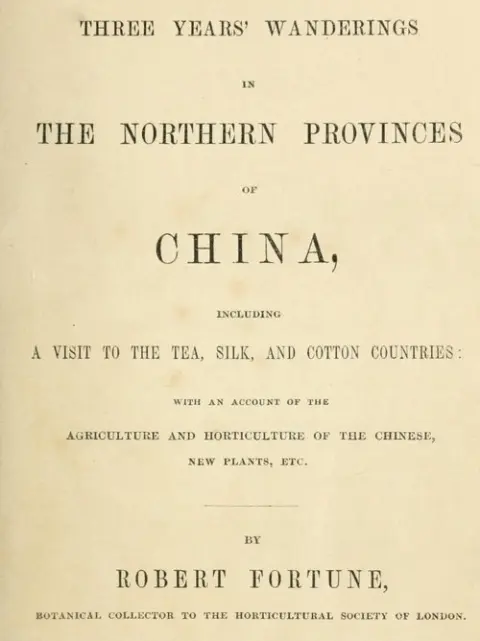
"Three Years' Wanderings in the Northern Provinces of China" by Robert Fortune is an exploration and botanical account written in the mid-19th century. The book recounts the author's extensive travels across various provinces in China, detailing his observations on the local flora, agriculture, and the socio-cultural dynamics he encounters. Fortune's narrative emerges from a unique perspective, as he serves as a botanical collector, aiming to document and understand a land often shrouded in Western misconceptions and mystique. The opening of the work introduces the author’s motivations and challenges as he embarks on his journey. Fortune reflects on the flawed Western perceptions of China, criticizing prior narratives for their reliance on hearsay and exaggerations. He presents a realistic depiction of the country, noting both its advancements and stagnations in comparison to the West. Additionally, he touches on the character of the Chinese people, their government, and agricultural practices while establishing the tone for a detailed, firsthand investigation into China’s natural and cultural landscape. This sets the stage for a journey filled with rich observations and personal anecdotes as Fortune navigates both the physical and social terrains of China.
Introduction adapted from the source catalogue; source summaries may be automatically generated.
Free to read · English · 106,245 words · No account needed
MAKE TIME FOR A GOOD BOOK
On by default. Untick to stop anonymous reading totals. Each page counts after 10 seconds in view. How this works.
Anonymous counting is on unless you have switched it off.
Of course I knew enough of the Chinese by this time to doubt every word they told me, unless I had good reasons for believing them to be speaking the truth, which I had not in this case. I also saw at a glance, from the state of the plants, that they had not only been grown in the country, but I knew from their condition that they could have come but a very short distance, for they had been dug out of the ground with a portion of the soil adhering to the roots. For some few days, however, all my efforts were completely baffled, until a lucky circumstance enabled me to get the better of my Chinese friends. My servant and myself were returning home from the country, after an unsuccessful day's search, when, as we neared the north gate of the city, I shot a bird, which was new to me; being at that time engaged in making a collection of the skins of Chinese birds. I was of course immediately surrounded by all the boys in the neighbourhood, who were quite in raptures at my gun, as it was so different from their own clumsy matchlock. "Now," said I to the juvenile crowd around me, "who can show me the way to the nearest flower-garden, where I can purchase some flowers." "Lyloe, lyloe,"[2] said half a dozen of them at once, and I found, to my surprise and pleasure, that I was almost close to the gate of a very good nursery belonging to an individual who had a flower-shop in the city, and with whom I had had the conversation related above. It was now getting too dark to see the plants well, but I marked the spot, and returned on the following day. This time, however, I was not successful, for, as I approached, a boy, who was on the watch, scampered away to the gardener's house and gave notice of my appearance; and long before I reached the gate it was closed and barricaded, and no persuasion nor entreaty could remove their fears, or induce them to allow me to enter. The next day, and the next again, the very same thing took place, although I took different roads, in the hopes of finding the young sentinel off his guard. I was now obliged to have recourse to other means to gain my end. Her Majesty's consul, Captain Balfour, had from the first taken great interest in the success of my pursuits, and kindly offered me every assistance in his power, should I find any difficulties in my way. I therefore related the circumstance to him, and requested him to allow one of the Chinese officers attached to the consulate to accompany me to the garden, and explain that my object was to purchase plants, and not to take any thing away against their will. From our experience of Chinese character, we were well aware that, if this were properly explained, the poor people, whose livelihood depended upon the propagation and sale of plants, would be very glad to allow me to make purchases at their garden. I therefore set out again on the following day, accompanied by an officer from the consulate. When we approached the garden, my young friend was at his post, as usual, and ran off immediately, and forthwith the gate was closed and barricaded as before. We walked quietly up to it, and knocked, but there was no answer; and the place seemed all at once to be deserted. The officer well knew that the family had hid themselves just inside the gate, and commenced talking to them, and laughing at their fears. In a few seconds we heard a movement amongst the bushes, and then the inmates, gaining courage, ventured to approach the gate to reconnoitre. At last, being apparently satisfied, the bolts were withdrawn, and we were admitted within the sacred precincts of the garden, when I soon found several very valuable plants. The ice was now broken, and, with the assistance of the Chinese officer, I got the names and localities of several other gardens, which I soon found out: and, although it was the winter season, and vegetation in a state of repose, I was able in a few weeks to get together a collection of plants, which, when they flowered, proved not only quite new, but highly ornamental. A few months wrought a great change upon these diffident and timid people, and, at length, they not only received me with pleasure, but begged me to bring my friends and acquaintances to see their flowers. I frequently did so, and as we always treated them with kindness and consideration, a favourable impression was made upon their minds, which, I have no doubt, will long continue. When I was leaving Shanghae for the last time on my return to England, I went to remove a collection of plants which I had in one of these gardens: as I was doing so, the proprietor said to me, "the next time you come to Shanghae I shall have left this garden, and gone to one which I have taken in the next district, where I shall be glad to see you, and supply you with the plants you want."
Your reading position is saved on this browser. Take it to another device with a library code. Reading pages adapt to text, rather than matching a printed edition.
BEHIND THE BOOK
This eBook is for the use of anyone anywhere in the United States and most other parts of the world at no cost and with almost no restrictions whatsoever. You may copy it, give it away or re-use it under the terms of the Project Gutenberg License included with this eBook or online at www.gutenberg.org. If you are not located in the United States, you will have to check the laws of the country where you are located before using this eBook. Read the source licence.
The original source file, including credits and licence, is retained by this library. Request an original-format copy at no charge. Please include the book title and Project Gutenberg identifier #54720.
KEEP YOUR CURIOSITY GOING
Wilfrid Scawen Blunt
Wilfrid Scawen Blunt

E. W. (Edgar Watson) Howe
Francis Greenleaf Allinson & Anne C. E. (Anne Crosby Emery) Allinson
Cyrenus Cole

John Martineau