THE CLASSIC COLLECTION✦My diaries, being a personal narrative of events 1888-1914, Part 2 (1900-1914)CLASSIC FREE BOOKS
My diaries, being a personal narrative of events 1888-1914, Part 2 (1900-1914)
Wilfrid Scawen Blunt
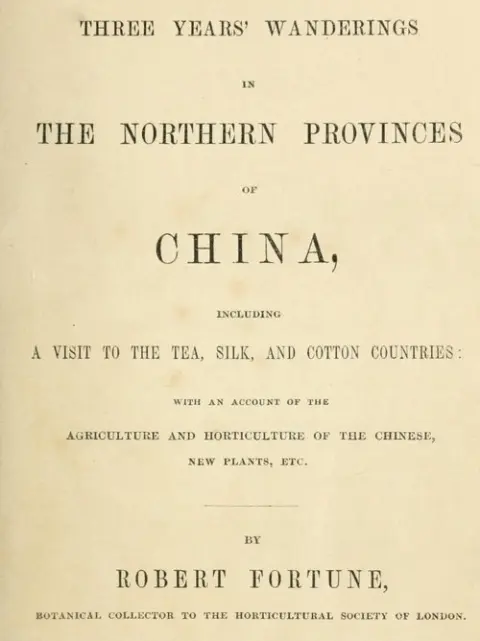
THE CLASSIC COLLECTION · 1847
"Three Years' Wanderings in the Northern Provinces of China" by Robert Fortune is an exploration and botanical account written in the mid-19th century. The book recounts the author's extensive travels across various provinces in China, detailing his observations on the local flora, agriculture, and the socio-cultural dynamics he encounters. Fortune's narrative emerges from a unique perspective, as he serves as a botanical collector, aiming to document and understand a land often shrouded in Western misconceptions and mystique. The opening of the work introduces the author’s motivations and challenges as he embarks on his journey. Fortune reflects on the flawed Western perceptions of China, criticizing prior narratives for their reliance on hearsay and exaggerations. He presents a realistic depiction of the country, noting both its advancements and stagnations in comparison to the West. Additionally, he touches on the character of the Chinese people, their government, and agricultural practices while establishing the tone for a detailed, firsthand investigation into China’s natural and cultural landscape. This sets the stage for a journey filled with rich observations and personal anecdotes as Fortune navigates both the physical and social terrains of China.
Introduction adapted from the source catalogue; source summaries may be automatically generated.
Free to read · English · 106,245 words · No account needed
MAKE TIME FOR A GOOD BOOK
On by default. Untick to stop anonymous reading totals. Each page counts after 10 seconds in view. How this works.
Anonymous counting is on unless you have switched it off.
On reaching the pagoda, I was astonished to find it in a most dilapidated condition, almost ruinous, although the main part of it, which had been strongly built, was nearly entire. A few stone josses or gods--a dome, with a double wall, containing a winding staircase leading to the different balconies through which the wind howled in a most dismal manner, are all that I can particularise about the pagoda. I went over the whole of it, and obtained an excellent view of the surrounding country for many miles on all sides. As far as the eye can reach, it has the same barren and rocky character. No one noticed or molested me in any way.
After enjoying the view of the country from the top of the hills, I again descended to the low ground by a different way from that by which I had come; but no sooner did I reach the plain, than I was again surrounded by the natives. It was getting late in the afternoon, and my servant, I believe, felt rather tired, as I had intended he should when we started in the morning. He now began to scheme a little, to save himself from walking any farther than he could possibly help; and as I sometimes traversed rather wide circular routes in search of plants, he generally took the nearest way in the direction in which he knew we had ultimately to go. A few of the natives now began to follow me rather closely, and from their manner I suspected that their intentions were not good; but as they pretended to take me to some place where I should see some good plants and flowers, I allowed them to accompany me, and tried to keep them all in good humour. We arrived at last in sight of a large mansion, standing in a retired part of the country, and I was proceeding with perfect confidence towards it, when the Chinamen began to press more closely round me; and upon feeling a hand in my pocket, I turned quickly round, and saw the thief running off with a letter which he had abstracted. As soon as he saw he was discovered, he threw it on the ground, and made off; but when I put my hand into my pocket, I found that I had lost several things of more value. This incident stopped my progress, and made me look about for my servant, whom I saw at some distance attacked by about eight or ten of the fellows. They had surrounded him, presenting their knives, and threatening to stab him if he offered the least resistance, at the same time endeavouring to rob and strip him of every thing of the slightest value, and my poor plants collected with so much care were flying about in all directions. I felt that we were in a dangerous situation, and instantly leaving my pickpockets, set off to his assistance as fast as I could. When the Chinamen saw me coming, they all took to their heels and left him, making off towards their companions, who were looking on from a distance. My servant was pale with fright when I reached him, and very much excited; nor did he fail to remind me of all he had said the day before. I felt there was no denying we were in dangerous company, and that the only thing to be done was to get out of it as soon as we could. Accordingly I made straight for the village where we had left the boat, and my servant took good care to follow close at my heels. As we approached the landing-place the boatman came to meet us in high spirits, saying he had expected us long ago, and was fearful that the Chinchew men had either robbed or murdered us. It was now ebb tide, and there was about half a mile of bare sand to cross, with the surf breaking furiously beyond it. The boatman at first said it was impossible to go to the ship before morning, and the people of the village promised me good chow-chow (food), and quarters for the night. I thanked them for all their kind offers, but told them that I should be much better pleased to get on board of the Ka pan with three masts, as I was to sail to Chusan early next day. Upon this, a sign was made to some other boatmen hard by, and immediately all were in motion. A boat was carried by a number of men across the sands to the water. I jumped upon the back of a stout Chinaman, who scampered like a race-horse across the wet sands, and deposited me in the boat; and they rowed us through the rolling surf in a masterly manner. I reached the ship, all safe and sound, although completely drenched with wet, but with my opinion of the Chinese considerably lowered by the adventures of the day.
Your reading position is saved on this browser. Take it to another device with a library code. Reading pages adapt to text, rather than matching a printed edition.
BEHIND THE BOOK
This eBook is for the use of anyone anywhere in the United States and most other parts of the world at no cost and with almost no restrictions whatsoever. You may copy it, give it away or re-use it under the terms of the Project Gutenberg License included with this eBook or online at www.gutenberg.org. If you are not located in the United States, you will have to check the laws of the country where you are located before using this eBook. Read the source licence.
The original source file, including credits and licence, is retained by this library. Request an original-format copy at no charge. Please include the book title and Project Gutenberg identifier #54720.
KEEP YOUR CURIOSITY GOING
Wilfrid Scawen Blunt
Wilfrid Scawen Blunt

E. W. (Edgar Watson) Howe
Francis Greenleaf Allinson & Anne C. E. (Anne Crosby Emery) Allinson
Cyrenus Cole

John Martineau