THE CLASSIC COLLECTION✦My diaries, being a personal narrative of events 1888-1914, Part 2 (1900-1914)CLASSIC FREE BOOKS
My diaries, being a personal narrative of events 1888-1914, Part 2 (1900-1914)
Wilfrid Scawen Blunt
THE CLASSIC COLLECTION · 1847
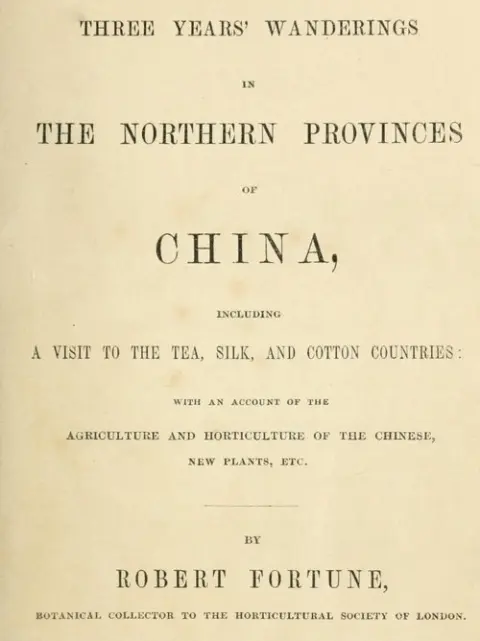
"Three Years' Wanderings in the Northern Provinces of China" by Robert Fortune is an exploration and botanical account written in the mid-19th century. The book recounts the author's extensive travels across various provinces in China, detailing his observations on the local flora, agriculture, and the socio-cultural dynamics he encounters. Fortune's narrative emerges from a unique perspective, as he serves as a botanical collector, aiming to document and understand a land often shrouded in Western misconceptions and mystique. The opening of the work introduces the author’s motivations and challenges as he embarks on his journey. Fortune reflects on the flawed Western perceptions of China, criticizing prior narratives for their reliance on hearsay and exaggerations. He presents a realistic depiction of the country, noting both its advancements and stagnations in comparison to the West. Additionally, he touches on the character of the Chinese people, their government, and agricultural practices while establishing the tone for a detailed, firsthand investigation into China’s natural and cultural landscape. This sets the stage for a journey filled with rich observations and personal anecdotes as Fortune navigates both the physical and social terrains of China.
Introduction adapted from the source catalogue; source summaries may be automatically generated.
Free to read · English · 106,245 words · No account needed
MAKE TIME FOR A GOOD BOOK
On by default. Untick to stop anonymous reading totals. Each page counts after 10 seconds in view. How this works.
Anonymous counting is on unless you have switched it off.
The port of Shanghae is situated about 80 or 100 miles to the north-west of Chusan, the latter being in lat. 30° north, and the former in 31° 20'. On leaving the Chusan group of Islands, and sailing to the northward in the direction of Shanghae we pass the Bay of Hangchow on the left, and enter the mouth of the noble Yang-tse-kiang, the "child of the Ocean," as its name implies. The country, which, up to this degree of latitude from the south, is very mountainous, now changes, and becomes perfectly level. The shores of the river are, in many places, lower than the river itself, which is kept within its bounds by large and strong embankments. The mountainous scenery disappears entirely, and even from the top of the highest mast of a ship, no hill is seen to bound the distant horizon--all the view is a vast level plain. This is what is called the valley of the Yang-tse-kiang, and is the great northern Nanking cotton district. The land is a deep rich loam, and is without doubt the finest in China, if not in the world.
At the entrance of the river, the navigation is rather difficult, particularly in thick weather, owing partly to the numerous sand banks, which are all covered at high water, and partly to the difficulty of getting prominent land-marks. Since the opening of the trade in 1843 several ships have got entangled amongst these banks, and have been totally wrecked. When I first visited the Yang-tse-kiang, it was quite a common occurrence for vessels to get aground at low water, but as the greater part of them were small opium clippers, commanded by men who knew the region well, they generally got easily off again when the tide flowed. One evening in April, we were sailing up this river with a fair light breeze, which was sending us on at the rate of six or seven miles an hour. The man at the lead was singing out his soundings; and as it was "and a half three," and "by the mark three," the captain concluded that we were in the right channel, and went below for a minute or two. The leadsman was still singing out three fathoms, when, all at once, we felt the bottom of the vessel touch the ground, and in two seconds she was hard and fast in the mud. The tide was ebbing rapidly at the time, and as one side of the schooner was in deeper water, we were obliged to get out all the spare planking we had to prop the vessel and prevent her from falling over. The next question was, how we were to get off when the tide rose. In the course of the afternoon, we had observed a number of junks astern of us, coming up the river and bound for Shanghae. Some of these were now within a quarter of a mile, and had dropt their anchors until the commencement of the flood tide. After some consultation, the captain came to the determination of boarding one of them, and getting the people to shift their anchoring ground and come a little nearer the schooner, so that a rope might be passed from the one to the other, and our vessel hauled off when the tide was sufficiently high to float her. As I was able to speak a little Chinese, I was asked to go in the boat and explain what our object was, and likewise to tell them that they should be well paid for their trouble. The boat's crew armed themselves with cutlasses, and, in order to render the business more imposing, the captain put on an old uniform which had formerly belonged to a naval officer, and with a cocked hat on his head and a sword dangling at his side took his seat in the boat. The night was dark but fine, and we could just discern the masts of the nearest junk. In a few minutes we were alongside, and were challenged by the man who had the watch upon deck, and who at the same moment, seeing we were foreigners, ran to give the alarm, exclaiming that the Hong-mou-jins, or "red-haired men," were upon them. Without further parley we sprang into the junk, and when we looked round we found her decks deserted--the watch and every body else having hid themselves below. The captain directed our men to go down the hatchways and try to get the Chinese upon deck, but he gave them strict orders to use them kindly. It was not a little amusing to see our tars going about this part of the business, which they did with right good will and glee. They soon dragged the Chinamen out of their hiding places, and, much against their inclination, mustered them on deck. I now explained to their captain that our intentions were peaceful, but that our vessel was in very great danger, and that it was absolutely necessary they should get up their anchor immediately, and come to our assistance. At the same time, I told them that they should receive twenty dollars for their trouble. They now held a consultation amongst themselves, and at last came and informed us that they would render the required assistance on the following morning. This, however, would not answer our purpose, and besides we knew enough of the Chinese to be perfectly aware that this "to-morrow" would never come, and was only said to get rid of us altogether, and leave us to our fate. We therefore told them that this arrangement would not suit us, and again requested them to get up their anchor. Another consultation was held, and as it was quite evident to me that they were procrastinating, and that we might go on in this manner all night, I advised the master of our schooner to set his own men to work to heave up the Chinaman's anchor, and hoist her sail. The sailors, who were getting rather impatient, gladly obeyed these orders, and when the junk's crew saw what was going on, they also gave their assistance, so that in a few minutes we were under weigh. Having gone as near the schooner as we considered prudent, the anchor was dropped, and a strong rope made fast to the two vessels in order to draw ours off the mud when the tide rose high enough to float her. This was accomplished during the night, and we were safely anchored in three fathoms of water. At daylight, however, we found that our Chinese friends had made sail, and gone away without waiting to claim the promised reward.
Your reading position is saved on this browser. Take it to another device with a library code. Reading pages adapt to text, rather than matching a printed edition.
BEHIND THE BOOK
This eBook is for the use of anyone anywhere in the United States and most other parts of the world at no cost and with almost no restrictions whatsoever. You may copy it, give it away or re-use it under the terms of the Project Gutenberg License included with this eBook or online at www.gutenberg.org. If you are not located in the United States, you will have to check the laws of the country where you are located before using this eBook. Read the source licence.
The original source file, including credits and licence, is retained by this library. Request an original-format copy at no charge. Please include the book title and Project Gutenberg identifier #54720.
KEEP YOUR CURIOSITY GOING
Wilfrid Scawen Blunt
Wilfrid Scawen Blunt

E. W. (Edgar Watson) Howe
Francis Greenleaf Allinson & Anne C. E. (Anne Crosby Emery) Allinson
Cyrenus Cole

John Martineau