Switch off
Oliver Optic
THE CLASSIC COLLECTION · 1894
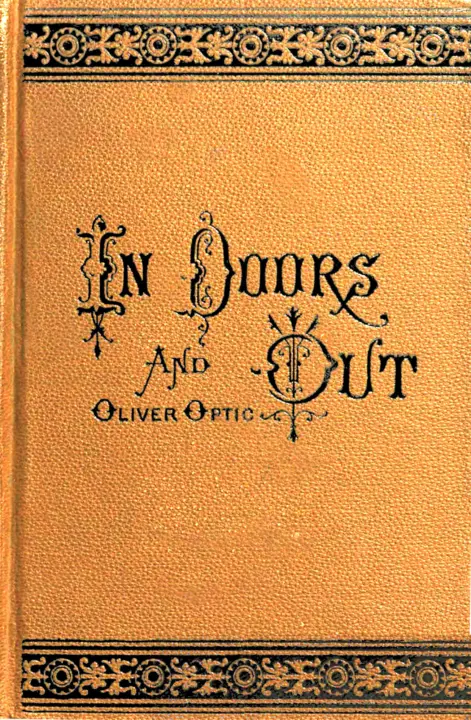
"Three millions! : or, The way of the world" by Oliver Optic is a novel written in the late 19th century. It centers on Eugene Hungerford, a principled young New Englander suddenly enriched by his uncle’s immense fortune—on the condition that he marry and produce a son named John Hungerford—setting up a conflict between love, duty, and personal integrity. The story moves among Poppleton’s mills and harbor and the nearby islands, following Eugene’s feelings for Mary Kingman, the attentions of an ardent artist, Eliot Buckstone, and the counsel of his friend Dick Birch, as wealth collides with character and community. The opening of the novel recounts the rise and death of Baltimore magnate John Hungerford and the reading of his elaborate will: generous bequests to friends and charities, and the bulk—three million dollars—held in trust for nephew Eugene until age thirty, to be inherited outright only if he is married and father to a son named John; otherwise the estate is divided among family members and institutions. Eugene, his mother, and sister Julia return to Poppleton dazed by their new status, while Eugene wrestles with the idea of marriage on principle rather than for money, dreams of improving Pine Hill, and sketches modest philanthropic plans to build decent homes for the poor. His college friend Dick Birch arrives, becomes his adviser, and warns him not to let pride or the will’s “price” chill genuine love. Meanwhile, a marine painter, Eliot Buckstone, spots Mary Kingman adrift after losing her oars and swims out, but Eugene and Dick soon tow her safely in, leading to a visit at her family’s weathered house on The Great Bell. There, Eugene’s restraint and stiffness—born of his fear of seeming to buy love—leave Mary unassured, while the charming Buckstone shows keen interest, setting the stage for the social and romantic tensions to come.
Introduction adapted from the source catalogue; source summaries may be automatically generated.
Free to read · English · 138,277 words · No account needed
MAKE TIME FOR A GOOD BOOK
On by default. Untick to stop anonymous reading totals. Each page counts after 10 seconds in view. How this works.
Anonymous counting is on unless you have switched it off.
“You do not know!” she gasped, for his words sounded like an equivocation; and indeed all his promises and protestations had been much too violent to seem real to her.
Now she had discovered that he was a drunkard, she had no confidence in him. He had deceived her--he did not know whether or not she was his wife!
“I do not know, Mary,” he repeated.
“You are not sincere now, Eliot.”
“God knows that I am sincere--that I love you with all my soul!”
“Were we married that evening in Providence, Eliot?” she demanded,
sternly.
“I do not know, Mary. If I intended to deceive you, I would not answer you thus,” replied he, with much meekness in his tones and manner.
“How dare you tell me you do not know?” continued Mary, with energy.
“I do not know; but whether you are or are not my wife, Mary, you shall
be.”
“You mock me, Eliot.”
“Hear me, Mary, and you shall know the truth, just as it is. As God is my judge, I would not deceive you for all the world.”
“You have done it already, if you do not know whether we were married
or not.”
“I intended to make you my wife. When we reached Providence, we went to the house of my friend, Mr. Dorning.”
“The artist, you mean?”
“Yes; I acknowledge that he is not the best man in the world.”
“Then why did you take me there?”
“Because I had no other friend in Providence.”
“If he is a bad man, why is he your friend?”
“We studied art together. I was acquainted with him--perhaps he was not my friend, in the truest sense of the word. We went to his house, and I told him as much of our story as I could relate in five minutes. He laughed----”
“Why should he laugh?” demanded Mary, indignantly.
“Probably he took a wrong view of the matter, and did not suppose I wished to be really married. He was mistaken; I intended to make you my wife--God knows that I did!”
Mary wept bitterly. Eliot should have smote the man to the earth when he laughed, for the laugh was an insult; it was trifling over the innocence and purity of her he pretended to love. She lost hope, as he went on with his story; her worst fears were gradually confirmed. His frequent use of the sacred name of God to fortify his statements did not inspire her with confidence. To her it was not the simple tale of truth.
“Go on, Eliot,” said Mary, in despair.
Your reading position is saved on this browser. Take it to another device with a library code. Reading pages adapt to text, rather than matching a printed edition.
BEHIND THE BOOK
This eBook is for the use of anyone anywhere in the United States and most other parts of the world at no cost and with almost no restrictions whatsoever. You may copy it, give it away or re-use it under the terms of the Project Gutenberg License included with this eBook or online at www.gutenberg.org. If you are not located in the United States, you will have to check the laws of the country where you are located before using this eBook. Read the source licence.
The original source file, including credits and licence, is retained by this library. Request an original-format copy at no charge. Please include the book title and Project Gutenberg identifier #76553.
KEEP YOUR CURIOSITY GOING
Coulson Kernahan

Maurice Baring
Frances Wright
Cécile Tormay

Frederic Jesup Stimson

W. H. P. (William Henry Pope) Jarvis