
The cable
Marion Ames Taggart
THE CLASSIC COLLECTION · 1897
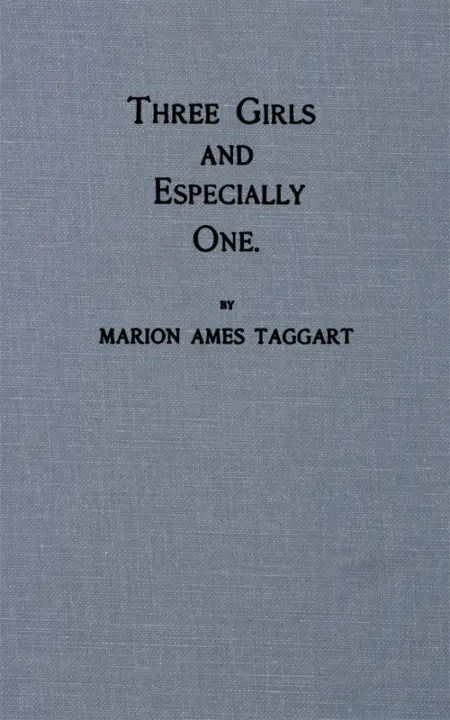
"Three girls and especially one" by Marion Ames Taggart is a novel written in the late 19th century. It follows the Merrick family in New York—especially twelve-year-old Marcella (“Marcy”), who dreams of genius and fame—and their candid, big-hearted cousin Nellie from the West. As drawing-room pride collides with plain honesty, and a sudden misfortune tests everyone, the focus shifts from self-display to quiet courage and service. Readers who like domestic coming‑of‑age stories with gentle Catholic themes will find much to enjoy.
At the start of the story, the Merricks’ busy, status-conscious home is introduced: Marcy broods over future greatness, Inez chases society, and the younger children squabble merrily—until cousin Nellie arrives, sunny, practical, and unpretentious. Nellie’s lack of polish draws snubs from fashionable schoolmates, yet her warmth wins the younger siblings and gradually pricks Marcy’s vanity. A fall from the rooftop observatory leaves Marcy gravely injured; guided by kindly Father Glenn’s parable of a hidden white blossom, she resolves to “live for others,” beginning with small, steady acts—reading to her father, tending the little ones, helping Inez and Bob do right, and sending her unused finery to Nellie’s needy siblings out West. A school play becomes a flashpoint when jealous girls hide the crown; Nellie recovers it in time, saving Inez’s triumph and sealing their new closeness. The opening ends with Christmas preparations centered around Marcy’s room and a generous box for Prairie Rest, promising a “merry Christmas after all.”
Introduction adapted from the source catalogue; source summaries may be automatically generated.
Free to read · English · 26,582 words · No account needed
MAKE TIME FOR A GOOD BOOK
On by default. Untick to stop anonymous reading totals. Each page counts after 10 seconds in view. How this works.
Anonymous counting is on unless you have switched it off.
“Why, it won’t bother me. I like to hear anything to make me forget, you know,” replied Marcy.
Inez did not need much urging.
“You see,” she explained, “Saturday will be my birthday, and I’d been telling the girls I would ask them to luncheon, and take them to the matinée, for mamma had said I could. Then when you got sick they all said they supposed the party was off, and I said it wouldn’t make any difference, for you weren’t going to be sick a little while--I mean, it wouldn’t be any different by and by. Oh, no, I mean----”
“Yes, I know, Inez; please go on,” said Marcy.
“Well,” Inez resumed, somewhat embarrassed, “I’ve been telling them we should have them just the same, and now mamma says it would be perfectly heathenish to have a theatre party so soon after you were hurt, and if I had any heart I should not want them, and I’m sure I didn’t want them, only I hate to tell them they can’t come.”
“Is that all? I’ll fix that for you. Mamma’ll do anything I ask her to, she’s so sorry for me, and I’ll tell her I want you to have the girls. I couldn’t see them,” Marcy said, with a little shudder at the thought of their curious and pitying eyes, “but I’d rather you would have your birthday just as if I were well. Why, if I’m to be sick all my life I must get used to your having good times without me, and what’s the use of waiting? I’ll get mamma to let you have the girls, so that’s easily set straight, Inez.”
Inez kissed her, quite unconscious of the pang this had cost her.
“It seems to me we were never sisters before, Marcy,” she said. “It’s just as if there had been a sort of crust, and you had fallen through and broken it all up.”
“Come,” said Marcy, smiling, “that’s one good thing, isn’t it? Maybe some day I’ll be glad I fell.”
The room was growing dark, and Marcy was aroused from a nap by Bob coming up-stairs, not two at a time, or tripping in his haste as usual, but heavily and slowly.
“Bob, aren’t you going to speak to me?” Marcy called out.
Bob came in, sat on the edge of a chair, and kicked at the floor with the toe of one boot, turned upright by a great effort.
“What’s the news?” asked Marcy.
“Nothing,” Bob replied gloomily.
Your reading position is saved on this browser. Take it to another device with a library code. Reading pages adapt to text, rather than matching a printed edition.
Marion Ames Taggart

Marion Ames Taggart & Karl May
Marion Ames Taggart
Marion Ames Taggart
BEHIND THE BOOK
This eBook is for the use of anyone anywhere in the United States and most other parts of the world at no cost and with almost no restrictions whatsoever. You may copy it, give it away or re-use it under the terms of the Project Gutenberg License included with this eBook or online at www.gutenberg.org. If you are not located in the United States, you will have to check the laws of the country where you are located before using this eBook. Read the source licence.
The original source file, including credits and licence, is retained by this library. Request an original-format copy at no charge. Please include the book title and Project Gutenberg identifier #78414.
KEEP YOUR CURIOSITY GOING
Coulson Kernahan

Maurice Baring
Frances Wright
Cécile Tormay

Frederic Jesup Stimson

W. H. P. (William Henry Pope) Jarvis