THE CLASSIC COLLECTION✦Bulldog CarneyCLASSIC FREE BOOKS
Bulldog Carney
William Alexander Fraser
THE CLASSIC COLLECTION · 1902
"Thoroughbreds" by William Alexander Fraser is a historical novel likely written in the early 20th century. The story unfolds in the quaint village of Brookfield, highlighting the lives of two key characters, John Porter, an avid horse racing enthusiast known for his integrity, and the Reverend Dolman, his moral adversary who harbors disdain for the sport. The book explores family dynamics, particularly the differing allegiances within the Porter household regarding horse racing, and sets up a narrative that intertwines personal passions with the looming specter of societal judgment. The opening of "Thoroughbreds" introduces readers to a tension-filled community where horse racing has re-emerged as a controversial topic. We meet John Porter, whose love for racing stands in stark contrast to the disapproving views of his wife and Reverend Dolman. This spectacle leads to a successful church concert where burnished emotions are stirred by a poem recited by their daughter, Allison, about a noteworthy horse, Crusader. The narrative soon transitions into a tense race at Morris Park, amplifying the stakes for Porter as he delves deeper into the world of competitive racing, intertwined with suspicion and the potential for betrayal. As the story escalates, themes of honesty, family loyalty, and moral conflict begin to take shape in a world where the noble sport of horse racing is shadowed by corruption and greed.
Introduction adapted from the source catalogue; source summaries may be automatically generated.
Free to read · English · 108,097 words · No account needed
MAKE TIME FOR A GOOD BOOK
On by default. Untick to stop anonymous reading totals. Each page counts after 10 seconds in view. How this works.
Anonymous counting is on unless you have switched it off.
From desiring the farm, insensibly Crane drifted into coveting the mare. He fell to wondering whether The Dutchman might not beat Lucretia. A question of this sort was one of the few he discussed with Langdon. Crane had smoked his cigar out, had settled the trend of many things, and developed the routine for his chessmen.
“I'll give Porter rope enough, in the way of funds, to tangle himself, and in the meantime I'll run up to New York and see what Langdon thinks about The Dutchman,” was the shorthand record of his thoughts as he threw away the end of his cigar, took his hat, and passed out of the bank.
That evening he talked with his trainer.
“What should win the Eclipse, Langdon?” he asked.
“Well, I don't know what'll start,” began the Trainer, with diplomatic caution, running over in his mind the most likely twoyear-olds.
“Would Porter's mare have a chance?”
“I think she would. I hear somethin' about a trial she gave them good enough to win--if I could find out her time--Porter don't talk much, an' Andy Dixon's like a clam. There's a boy in the stable, Shandy, that I might pump--”
“Don't bother, Mr. Langdon; I dislike prying into anybody's business.”
The Trainer stared, but he didn't know that Porter had told Crane all about the trial, and so the latter could afford to take a virtuous pose.
“Has The Dutchman a look in?” continued Crane.
“On his runnin' he has; he wasn't half fit, an' got as bad a ride as ever I see in my life. The race ought to be between 'em--I ain't seen no two-year-olds out to beat that pair.”
“If I thought The Dutchman would win I'd buy him. I like game horses, and men, too--that'll take the gaff and try.”
“I don't know as the owner'd sell him.”
“Do you remember the buying of Silver Foot, Langdon?”
“Yes.”
“He was a good horse.”
“The best handicap horse in the country, an' he was sold for a
song--seven thousand.”
“Less than that, the first time,” corrected Crane.
“Yes, they stole him from old Walters; made him believe the horse was no
good.”
“Just so,” commented Crane; “I've heard that story,” and his smooth, putty-like face remained blank and devoid of all meaning, as his eyes peered vacantly over their lower lids at the Trainer.
Langdon waited for the other to continue, but the Banker seemed wrapped up in a retrospect of the Silver Foot deal.
“I know Billy Smith, that trains The Dutchman,” hazarded Langdon; “he's
a boozer.”
Your reading position is saved on this browser. Take it to another device with a library code. Reading pages adapt to text, rather than matching a printed edition.
William Alexander Fraser
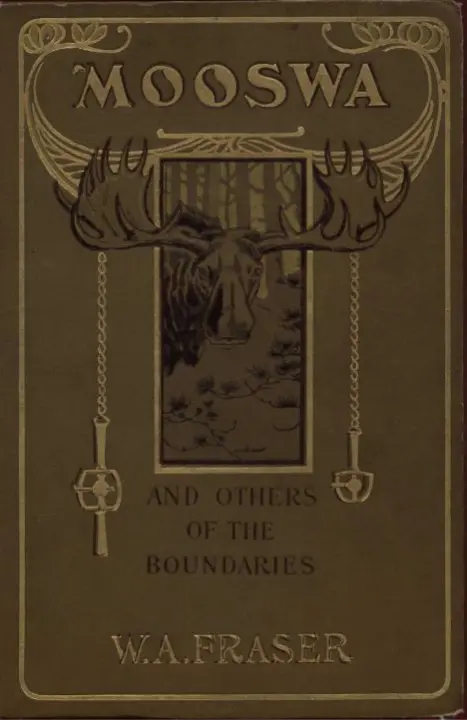
William Alexander Fraser
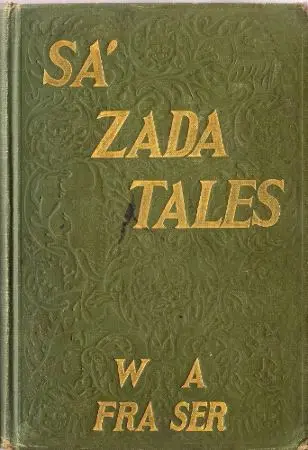
William Alexander Fraser
William Alexander Fraser
BEHIND THE BOOK
This eBook is for the use of anyone anywhere in the United States and most other parts of the world at no cost and with almost no restrictions whatsoever. You may copy it, give it away or re-use it under the terms of the Project Gutenberg License included with this eBook or online at www.gutenberg.org. If you are not located in the United States, you will have to check the laws of the country where you are located before using this eBook. Read the source licence.
The original source file, including credits and licence, is retained by this library. Request an original-format copy at no charge. Please include the book title and Project Gutenberg identifier #9088.
KEEP YOUR CURIOSITY GOING
Cécile Tormay

Moritz Busch
Coulson Kernahan
John L. Ransom

Maurice Baring
Frances Wright