THE CLASSIC COLLECTION✦Bulldog CarneyCLASSIC FREE BOOKS
Bulldog Carney
William Alexander Fraser
THE CLASSIC COLLECTION · 1902
"Thoroughbreds" by William Alexander Fraser is a historical novel likely written in the early 20th century. The story unfolds in the quaint village of Brookfield, highlighting the lives of two key characters, John Porter, an avid horse racing enthusiast known for his integrity, and the Reverend Dolman, his moral adversary who harbors disdain for the sport. The book explores family dynamics, particularly the differing allegiances within the Porter household regarding horse racing, and sets up a narrative that intertwines personal passions with the looming specter of societal judgment. The opening of "Thoroughbreds" introduces readers to a tension-filled community where horse racing has re-emerged as a controversial topic. We meet John Porter, whose love for racing stands in stark contrast to the disapproving views of his wife and Reverend Dolman. This spectacle leads to a successful church concert where burnished emotions are stirred by a poem recited by their daughter, Allison, about a noteworthy horse, Crusader. The narrative soon transitions into a tense race at Morris Park, amplifying the stakes for Porter as he delves deeper into the world of competitive racing, intertwined with suspicion and the potential for betrayal. As the story escalates, themes of honesty, family loyalty, and moral conflict begin to take shape in a world where the noble sport of horse racing is shadowed by corruption and greed.
Introduction adapted from the source catalogue; source summaries may be automatically generated.
Free to read · English · 108,097 words · No account needed
MAKE TIME FOR A GOOD BOOK
On by default. Untick to stop anonymous reading totals. Each page counts after 10 seconds in view. How this works.
Anonymous counting is on unless you have switched it off.
Almost involuntarily Mortimer, as he talked, had edged back toward his friend of disconsolate raggedness.
“I wanted to go in there--I'd like to go now to find him, but they won't let me through the gate.”
“No more they will,” answered Mike, with untruthful readiness, for all at once it occurred to him that if Mortimer got to the paddock he might run up against Allis and recognize her.
“De gent could buy a badge and get in,” volunteered Old Bill.
The lid of Mike's right eye drooped like the slide of a lantern, as he answered: “He couldn't get wan now--it's too late; just wait ye here, sir, and if the b'y's there wit' the nags, I'll sind him out.”
Old Bill made no comment upon Mike's diplomatic misstatement anent the badge, for he had observed the wink, and held true to the masonry which exists between race-course regulars.
“Yes, please send him out then, Mr. Gaynor; it's important.”
“I'm in a hurry meself,” said Mike; “I just come out fer a minute; see here,” and he nodded his head sideways to Mortimer. The latter walked by his side for a few steps.
“Who's that guy?” asked the Trainer.
“I don't know; he calls himself Old Bill.”
“Well, ye best look out--he looks purty tough. What's he playin' ye
fer?”
“He advised me to bet money on Lauzanne.”
“The divil he did! What th' yellow moon does he know about the Chestnut;
did ye back him?”
“Not yet.”
“Are ye goin' to?”
“I don't know. Do you think Lauzanne might come in first?”
A slight smile relaxed the habitually drawn muscles of Mike's grim visage; it was moons since he had heard anybody talk of a horse “coming in first;” he was indeed a green bettor, this, young man of the counting house. What was he doing there betting at all, Mike wondered. It must be because of his interest in the girl, his reason answered.
“I tink he'll win if he does his best for her.”
“Does his best for who?”
Mike got to cover; his ungoverned tongue was always playing him tricks.
“Miss Allis is managin' the horses,” he explained, very deliberately, “an' there's a new b'y up on Lauzanne's back, d'ye onderstand; an' if the Chestnut doesn't sulk, does his best fer the young misthress that'll be watchin' him here in the stand wit' tears in her eyes, he moight win--d'ye onderstand?”
Yes, Mortimer understood; it seemed quite clear, for Mike had been to some pains to cover up the slip he had made.
“Now I must go,” he continued; “an' ye needn't come in the paddock--if the b'y is there, I'll sind him out.”
Your reading position is saved on this browser. Take it to another device with a library code. Reading pages adapt to text, rather than matching a printed edition.
William Alexander Fraser
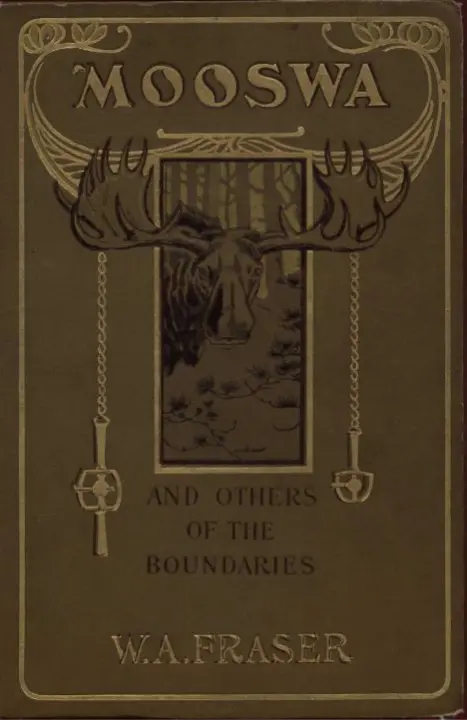
William Alexander Fraser
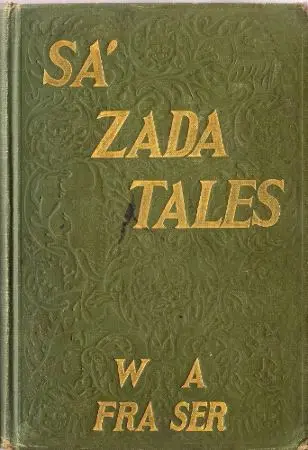
William Alexander Fraser
William Alexander Fraser
BEHIND THE BOOK
This eBook is for the use of anyone anywhere in the United States and most other parts of the world at no cost and with almost no restrictions whatsoever. You may copy it, give it away or re-use it under the terms of the Project Gutenberg License included with this eBook or online at www.gutenberg.org. If you are not located in the United States, you will have to check the laws of the country where you are located before using this eBook. Read the source licence.
The original source file, including credits and licence, is retained by this library. Request an original-format copy at no charge. Please include the book title and Project Gutenberg identifier #9088.
KEEP YOUR CURIOSITY GOING
Cécile Tormay

Moritz Busch
Coulson Kernahan
John L. Ransom

Maurice Baring
Frances Wright