THE CLASSIC COLLECTION✦Bulldog CarneyCLASSIC FREE BOOKS
Bulldog Carney
William Alexander Fraser
THE CLASSIC COLLECTION · 1902
"Thoroughbreds" by William Alexander Fraser is a historical novel likely written in the early 20th century. The story unfolds in the quaint village of Brookfield, highlighting the lives of two key characters, John Porter, an avid horse racing enthusiast known for his integrity, and the Reverend Dolman, his moral adversary who harbors disdain for the sport. The book explores family dynamics, particularly the differing allegiances within the Porter household regarding horse racing, and sets up a narrative that intertwines personal passions with the looming specter of societal judgment. The opening of "Thoroughbreds" introduces readers to a tension-filled community where horse racing has re-emerged as a controversial topic. We meet John Porter, whose love for racing stands in stark contrast to the disapproving views of his wife and Reverend Dolman. This spectacle leads to a successful church concert where burnished emotions are stirred by a poem recited by their daughter, Allison, about a noteworthy horse, Crusader. The narrative soon transitions into a tense race at Morris Park, amplifying the stakes for Porter as he delves deeper into the world of competitive racing, intertwined with suspicion and the potential for betrayal. As the story escalates, themes of honesty, family loyalty, and moral conflict begin to take shape in a world where the noble sport of horse racing is shadowed by corruption and greed.
Introduction adapted from the source catalogue; source summaries may be automatically generated.
Free to read · English · 108,097 words · No account needed
MAKE TIME FOR A GOOD BOOK
On by default. Untick to stop anonymous reading totals. Each page counts after 10 seconds in view. How this works.
Anonymous counting is on unless you have switched it off.
“That filly's all right; she's worked out well enough to do up that field of stiffs. I ain't no rail bird, but I've hed me eye on her. But I ain't doin' no stunt about horses, Mister Porter; I'm talkin' about men. Th' filly's honest, and ye'r honest sir, but ye don't roide th' mare yerself, do ye?”
“You think, Mike--” began Mr. Porter, questioningly; but Gaynor interrupted him with: “I don't think nothin', sir, an' I ain't sayin' nothin. I ain't never been before the Stewards yet for crooked work, or crooked talk; but there's a boy ridin' in dat bunch to-day w'at got six hundred for t'rowing me down once, see? S'elp me God! he pulled Blue Smoke to a standstill on me, knowin' that it would break me. That was at Coney Island, two years ago.”
“And you don't remember his name, I suppose, Mike?”
“I don't remember not'in' but that I got it in th' neck. But ye keep yer eye open, sir. Ye t'ink that none of the b'ys would t'row ye down cause ye've been good to 'em; but some of 'em are that mean they'd steal th' sugar from a fly. I know 'em. I hears 'em talk, cause they don't mind me--t'ink I'm one of th' gang.”
“Thank you very much, Gaynor; I appreciate your kindly warning; but I hope you're mistaken, all the same,” said Porter. Then he proceeded on his way toward stall five, in which was Lauzanne.
“How are you, Mr. Porter?”
It was Philip Crane, standing just outside of the stall, who thus addressed him. “Got something running today?” he continued, with vague innocence.
Langdon, just inside the box, chuckled softly. Surely Crane was a past
master in duplicity.
“I'm starting Lucretia in this race,” replied Honest John.
“Oh!” Then Crane took Porter gently by the sleeve and drew him half within the stall. “Mr. Langdon, who trains a horse or two for me, says this one'll win;” and he indicated the big chestnut colt that the Trainer was binding tight to a light racing saddle. “You'd better have a bit on, Mr. Porter,” Crane added.
“Lucretia carries my money,” answered Porter in loyalty.
Langdon looked up, having cinched the girth tight, and took a step
toward the two men.
“Well, we both can't win,” he said, half insolently; “an' I don't think there's anything out to-day'll beat Lauzanne.”
“That mare'll beat him,” retorted Porter, curtly, nettled by the other's
cocksureness.
“I'll bet you one horse against the other, the winner to take both,” cried Langdon in a sneering, defiant tone.
“I've made my bets,” said Lucretia's owner, quietly.
Your reading position is saved on this browser. Take it to another device with a library code. Reading pages adapt to text, rather than matching a printed edition.
William Alexander Fraser
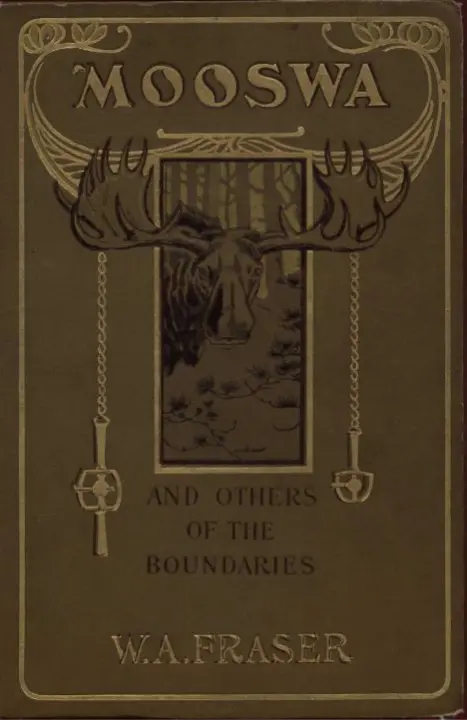
William Alexander Fraser
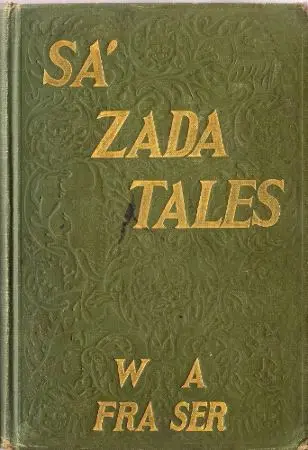
William Alexander Fraser
William Alexander Fraser
BEHIND THE BOOK
This eBook is for the use of anyone anywhere in the United States and most other parts of the world at no cost and with almost no restrictions whatsoever. You may copy it, give it away or re-use it under the terms of the Project Gutenberg License included with this eBook or online at www.gutenberg.org. If you are not located in the United States, you will have to check the laws of the country where you are located before using this eBook. Read the source licence.
The original source file, including credits and licence, is retained by this library. Request an original-format copy at no charge. Please include the book title and Project Gutenberg identifier #9088.
KEEP YOUR CURIOSITY GOING
Cécile Tormay

Moritz Busch
Coulson Kernahan
John L. Ransom

Maurice Baring
Frances Wright