THE CLASSIC COLLECTION✦Bulldog CarneyCLASSIC FREE BOOKS
Bulldog Carney
William Alexander Fraser
THE CLASSIC COLLECTION · 1902
"Thoroughbreds" by William Alexander Fraser is a historical novel likely written in the early 20th century. The story unfolds in the quaint village of Brookfield, highlighting the lives of two key characters, John Porter, an avid horse racing enthusiast known for his integrity, and the Reverend Dolman, his moral adversary who harbors disdain for the sport. The book explores family dynamics, particularly the differing allegiances within the Porter household regarding horse racing, and sets up a narrative that intertwines personal passions with the looming specter of societal judgment. The opening of "Thoroughbreds" introduces readers to a tension-filled community where horse racing has re-emerged as a controversial topic. We meet John Porter, whose love for racing stands in stark contrast to the disapproving views of his wife and Reverend Dolman. This spectacle leads to a successful church concert where burnished emotions are stirred by a poem recited by their daughter, Allison, about a noteworthy horse, Crusader. The narrative soon transitions into a tense race at Morris Park, amplifying the stakes for Porter as he delves deeper into the world of competitive racing, intertwined with suspicion and the potential for betrayal. As the story escalates, themes of honesty, family loyalty, and moral conflict begin to take shape in a world where the noble sport of horse racing is shadowed by corruption and greed.
Introduction adapted from the source catalogue; source summaries may be automatically generated.
Free to read · English · 108,097 words · No account needed
MAKE TIME FOR A GOOD BOOK
On by default. Untick to stop anonymous reading totals. Each page counts after 10 seconds in view. How this works.
Anonymous counting is on unless you have switched it off.
“Quite a feeler, Mister Jockey,” thought Langdon to himself; “it's news you want, eh?” Then he answered aloud, with a diplomacy born of many years of turf tuition: “Fairish sort of time; it might have been better, perhaps--a shade under two-twelve. I thought they might have bettered that a couple of seconds. But they'll come on--they'll come on, both of them. If anybody asks you, Westley, The Dutchman was beaten off, see? I don't like to discourage the clever owners that has good 'uns in the Derby” Then he added as a sort of after thought, and with wondrous carelessness:
“It doesn't matter about the Black, you know; he's only a sellin' plater, so it doesn't matter. But all the same, Westley, when we find a soft spot for him, an over-night sellin' purse or somethin, you'll have the leg up, with a bet down for you at a long price, see?”
“I understand, sir.”
By the time Langdon had slipped the saddle from Diablo's back the boy had thrown a hooded blanket over him, and he was led away. “Send them home, Westley. Now, Mr. Crane, we'll drive back to the house an' have a bit of lunch.”
As they drove along Crane brought up the subject of the trial.
“The colt must be extra good, Langdon, or the Black is--well, as he was represented to be, not much account.”
“I guess Diablo's about good enough to win a big handicap, if he happened to be in one at a light weight.”
“He didn't win to-day.”
“He came pretty near it.”
“But where would he have been carrying his proper weight?”
“About where he was, I guess.”
“You said as a four-year-old he should have had up a hundred and twenty-six, and he carried a hundred and twelve; and, besides, had the best boy by seven pounds on his back.”
“Just pass me that saddle, Mr. Crane,” said Langdon, by way of answer. “No; not that--the one I took off Diablo.”
Crane reached down his hand, but the saddle didn't come quite as freely as it should have. “What's it caught in?” he asked, fretfully.
“In itself, I reckon--lift it.” “Gad! it's heavy. Did Diablo carry that?
What's in it?”
“Lead-built into it; it's my old fiddle, you know. You're the first man that's had his hand on that saddle for some time, I can tell you.”
“Then Diablo did carry his full weight,” commented Crane, a light
breaking in upon him.
“Just about, and carried it like a stake horse, too.”
“And you--”
Your reading position is saved on this browser. Take it to another device with a library code. Reading pages adapt to text, rather than matching a printed edition.
William Alexander Fraser
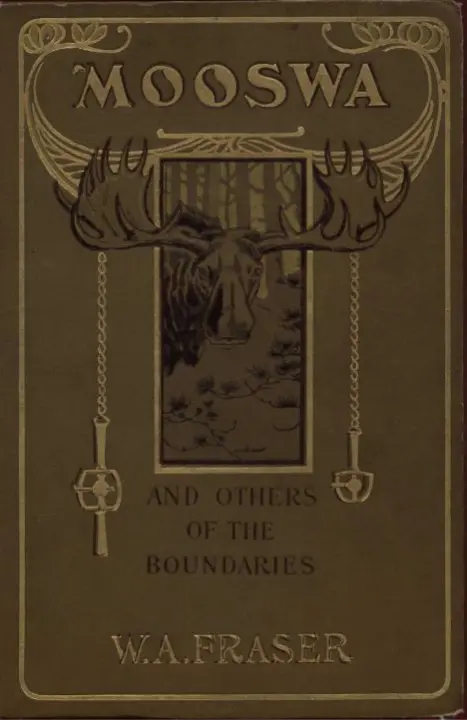
William Alexander Fraser
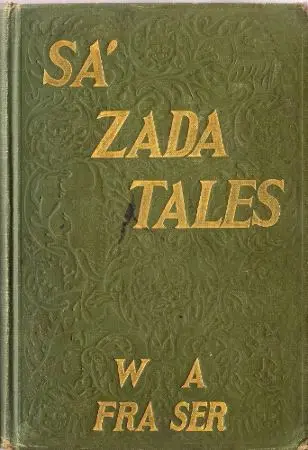
William Alexander Fraser
William Alexander Fraser
BEHIND THE BOOK
This eBook is for the use of anyone anywhere in the United States and most other parts of the world at no cost and with almost no restrictions whatsoever. You may copy it, give it away or re-use it under the terms of the Project Gutenberg License included with this eBook or online at www.gutenberg.org. If you are not located in the United States, you will have to check the laws of the country where you are located before using this eBook. Read the source licence.
The original source file, including credits and licence, is retained by this library. Request an original-format copy at no charge. Please include the book title and Project Gutenberg identifier #9088.
KEEP YOUR CURIOSITY GOING
Cécile Tormay

Moritz Busch
Coulson Kernahan
John L. Ransom

Maurice Baring
Frances Wright