THE CLASSIC COLLECTION✦ByronCLASSIC FREE BOOKS
Byron
John Nichol
THE CLASSIC COLLECTION · 1894
"Thomas Carlyle" by John Nichol is a biographical account written in the early 20th century. The book explores the life and influence of the notable 19th-century Scottish historian and essayist Thomas Carlyle, delving into his intellectual legacy and the cultural context of his work. The narrative likely discusses his significant contributions to literature and philosophy, as well as his complex personality and relationships—particularly focusing on his connections with other prominent figures of the time. The opening of the work establishes a comprehensive framework for understanding Carlyle's significance in British literature. It begins with a contextual overview, highlighting Carlyle's contemporaries and how each represented different currents of thought during their respective eras. Nichol describes Carlyle's character as a reflection of the Scottish spirit—intrepid, independent, and fiercely critical of his society. The introduction also touches on Carlyle's tumultuous personal life, including his relationships and struggles, suggesting a nuanced portrait of the man behind the influential writings, setting the stage for a detailed exploration of his thoughts and contributions in the chapters to follow.
Introduction adapted from the source catalogue; source summaries may be automatically generated.
Free to read · English · 81,539 words · No account needed
MAKE TIME FOR A GOOD BOOK
On by default. Untick to stop anonymous reading totals. Each page counts after 10 seconds in view. How this works.
Anonymous counting is on unless you have switched it off.
There remains of this period the record of a triumph and of a tragedy. After seven years more of rarely intermitted toil, broken only by a few visits, trips to the sea-shore, etc., and the distress of the terrible accident to his wife,--her fall on a curbstone and dislocation of a limb,--which has been often sufficiently detailed, he had finished his last great work. The third volume of Friedrich was published in May 1862, the fourth appeared in February 1864, the fifth and sixth in March 1865. Carlyle had at last slain his Minotaur, and stood before the world as a victorious Theseus, everywhere courted and acclaimed, his hard-earned rest only disturbed by a shower of honours. His position as the foremost prose writer of his day was as firmly established in Germany, where his book was at once translated and read by all readers of history, as in England. Scotland, now fully awake to her reflected fame, made haste to make amends. Even the leaders of the sects, bond and "free," who had denounced him, were now eager to proclaim that he had been intrinsically all along, though sometimes in disguise, a champion of their faith. No men knew better how to patronise, or even seem to lead, what they had failed to quell. The Universities made haste with their burnt-offerings. In 1856 a body of Edinburgh students had prematurely repeated the attempt of their forerunners in Glasgow to confer on him their Lord Rectorship, and failed. In 1865 he was elected, in opposition again to Mr. Disraeli, to succeed Mr. Gladstone, the genius of elections being in a jesting mood. He was prevailed on to accept the honour, and, later, consented to deliver in the spring of 1866 the customary Inaugural Address. Mrs. Carlyle's anxiety on this occasion as to his success and his health is a tribute to her constant and intense fidelity. He went north to his Installation, under the kind care of encouraging friends, imprimis of Professor Tyndall, one of his truest; they stopped on the road at Fryston, with Lord Houghton, and there met Professor Huxley, who accompanied them to Edinburgh. Carlyle, having resolved to speak and not merely to read what he had to say, was oppressed with nervousness; and of the event itself he writes: "My speech was delivered in a mood of defiant despair, and under the pressure of nightmare. Some feeling that I was not speaking lies alone sustained me. The applause, etc., I took for empty noise, which it really was not altogether." The address, nominally on the "Reading of Books," really a rapid autobiography of his own intellectual career, with references to history, literature, religion, and the conduct of life, was, as Tyndall telegraphed to Mrs. Carlyle,--save for some difficulty the speaker had in making himself audible--"a perfect triumph." His reception by one of the most enthusiastic audiences ever similarly assembled marked the climax of a steadily-increasing fame. It may be compared to the late welcome given to Wordsworth in the Oxford Theatre. After four days spent with Erskine and his own brother James in Edinburgh, he went for a week's quiet to Scotsbrig, and was kept there, lingering longer than he had intended, by a sprained ankle, "blessed in the country stillness, the purity of sky and earth, and the absence of all babble." On April 20th he wrote his last letter to his wife, a letter which she never read. On the evening of Saturday the 21st, when staying on the way south at his sister's house at Dumfries, he received a telegram informing him that the close companionship of forty years--companionship of struggle and victory, of sad and sweet so strangely blent--was for ever at an end. Mrs. Carlyle had been found dead in her carriage when driving round Hyde Park on the afternoon of that day, her death (from heart-disease) being accelerated by an accident to a favourite little dog. Carlyle felt as "one who hath been stunned," hardly able to realise his loss. "They took me out next day ... to wander in the green sunny Sabbath fields, and ever and anon there rose from my sick heart the ejaculation, 'My poor little woman,' but no full gust of tears came to my relief, nor has yet come." On the following Monday he set off with his brother for London. "Never for a thousand years shall I forget that arrival hero of ours, my first unwelcomed by her. She lay in her coffin, lovely in death. Pale death Hid things not mine or ours had possession of our poor darling." On Wednesday they returned, and on Thursday the 26th she was buried in the nave of the old Abbey Kirk at Haddington, in the grave of her father The now desolate old man, who had walked with her over many a stony road, paid the first of his many regretful tributes in the epitaph inscribed over her tomb: in which follows, after the name and date of birth:--
Your reading position is saved on this browser. Take it to another device with a library code. Reading pages adapt to text, rather than matching a printed edition.
BEHIND THE BOOK
This eBook is for the use of anyone anywhere in the United States and most other parts of the world at no cost and with almost no restrictions whatsoever. You may copy it, give it away or re-use it under the terms of the Project Gutenberg License included with this eBook or online at www.gutenberg.org. If you are not located in the United States, you will have to check the laws of the country where you are located before using this eBook. Read the source licence.
The original source file, including credits and licence, is retained by this library. Request an original-format copy at no charge. Please include the book title and Project Gutenberg identifier #9784.
KEEP YOUR CURIOSITY GOING
John L. Ransom
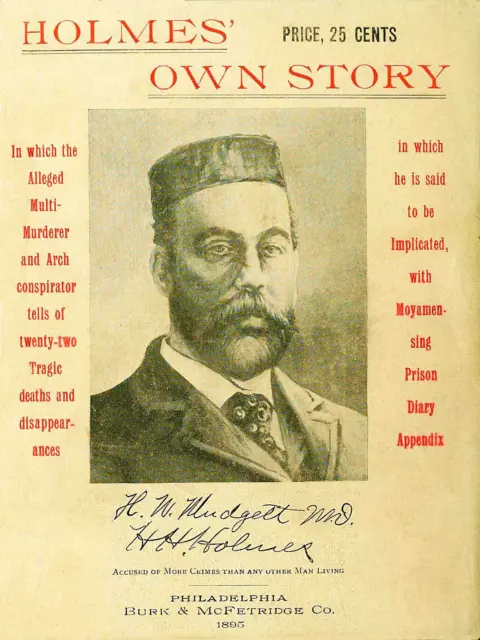
Herman W. Mudgett
Harriet Monroe
Daniel Dulany Addison
Charles Lanman
Harold Rosher