THE CLASSIC COLLECTION✦ByronCLASSIC FREE BOOKS
Byron
John Nichol
THE CLASSIC COLLECTION · 1894
"Thomas Carlyle" by John Nichol is a biographical account written in the early 20th century. The book explores the life and influence of the notable 19th-century Scottish historian and essayist Thomas Carlyle, delving into his intellectual legacy and the cultural context of his work. The narrative likely discusses his significant contributions to literature and philosophy, as well as his complex personality and relationships—particularly focusing on his connections with other prominent figures of the time. The opening of the work establishes a comprehensive framework for understanding Carlyle's significance in British literature. It begins with a contextual overview, highlighting Carlyle's contemporaries and how each represented different currents of thought during their respective eras. Nichol describes Carlyle's character as a reflection of the Scottish spirit—intrepid, independent, and fiercely critical of his society. The introduction also touches on Carlyle's tumultuous personal life, including his relationships and struggles, suggesting a nuanced portrait of the man behind the influential writings, setting the stage for a detailed exploration of his thoughts and contributions in the chapters to follow.
Introduction adapted from the source catalogue; source summaries may be automatically generated.
Free to read · English · 81,539 words · No account needed
MAKE TIME FOR A GOOD BOOK
On by default. Untick to stop anonymous reading totals. Each page counts after 10 seconds in view. How this works.
Anonymous counting is on unless you have switched it off.
Herrnhut, the primitive city of the Moravian brethren: a place not bigger than Annan, but beautiful, pure, and quiet beyond any town on the earth, I daresay; and, indeed, more like a saintly dream of ideal Calvinism made real than a town of stone and lime.
Onward by "dreary moory Frankfurt" on the Oder, whence they reconnoitred "the field of Kunersdorf, a scraggy village where Fritz received his worst defeat," they reached the Prussian capital on the last evening of the month. From the British Hotel, Unter den Linden, we have, October 1st:--
I am dead stupid; my heart nearly choked out of me, and my head churned to pieces.... Berlin is loud almost as London, but in no other way great ... about the size of Liverpool, and more like Glasgow.
They spent a week there (sight-seeing being made easier by an introduction from Lady Ashburton to the Ambassador), discovering at length an excellent portrait of Fritz, meeting Tieck, Cornelius, Rauch, Preuss, etc., and then got quickly back to London by way of Hanover, Cologne, and Ostend. Carlyle's travels are always interesting, and would be more so without the tiresome, because ever the same, complaints. Six years later (1858) he made his second expedition to Germany, in the company of two friends, a Mr. Foxton--who is made a butt--and the faithful Neuberg. Of this journey, undertaken with a more exclusively business purpose, and accomplished with greater dispatch, there are fewer notes, the substance of which may be here anticipated. He sailed (August 21st) from Leith to Hamburg, admiring the lower Elbe, and then went out of his way to accept a pressing invitation from the Baron Usedom and his wife to the Isle of Ruegen, sometimes called the German Isle of Wight. He went there by Stralsund, liked his hosts and their pleasant place, where for cocks crowing he had doves cooing; but in Putbus, the Richmond of the island, he had to encounter brood sows as well as cochin-chinas. From Ruegen he went quickly south by Stettin to Berlin, then to Cuestrin to survey the field of Zorndorf, with what memorable result readers of Friedrich know. His next halt was at Liegnitz, headquarters for exploring the grounds of "Leuthen, the grandest of all the battles," and Molwitz--first of Fritz's fights--of which we hear so much in the Reminiscences. His course lay on to Breslau, "a queer old city as ever you heard of, high as Edinburgh or more so," and, by Landshut, through the picturesque villages of the Riesen-Gebirge into Bohemia. There he first put up at Pardubitz in a vile, big inn, for bed a "trough eighteen inches too short, a mattress forced into it which cocked up at both ends"--such as most travellers in remoter Germany at that period have experienced. Carlyle was unfavourably impressed by the Bohemians; and "not one in a hundred of them could understand a word of German. They are liars, thieves, slatterns, a kind of miserable, subter-Irish people,--Irish with the addition of ill-nature." He and his friends visited the fields of Chotusitz and Kolin, where they found the "Golden Sun," from which "the last of the Kings" had surveyed the ground, "sunk to be the dirtiest house probably in Europe." Thence he made for Prague, whose picturesque grandeur he could not help extolling. "Here," he writes, enclosing the flower to his wife, "is an authentic wild pink plucked from the battle-field. Give it to some young lady who practises 'the Battle of Prague' on her piano to your satisfaction." On September 15th he dates from Dresden, whence he spent a laborious day over Torgau. Thereafter they sped on, with the usual tribulations, by Hochkirk, Leipzig, Weissenfels, and Rossbach. Hurrying homeward, they were obliged to decline another invitation from the Duchess at Weimar; and, making for Guntershausen, performed the fatiguing journey from there to Aix-la-Chapelle in one day, i.e. travelling often in slow trains from 4 A.M. to 7 P.M., a foolish feat even for the eupeptic. Carlyle visited the cathedral, but has left a very poor account of the impression produced on him by the simple slab sufficiently inscribed, "Carolo Magno." "Next morning stand upon the lid of Charlemagne, abominable monks roaring out their idolatrous grand music within sight." By Ostend and Dover he reached home on the 22nd. A Yankee scamper trip, one might say, but for the result testifying to the enormous energy of the traveller. "He speaks lightly," says Mr. Froude, "of having seen Kolin, Torgau, etc. etc. No one would guess from reading these short notices that he had mastered the details of every field he visited; not a turn of the ground, not a brook, not a wood ... had escaped him.... There are no mistakes. Military students in Germany are set to learn Frederick's battles in Carlyle's account of them."
Your reading position is saved on this browser. Take it to another device with a library code. Reading pages adapt to text, rather than matching a printed edition.
BEHIND THE BOOK
This eBook is for the use of anyone anywhere in the United States and most other parts of the world at no cost and with almost no restrictions whatsoever. You may copy it, give it away or re-use it under the terms of the Project Gutenberg License included with this eBook or online at www.gutenberg.org. If you are not located in the United States, you will have to check the laws of the country where you are located before using this eBook. Read the source licence.
The original source file, including credits and licence, is retained by this library. Request an original-format copy at no charge. Please include the book title and Project Gutenberg identifier #9784.
KEEP YOUR CURIOSITY GOING
John L. Ransom
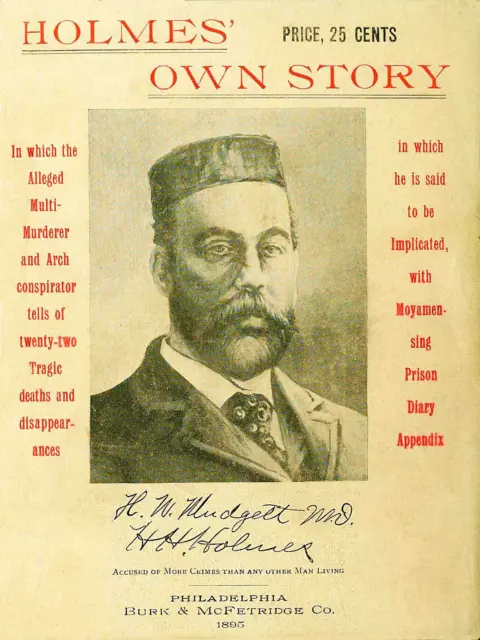
Herman W. Mudgett

Harriet Monroe
Daniel Dulany Addison
Charles Lanman
Harold Rosher