THE CLASSIC COLLECTION✦ByronCLASSIC FREE BOOKS
Byron
John Nichol
THE CLASSIC COLLECTION · 1894
"Thomas Carlyle" by John Nichol is a biographical account written in the early 20th century. The book explores the life and influence of the notable 19th-century Scottish historian and essayist Thomas Carlyle, delving into his intellectual legacy and the cultural context of his work. The narrative likely discusses his significant contributions to literature and philosophy, as well as his complex personality and relationships—particularly focusing on his connections with other prominent figures of the time. The opening of the work establishes a comprehensive framework for understanding Carlyle's significance in British literature. It begins with a contextual overview, highlighting Carlyle's contemporaries and how each represented different currents of thought during their respective eras. Nichol describes Carlyle's character as a reflection of the Scottish spirit—intrepid, independent, and fiercely critical of his society. The introduction also touches on Carlyle's tumultuous personal life, including his relationships and struggles, suggesting a nuanced portrait of the man behind the influential writings, setting the stage for a detailed exploration of his thoughts and contributions in the chapters to follow.
Introduction adapted from the source catalogue; source summaries may be automatically generated.
Free to read · English · 81,539 words · No account needed
MAKE TIME FOR A GOOD BOOK
On by default. Untick to stop anonymous reading totals. Each page counts after 10 seconds in view. How this works.
Anonymous counting is on unless you have switched it off.
The crisis of bereavement, which promised to bind the husband and wife more closely together, brought to an end a dispute in which for once Mrs. Carlyle had her way. During the eight years over which we have been glancing, Carlyle had been perpetually grumbling at his Chelsea life: the restless spirit, which never found peace on this side of the grave, was constantly goading him with an impulse of flight and change, from land to sea, from shore to hills; anywhere or everywhere, at the time, seemed better than where he was. America and the Teufelsdroeckh wanderings abandoned, he reverted to the idea of returning to his own haunts. A letter to Emerson in 1839 best expresses his prevalent feeling:--
Carlyle's devotion to his own kin, blood of his blood and bone of his bone, did not wait for any death to make itself declared. His veneration for his mother was reciprocated by a confidence and pride in him unruffled from cradle to grave, despite their widening theoretic differences; for with less distinct acknowledgment she seems to have practically shared his belief, "it matters little what a man holds in comparison with how he holds it." But on his wife's side the family bond was less absolute, and the fact adds a tragic interest to her first great bereavement after the settlement in London. There were many callers--increasing in number and eminence as time went on--at Cheyne Row; but naturally few guests. Among these, Mrs. Carlyle's mother paid, in 1838, her first and last visit, unhappily attended by some unpleasant friction. Grace Welsh (through whom her daughter derived the gipsy vein) had been in early years a beauty and a woman of fashion, endowed with so much natural ability that Carlyle, not altogether predisposed in her favour, confessed she had just missed being a genius; but she was accustomed to have her way, and old Walter of Pefillan confessed to having seen her in fifteen different humours in one evening. Welcomed on her arrival, misunderstandings soon arose. Carlyle himself had to interpose with conciliatory advice to his wife to bear with her mother's humours. One household incident, though often quoted, is too characteristic to be omitted. On occasion of an evening party, Mrs. Welsh, whose ideas of hospitality, if not display, were perhaps larger than those suited for her still struggling hosts, had lighted a show of candles for the entertainment, whereupon the mistress of the house, with an air of authority, carried away two of them, an act which her mother resented with tears. The penitent daughter, in a mood like that which prompted Johnson to stand in the Uttoxeter market-place, left in her will that the candles were to be preserved and lit about her coffin, round which, nearly thirty years later, they were found burning. Carlyle has recorded their last sight of his mother-in-law in a few of his many graphic touches. It was at Dumfries in 1841, where she had brought Jane down from Templand to meet and accompany him back to the south. They parted at the door of the little inn, with deep suppressed emotion, perhaps overcharged by some presentiment; Mrs. Welsh looking sad but bright, and their last glimpse of her was the feather in her bonnet waving down the way to Lochmaben gate. Towards the close of February 1842 news came that she had had an apoplectic stroke, and Mrs. Carlyle hurried north, stopping to break the journey at her uncle's house in Liverpool; when there she was so prostrated by the sudden announcement of her mother's death that she was prohibited from going further, and Carlyle came down from London in her stead. On reaching Templand he found that the funeral had already taken place. He remained six weeks, acting as executor in winding up the estate, which now, by the previous will, devolved on his wife. To her during the interval he wrote a series of pathetic letters. Reading these,--which, with others from Haddington in the following years make an anthology of tenderness and ruth, reading them alongside of his angry invectives, with his wife's own accounts of the bilious earthquakes and peevish angers over petty cares; or worse, with ebullitions of jealousy assuming the mask of contempt, we again revert to the biographer who has said almost all that ought to be said of Carlyle, and more: "It seemed as if his soul was divided, like the Dioscuri, as if one part of it was in heaven, and the other in the place opposite heaven. But the misery had its origin in the same sensitiveness of nature which was so tremulously alive to soft and delicate emotion. Men of genius ... are like the wind-harp which answers to the breath that touches it, now low and sweet, now rising into wild swell or angry scream, as the strings are swept by some passing gust." This applies completely to men like Burns, Byron, Heine, and Carlyle, less to the Miltons, Shakespeares, and Goethes of the world.
Your reading position is saved on this browser. Take it to another device with a library code. Reading pages adapt to text, rather than matching a printed edition.
BEHIND THE BOOK
This eBook is for the use of anyone anywhere in the United States and most other parts of the world at no cost and with almost no restrictions whatsoever. You may copy it, give it away or re-use it under the terms of the Project Gutenberg License included with this eBook or online at www.gutenberg.org. If you are not located in the United States, you will have to check the laws of the country where you are located before using this eBook. Read the source licence.
The original source file, including credits and licence, is retained by this library. Request an original-format copy at no charge. Please include the book title and Project Gutenberg identifier #9784.
KEEP YOUR CURIOSITY GOING
John L. Ransom
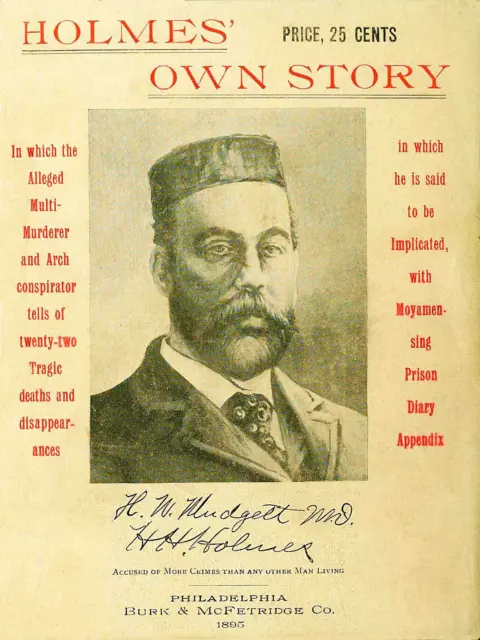
Herman W. Mudgett
Harriet Monroe
Daniel Dulany Addison
Charles Lanman
Harold Rosher