THE CLASSIC COLLECTION✦ByronCLASSIC FREE BOOKS
Byron
John Nichol
THE CLASSIC COLLECTION · 1894
"Thomas Carlyle" by John Nichol is a biographical account written in the early 20th century. The book explores the life and influence of the notable 19th-century Scottish historian and essayist Thomas Carlyle, delving into his intellectual legacy and the cultural context of his work. The narrative likely discusses his significant contributions to literature and philosophy, as well as his complex personality and relationships—particularly focusing on his connections with other prominent figures of the time. The opening of the work establishes a comprehensive framework for understanding Carlyle's significance in British literature. It begins with a contextual overview, highlighting Carlyle's contemporaries and how each represented different currents of thought during their respective eras. Nichol describes Carlyle's character as a reflection of the Scottish spirit—intrepid, independent, and fiercely critical of his society. The introduction also touches on Carlyle's tumultuous personal life, including his relationships and struggles, suggesting a nuanced portrait of the man behind the influential writings, setting the stage for a detailed exploration of his thoughts and contributions in the chapters to follow.
Introduction adapted from the source catalogue; source summaries may be automatically generated.
Free to read · English · 81,539 words · No account needed
MAKE TIME FOR A GOOD BOOK
On by default. Untick to stop anonymous reading totals. Each page counts after 10 seconds in view. How this works.
Anonymous counting is on unless you have switched it off.
About this time Carlyle writes, "My friends think I have found the art of living upon nothing," and there must, despite Mill's contribution, have been "bitter thrift" in Cheyne REow during the years 1835-1837. He struggled through the unremunerative interval of waiting for the sale of a great work by help of fees derived from his essay on the Diamond Necklace (which, after being refused by the Foreign Quarterly, appeared in Fraser, 1837), that on Mirabeau in the Westminster, and in the following year, for the same periodical, the article on Sir Walter Scott. To the last work, undertaken against the grain, he refers in one of the renewed wails of the year: "O that literature had never been devised. I am scourged back to it by the whip of necessity." The circumstance may account for some of the manifest defects of one of the least satisfactory of Carlyle's longer' reviews. Frequent references in previous letters show that he never appreciated Scott, to whom he refers as a mere Restaurateur.
Meanwhile the appearance of the French Revolution had brought the name of its author, then in his forty-third year, for the first time prominently before the public. It attracted the attention of Thackeray, who wrote a generous review in the Times, of Southey, Jeffrey, Macaulay, Hallam, and Brougham, who recognised the advent of an equal, if sometimes an adverse power in the world of letters. But, though the book established his reputation, the sale was slow, and for some years the only substantial profits, amounting to about L400, came from America, through the indefatigable activity and good management of Emerson. It is pleasant to note a passage in the interesting volumes of their Correspondence which shows that in this instance the benefited understood his financial relation to the benefactor: "A reflection I cannot but make is that, at bottom, this money was all yours; not a penny of it belonged to me by any law except that of helpful friend-ship.... I could not examine it (the account) without a kind of crime." Others who, at this period, made efforts to assist "the polar Bear" were less fortunate. In several instances good intentions paved the palace of Momus, and in one led a well-meaning man into a notoriously false position. Mr. Basil Montagu being in want of a private secretary offered the post to his former guest, as a temporary makeshift, at a salary of L200, and so brought upon his memory a torrent of contempt. Undeterred by this and similar warnings, the indefatigable philanthropist, Miss Harriet Martineau, who at first conciliated the Carlyles by her affection for "this side of the street," and was afterwards an object of their joint ridicule, conceived the idea of organising a course of lectures to an audience collected by canvass to hoar the strange being from the moors talk for an hour on end about literature, morals, and history. He was then an object of curiosity to those who knew anything about him at all, and lecturing was at that time a lucrative and an honourable employment. The "good Harriet," so called by Cheyne Row in its condescending mood, aided by other kind friends of the Sterling and Mill circles--the former including Frederick Denison Maurice--made so great a success of the enterprise that it was thrice repeated. The first course of six lectures on "German Literature," May 1837, delivered in Willis's Rooms, realised L135; the second of twelve, on the "History of European Literature," at 17 Edward Street, Portman Square, had a net result of L300; the third, in the same rooms, on "Revolutions," brought L200; the fourth, on "Heroes," the same. In closing this course Carlyle appeared for the last time on a public platform until 1866, when he delivered his Inaugural Address as Lord Rector to the students of Edinburgh. The impression he produced on his unusually select audiences was that of a man of genius, but roughly clad. The more superficial auditors had a new sensation, those who came to stare remained to wonder; the more reflective felt that they had learnt something of value. Carlyle had no inconsiderable share of the oratorical power which he latterly so derided; he was able to speak from a few notes; but there were comments more or less severe on his manner and style. J. Grant, in his Portraits of Public Characters, says: "At times he distorts his features as if suddenly seized by some paroxysm of pain ... he makes mouths; he has a harsh accent and graceless gesticulation." Leigh Hunt, in the Examiner, remarks on the lecturer's power of extemporising; but adds that he often touches only the mountain-tops of the subject, and that the impression left was as if some Puritan had come to life again, liberalised by German philosophy. Bunsen, present at one of the lectures, speaks of the striking and rugged thoughts thrown at people's heads; and Margaret Fuller, afterwards Countess Ossoli, referred to his arrogance redeemed by "the grandeur of a Siegfried melting down masses of iron into sunset red." Carlyle's own comments are for the most part slighting. He refers to his lectures as a mixture of prophecy and play-acting, and says that when about to open his course on "Heroes" he felt like a man going to be hanged. To Emerson, April 17th 1839, he writes :--
Your reading position is saved on this browser. Take it to another device with a library code. Reading pages adapt to text, rather than matching a printed edition.
BEHIND THE BOOK
This eBook is for the use of anyone anywhere in the United States and most other parts of the world at no cost and with almost no restrictions whatsoever. You may copy it, give it away or re-use it under the terms of the Project Gutenberg License included with this eBook or online at www.gutenberg.org. If you are not located in the United States, you will have to check the laws of the country where you are located before using this eBook. Read the source licence.
The original source file, including credits and licence, is retained by this library. Request an original-format copy at no charge. Please include the book title and Project Gutenberg identifier #9784.
KEEP YOUR CURIOSITY GOING
John L. Ransom
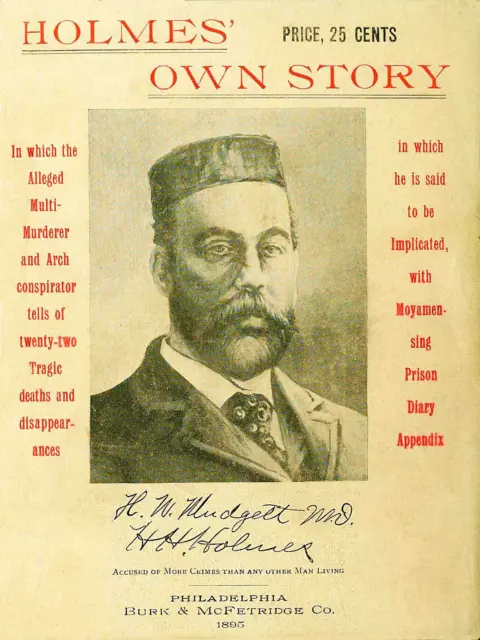
Herman W. Mudgett
Harriet Monroe
Daniel Dulany Addison
Charles Lanman
Harold Rosher