THE CLASSIC COLLECTION✦ByronCLASSIC FREE BOOKS
Byron
John Nichol
THE CLASSIC COLLECTION · 1894
"Thomas Carlyle" by John Nichol is a biographical account written in the early 20th century. The book explores the life and influence of the notable 19th-century Scottish historian and essayist Thomas Carlyle, delving into his intellectual legacy and the cultural context of his work. The narrative likely discusses his significant contributions to literature and philosophy, as well as his complex personality and relationships—particularly focusing on his connections with other prominent figures of the time. The opening of the work establishes a comprehensive framework for understanding Carlyle's significance in British literature. It begins with a contextual overview, highlighting Carlyle's contemporaries and how each represented different currents of thought during their respective eras. Nichol describes Carlyle's character as a reflection of the Scottish spirit—intrepid, independent, and fiercely critical of his society. The introduction also touches on Carlyle's tumultuous personal life, including his relationships and struggles, suggesting a nuanced portrait of the man behind the influential writings, setting the stage for a detailed exploration of his thoughts and contributions in the chapters to follow.
Introduction adapted from the source catalogue; source summaries may be automatically generated.
Free to read · English · 81,539 words · No account needed
MAKE TIME FOR A GOOD BOOK
On by default. Untick to stop anonymous reading totals. Each page counts after 10 seconds in view. How this works.
Anonymous counting is on unless you have switched it off.
Three of the visits of this period are memorable. Two from the Jeffreys (in 1828 and 1830) leave us with the same uncomfortable impression of kindness ungrudgingly bestowed and grudgingly received. Jeffrey had a double interest in the household at Craigenputtock--an almost brotherly regard for the wife, and a belief, restrained by the range of a keen though limited appreciation, in the powers of the husband, to whom he wrote: "Take care of the fair creature who has entrusted herself so entirely to you," and with a half truth, "You have no mission upon earth, whatever you may fancy, half so important as to be innocently happy." And again: "Bring your blooming Eve out of your blasted Paradise, and seek shelter in the lower world." But Carlyle held to the "banner with a strange device," and was either deaf or indignant. The visits passed, with satirical references from both host and hostess; for Mrs. Carlyle, who could herself abundantly scoff and scold, would allow the liberty to no one else. Jeffrey meanwhile was never weary of well-doing. Previous to his promotion as Lord Advocate and consequent transference to London, he tried to negotiate for Carlyle's appointment as his successor in the editorship of the Review, but failed to make him accept the necessary conditions. The paper entitled Signs of the Times was the last production that he had to revise for his eccentric friend. Those following on Taylor's German Literature and the Characteristics were brought out in 1831 under the auspices of Macvey Napier. The other visit was from the most illustrious of Carlyle's English-speaking friends, in many respects a fellow-worker, yet "a spirit of another sort," and destined, though a transcendental mystic, to be the most practical of his benefactors. Twenty-four hours of Ralph Waldo Emerson (often referred to in the course of a long and intimate correspondence) are spoken of by Mrs. Carlyle as a visit from the clouds, brightening the prevailing gray. He came to the remote inland home with "the pure intellectual gleam" of which Hawthorne speaks, and "the quiet night of clear fine talk" remained one of the memories which led Carlyle afterwards to say, "Perhaps our happiest days were spent at the Craig." Goethe's letters, especially that in which he acknowledges a lock of Mrs. Carlyle's hair, "eine unvergleichliche schwarze Haar locke," were also among the gleams of 1829. The great German died three years later, after receiving the birthday tribute, in his 82nd year, from English friends; and it is pleasant to remember that in this instance the disciple was to the end loyal to his master. To this period belong many other correspondences. "I am scribble scribbling," he says in a letter of 1832, and mere scribbling may fill many pages with few headaches; but Carlyle wrestled as he wrote, and not a page of those marvellous Miscellanies but is red with his life's blood. Under all his reviewing, he was set on a work whose fortunes were to be the strangest, whose result was, in some respects, the widest of his efforts. The plan of Sartor Resartus is far from original. Swift's Tale of a Tub distinctly anticipates the Clothes Philosophy; there are besides manifest obligations to Reinecke Fuchs, Jean Paul Richter, and other German authors: but in our days originality is only possible in the handling; Carlyle has made an imaginary German professor the mere mouthpiece of his own higher aspirations and those of the Scotland of his day, and it remains the most popular as surely as his Friedrich is the greatest of his works. The author was abundantly conscious of the value of the book, and super-abundantly angry at the unconsciousness of the literary patrons of the time. In 1831 he resolved if possible to go up to London to push the prospects of this first-born male child. The res angusta stood in the way. Jeffrey, after asking his friend "what situation he could get him that he would detest the least," pressed on him "in the coolest, lightest manner the use of his purse." This Carlyle, to the extent of L50 as a loan (carefully returned), was induced ultimately to accept. It has been said that "proud men never wholly forgive those to whom they feel themselves obliged," but their resenting benefits is the worst feature of their pride. Carlyle made his second visit to London to seek types for Sartor, in vain. Always preaching reticence with the sound of artillery, he vents in many pages the rage of his chagrin at the "Arimaspian" publishers, who would not print his book, and the public which, "dosed with froth," would not buy it. The following is little softened by the chiaroscuro of five-and-thirty years:--
Your reading position is saved on this browser. Take it to another device with a library code. Reading pages adapt to text, rather than matching a printed edition.
BEHIND THE BOOK
This eBook is for the use of anyone anywhere in the United States and most other parts of the world at no cost and with almost no restrictions whatsoever. You may copy it, give it away or re-use it under the terms of the Project Gutenberg License included with this eBook or online at www.gutenberg.org. If you are not located in the United States, you will have to check the laws of the country where you are located before using this eBook. Read the source licence.
The original source file, including credits and licence, is retained by this library. Request an original-format copy at no charge. Please include the book title and Project Gutenberg identifier #9784.
KEEP YOUR CURIOSITY GOING
John L. Ransom
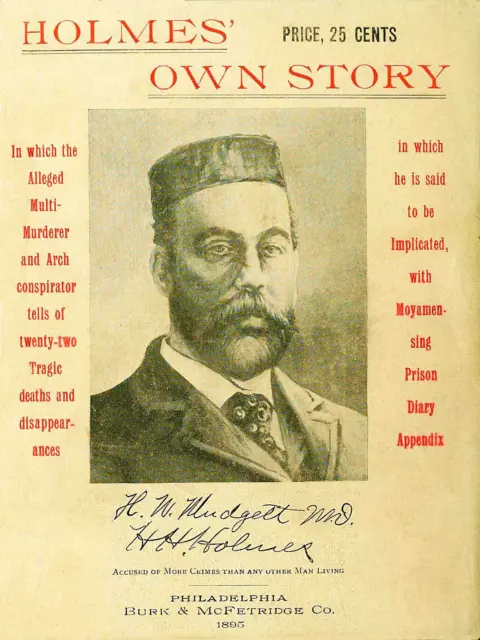
Herman W. Mudgett
Harriet Monroe
Daniel Dulany Addison
Charles Lanman
Harold Rosher