THE CLASSIC COLLECTION✦ByronCLASSIC FREE BOOKS
Byron
John Nichol
THE CLASSIC COLLECTION · 1894
"Thomas Carlyle" by John Nichol is a biographical account written in the early 20th century. The book explores the life and influence of the notable 19th-century Scottish historian and essayist Thomas Carlyle, delving into his intellectual legacy and the cultural context of his work. The narrative likely discusses his significant contributions to literature and philosophy, as well as his complex personality and relationships—particularly focusing on his connections with other prominent figures of the time. The opening of the work establishes a comprehensive framework for understanding Carlyle's significance in British literature. It begins with a contextual overview, highlighting Carlyle's contemporaries and how each represented different currents of thought during their respective eras. Nichol describes Carlyle's character as a reflection of the Scottish spirit—intrepid, independent, and fiercely critical of his society. The introduction also touches on Carlyle's tumultuous personal life, including his relationships and struggles, suggesting a nuanced portrait of the man behind the influential writings, setting the stage for a detailed exploration of his thoughts and contributions in the chapters to follow.
Introduction adapted from the source catalogue; source summaries may be automatically generated.
Free to read · English · 81,539 words · No account needed
MAKE TIME FOR A GOOD BOOK
On by default. Untick to stop anonymous reading totals. Each page counts after 10 seconds in view. How this works.
Anonymous counting is on unless you have switched it off.
Travellers in the Hartz, ascending the Brocken, are in certain atmospheres startled by the apparition of a shadowy figure,--a giant image of themselves, thrown on the horizon by the dawn. Similar is the relation of Carlyle to the common types of his countrymen. Burns, despite his perfervid patriotism, was in many ways "a starry stranger." Carlyle was Scotch to the core and to the close, in every respect a macrocosm of the higher peasant class of the Lowlanders. Saturated to the last with the spirit of a dismissed creed, he fretted in bonds from which he could never get wholly free. Intrepid, independent, steadfast, frugal, prudent, dauntless, he trampled on the pride of kings with the pride of Lucifer. He was clannish to excess, painfully jealous of proximate rivals, self-centred if not self-seeking, fired by zeal and inflamed by almost mean emulations, resenting benefits as debts, ungenerous--with one exception, that of Goethe,--to his intellectual creditors; and, with reference to men and manners around him at variance with himself, violently intolerant. He bore a strange relation to the great poet, in many ways his predecessor in influence, whom with persistent inconsistency he alternately eulogised and disparaged, the half Scot Lord Byron. One had by nature many affinities to the Latin races, the other was purely Teutonic: but the power of both was Titanic rather than Olympian; both were forces of revolution; both protested, in widely different fashion, against the tendency of the age to submerge Individualism; both were to a large extent egoists: the one whining, the other roaring, against the "Philistine" restraints of ordinary society. Both had hot hearts, big brains, and an exhaustless store of winged and fiery words; both were wrapt in a measureless discontent, and made constant appeal against what they deemed the shallows of Optimism; Carlylism is the prose rather than "the male of Byronism." The contrasts are no less obvious: the author of Sartor Resartus, however vaguely, defended the System of the Universe; the author of Cain, with an audacity that in its essence went beyond that of Shelley, arraigned it. In both we find vehemence and substantial honesty; but, in the one, there is a dominant faith, tempered by pride, in the "caste of Vere de Vere," in Freedom for itself--a faith marred by shifting purposes, the garrulous incontinence of vanity, and a broken life; in the other unwavering belief in Law. The record of their fame is diverse. Byron leapt into the citadel, awoke and found himself the greatest inheritor of an ancient name. Carlyle, a peasant's son, laid slow siege to his eminence, and, only after outliving twice the years of the other, attained it. His career was a struggle, sterner than that of either Johnson or Wordsworth, from obscurity, almost from contempt, to a rarely challenged renown. Fifty years ago few "so poor to do him reverence": at his death, in a sunset storm of praise, the air was full of him, and deafening was the Babel of the reviews; for the progress of every original thinker is accompanied by a stream of commentary that swells as it runs till it ends in a dismal swamp of platitude. Carlyle's first recognition was from America, his last from his own countrymen. His teaching came home to their hearts "late in the gloamin'." In Scotland, where, for good or ill, passions are in extremes, he was long howled down, lampooned, preached at, prayed for: till, after his Edinburgh Inaugural Address, he of a sudden became the object of an equally blind devotion; and was, often by the very men who had tried and condemned him for blasphemy, as senselessly credited with essential orthodoxy. "The stone which the builders rejected became the headstone of the corner," the terror of the pulpit its text. Carlyle's decease was marked by a dirge of rhapsodists whose measureless acclamations stifled the voice of sober criticism. In the realm of contemporary English prose he has left no adequate successor; [Footnote: The nearest being the now foremost prose writers of our time, Mr. Ruskin and Mr. Froude.] the throne that does not pass by primogeniture is vacant, and the bleak northern skies seem colder and grayer since that venerable head was laid to rest by the village churchyard, far from the smoke and din of the great city on whose streets his figure was long familiar and his name was at last so honoured.
Your reading position is saved on this browser. Take it to another device with a library code. Reading pages adapt to text, rather than matching a printed edition.
BEHIND THE BOOK
This eBook is for the use of anyone anywhere in the United States and most other parts of the world at no cost and with almost no restrictions whatsoever. You may copy it, give it away or re-use it under the terms of the Project Gutenberg License included with this eBook or online at www.gutenberg.org. If you are not located in the United States, you will have to check the laws of the country where you are located before using this eBook. Read the source licence.
The original source file, including credits and licence, is retained by this library. Request an original-format copy at no charge. Please include the book title and Project Gutenberg identifier #9784.
KEEP YOUR CURIOSITY GOING
John L. Ransom
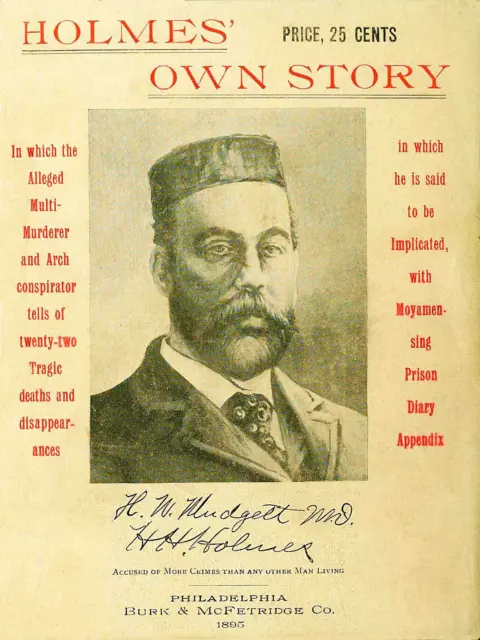
Herman W. Mudgett
Harriet Monroe
Daniel Dulany Addison
Charles Lanman
Harold Rosher