THE CLASSIC COLLECTION✦ByronCLASSIC FREE BOOKS
Byron
John Nichol
THE CLASSIC COLLECTION · 1894
"Thomas Carlyle" by John Nichol is a biographical account written in the early 20th century. The book explores the life and influence of the notable 19th-century Scottish historian and essayist Thomas Carlyle, delving into his intellectual legacy and the cultural context of his work. The narrative likely discusses his significant contributions to literature and philosophy, as well as his complex personality and relationships—particularly focusing on his connections with other prominent figures of the time. The opening of the work establishes a comprehensive framework for understanding Carlyle's significance in British literature. It begins with a contextual overview, highlighting Carlyle's contemporaries and how each represented different currents of thought during their respective eras. Nichol describes Carlyle's character as a reflection of the Scottish spirit—intrepid, independent, and fiercely critical of his society. The introduction also touches on Carlyle's tumultuous personal life, including his relationships and struggles, suggesting a nuanced portrait of the man behind the influential writings, setting the stage for a detailed exploration of his thoughts and contributions in the chapters to follow.
Introduction adapted from the source catalogue; source summaries may be automatically generated.
Free to read · English · 81,539 words · No account needed
MAKE TIME FOR A GOOD BOOK
On by default. Untick to stop anonymous reading totals. Each page counts after 10 seconds in view. How this works.
Anonymous counting is on unless you have switched it off.
I do not know another man in all the world to whom I can speak with clear hope of getting adequate response from him. Truly Concord seems worthy of the name: no dissonance comes to me from that side. Ah me! I feel as if in the wide world there were still but this one voice that responded intelligently to my own: as if the rest were all hearsays ... echoes: as if this alone were true and alive. My blessings on you, good Ralph Waldo.
Emerson answers in 1872, on receipt of the completed edition of his friend's work: "You shall wear the crown at the Pan-Saxon games, with no competitor in sight ... well earned by genius and exhaustive labour, and with nations for your pupils and praisers."
The general verdict on Carlyle's literary career assigns to him the first place among the British authors of his time. No writer of our generation, in England, has combined such abundance with such power. Regarding his rank as a writer there is little or no dispute: it is admitted that the irregularities and eccentricities of his style are bound up with its richness. In estimating the value of his thought we must discriminate between instruction and inspiration. If we ask what new truths he has taught, what problems he has definitely solved, our answer must be, "few." This is a perhaps inevitable result of the manner of his writing, or rather of the nature of his mind. Aside from political parties, he helped to check their exaggerations by his own; seeing deeply into the under-current evils of the time, even when vague in his remedies he was of use in his protest against leaving these evils to adjust themselves--what has been called "the policy of drifting"--or of dealing with them only by catchwords. No one set a more incisive brand on the meanness that often marks the unrestrained competition of great cities; no one was more effective in his insistence that the mere accumulation of wealth may mean the ruin of true prosperity; no one has assailed with such force the mammon-worship and the frivolity of his age. Everything he writes comes home to the individual conscience: his claim to be regarded as a moral exemplar has been diminished, his hold on us as an ethical teacher remains unrelaxed. It has been justly observed that he helped to modify "the thought rather than the opinion of two generations." His message, as that of Emerson, was that "life must be pitched on a higher plane." Goethe said to Eckermann in 1827 that Carlyle was a moral force so great that he could not tell what he might produce. His influence has been, though not continuously progressive, more marked than that of any of his compeers, among whom he was, if not the greatest, certainly the most imposing personality. It had two culminations; shortly after the appearance of The French Revolution, and again towards the close of the seventh decade of the author's life. To the enthusiastic reception of his works in the Universities, Mr. Froude has borne eloquent testimony, and the more reserved Matthew Arnold admits that "the voice of Carlyle, overstrained and misused since, sounded then in Oxford fresh and comparatively sound," though, he adds, "The friends of one's youth cannot always support a return to them." In the striking article in the St. James' Gazette of the date of the great author's death we read: "One who had seen much of the world and knew a large proportion of the remarkable men of the last thirty years declared that Mr. Carlyle was by far the most impressive person he had ever known, the man who conveyed most forcibly to those who approached him [best on resistance principles] that general impression of genius and force of character which it is impossible either to mistake or to define." Thackeray, as well as Ruskin and Froude, acknowledged him as, beyond the range of his own metier, his master, and the American Lowell, penitent for past disparagement, confesses that "all modern Literature has felt his influence in the right direction"; while the Emersonian hermit Thoreau, a man of more intense though more restricted genius than the poet politician, declares--"Carlyle alone with his wide humanity has, since Coleridge, kept to us the promise of England. His wisdom provokes rather than informs. He blows down narrow walls, and struggles, in a lurid light, like the Joethuns, to throw the old woman Time; in his work there is too much of the anvil and the forge, not enough hay-making under the sun. He makes us act rather than think: he does not say, know thyself, which is impossible, but know thy work. He has no pillars of Hercules, no clear goal, but an endless Atlantic horizon. He exaggerates. Yes; but he makes the hour great, the picture bright, the reverence and admiration strong; while mere precise fact is a coil of lead." Our leading journal on the morning after Carlyle's death wrote of him in a tone of well-tempered appreciation: "We have had no such individuality since Johnson. Whether men agreed or not, he was a touchstone to which truth and falsehood were brought to be tried. A preacher of Doric thought, always in his pulpit and audible, he denounced wealth without sympathy, equality without respect, mobs without leaders, and life without aim." To this we may add the testimony of another high authority in English letters, politically at the opposite pole: "Carlyle's influence in kindling enthusiasm for virtues worthy of it, and in stirring a sense of the reality on the one hand and the unreality on the other, of all that men can do and suffer, has not been surpassed by any teacher now living. Whatever later teachers may have done in definitely shaping opinion ... here is the friendly fire-bearer who first conveyed the Promethean spark; here the prophet who first smote the rock." Carlyle, writes one of his oldest friends, "may be likened to a fugleman; he stood up in the front of Life's Battle and showed in word and action his notion of the proper attitude and action of men. He was, in truth, a prophet, and he has left his gospels." To those who contest that these gospels are for the most part negative, we may reply that to be taught what not to do is to be far advanced on the way to do.
Your reading position is saved on this browser. Take it to another device with a library code. Reading pages adapt to text, rather than matching a printed edition.
BEHIND THE BOOK
This eBook is for the use of anyone anywhere in the United States and most other parts of the world at no cost and with almost no restrictions whatsoever. You may copy it, give it away or re-use it under the terms of the Project Gutenberg License included with this eBook or online at www.gutenberg.org. If you are not located in the United States, you will have to check the laws of the country where you are located before using this eBook. Read the source licence.
The original source file, including credits and licence, is retained by this library. Request an original-format copy at no charge. Please include the book title and Project Gutenberg identifier #9784.
KEEP YOUR CURIOSITY GOING
John L. Ransom
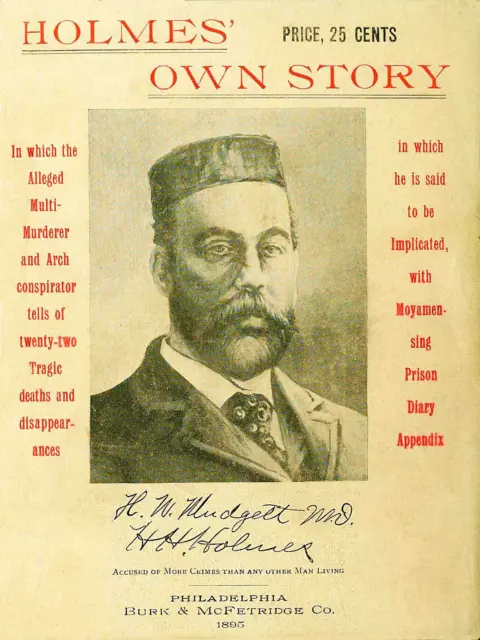
Herman W. Mudgett
Harriet Monroe
Daniel Dulany Addison
Charles Lanman
Harold Rosher