THE CLASSIC COLLECTION✦ByronCLASSIC FREE BOOKS
Byron
John Nichol
THE CLASSIC COLLECTION · 1894
"Thomas Carlyle" by John Nichol is a biographical account written in the early 20th century. The book explores the life and influence of the notable 19th-century Scottish historian and essayist Thomas Carlyle, delving into his intellectual legacy and the cultural context of his work. The narrative likely discusses his significant contributions to literature and philosophy, as well as his complex personality and relationships—particularly focusing on his connections with other prominent figures of the time. The opening of the work establishes a comprehensive framework for understanding Carlyle's significance in British literature. It begins with a contextual overview, highlighting Carlyle's contemporaries and how each represented different currents of thought during their respective eras. Nichol describes Carlyle's character as a reflection of the Scottish spirit—intrepid, independent, and fiercely critical of his society. The introduction also touches on Carlyle's tumultuous personal life, including his relationships and struggles, suggesting a nuanced portrait of the man behind the influential writings, setting the stage for a detailed exploration of his thoughts and contributions in the chapters to follow.
Introduction adapted from the source catalogue; source summaries may be automatically generated.
Free to read · English · 81,539 words · No account needed
MAKE TIME FOR A GOOD BOOK
On by default. Untick to stop anonymous reading totals. Each page counts after 10 seconds in view. How this works.
Anonymous counting is on unless you have switched it off.
Book II. of Sartor is an acknowledged fragment of autobiography, mainly a record of the author's inner life, but with numerous references to his environment. There is not much to identify the foster parents of Teufelsdroeckh, and the dramatic drollery of the child's advent takes the place of ancestry: Entepfuhl is obviously Ecclefechan, where the ducks are paddling in the ditch that has to pass muster for a stream, to-day as a century gone: the severe frugality which (as in the case of Wordsworth and Carlyle himself) survived the need for it, is clearly recalled; also the discipline of the Roman-like domestic law, "In an orderly house, where the litter of children's sports is hateful, your training is rather to bear than to do. I was forbid much, wishes in any measure bold I had to renounce; everywhere a strait bond of obedience inflexibly held me down. It was not a joyful life, yet ... a wholesome one." The following oft-quoted passage is characteristic of his early love of nature and the humorous touches by which he was wont to relieve his fits of sentiment:--
On fine evenings I was wont to carry forth my supper (bread crumb boiled in milk) and eat it out of doors. On the coping of the wall, which I could reach by climbing, my porringer was placed: there many a sunset have I, looking at the distant mountains, consumed, not without relish, my evening meal. Those hues of gold and azure, that hush of world's expectation as day died, were still a Hebrew speech for me: nevertheless I was looking at the fair illumined letters, and had an eye for the gilding.
In all that relates to the writer's own education, the Dichtung of Sartor and the Wahrheit of the Reminiscences are in accord. By Carlyle's own account, an "insignificant portion" of it "depended on schools." Like Burns, he was for some years trained in his own parish, where home influences counted for more than the teaching of not very competent masters. He soon read eagerly and variously. At the age of seven he was, by an Inspector of the old order, reported to be "complete in English." In his tenth year (1805) he was sent to the Grammar School of Annan, the "Hinterschlag Gymnasium," where his "evil days" began. Every oversensitive child finds the life of a public school one long misery. Ordinary boys--those of the Scotch borderland being of the most savage type--are more brutal than ordinary men; they hate singularity as the world at first hates originality, and have none of the restraints which the later semi-civilisation of life imposes. "They obey the impulse of rude Nature which bids the deer herd fall upon any stricken hart, the duck flock put to death any broken-winged brother or sister, and on all hands the strong tyrannise over the weak." Young Carlyle was mocked for his moody ways, laughed at for his love of solitude, and called "Tom the Tearful" because of his habit of crying. To add much to his discomfort, he had made a rash promise to his pious mother, who seems, in contrast to her husband's race, to have adopted non-resistance principles--a promise to abstain from fighting, provocative of many cuffs till it was well broken by a hinterschlag, applied to some blustering bully. Nor had he refuge in the sympathy of his teachers, "hide-bound pedants, who knew Syntax enough, and of the human soul thus much: that it had a faculty called Memory, which could be acted on through the muscular integument by appliance of birch rods." At Annan, however, he acquired a fair knowledge of Latin and French, the rudiments of algebra, the Greek alphabet, began to study history, and had his first glimpse of Edward Irving, the bright prize-taker from Edinburgh, later his Mentor and then life-long friend. On Thomas's return home it was decided to send him to the University, despite the cynical warning of one of the village cronies, "Educate a boy, and he grows up to despise his ignorant parents." "Thou hast not done so," said old James in after years, "God be thanked for it;" and the son pays due tribute to the tolerant patience and substantial generosity of the father: "With a noble faith he launched me forth into a world which he himself had never been permitted to visit." Carlyle walked through Moffat all the way to Edinburgh with a senior student, Tom Smail (who owes to this fact the preservation of his name), with eyes open to every shade on the moors, as is attested in two passages of the Reminiscences. The boys, as is the fashion still, clubbed together in cheap lodgings, and Carlyle attended the curriculum from 1809 to 1814. Comparatively little is known of his college life, which seems to have been for the majority of Scotch students much as it is now, a compulsorily frugal life, with too little variety, relaxation, or society outside Class rooms; and, within them, a constant tug at Science, mental or physical, at the gateway to dissecting souls or bodies. We infer, from hints in later conversations and memorials, that Carlyle lived much with his own fancies, and owed little to any system. He is clearly thinking of his own youth in his account of Dr. Francia: "Jose must have been a loose-made tawny creature, much given to taciturn reflection, probably to crying humours, with fits of vehement ill nature--subject to the terriblest fits of hypochondria." His explosion in Sartor, "It is my painful duty to say that out of England and Spain, ours was the worst of all hitherto discovered Universities," is the first of a long series of libels on things and persons he did not like. The Scotch capital was still a literary centre of some original brilliancy, in the light of the circle of Scott, which followed that of Burns, in the early fame of Cockburn and of Clerk (Lord Eldin), of the Quarterly and Edinburgh Reviews, and of the elder Alison. The Chairs of the University were conspicuously well filled by men of the sedate sort of ability required from Professors, some of them--conspicuously Brown (the more original if less "sound" successor of Dugald Stewart), Playfair, and Leslie--rising to a higher rank. But great Educational Institutions must adapt themselves to the training of average minds by requirements and restrictions against which genius always rebels. Biography more than History repeats itself, and the murmurs of Carlyle are, like those of Milton, Gibbon, Locke, and Wordsworth, the protests or growls of irrepressible individuality kicking against the pricks. He was never in any sense a classic; read Greek with difficulty--Aeschylus and Sophocles mainly in translations--and while appreciating Tacitus disparaged Horace. For Scotch Metaphysics, or any logical system, he never cared, and in his days there was written over the Academic entrances "No Mysticism." He distinguished himself in Mathematics, and soon found, by his own vaunt, the Principia of Newton prostrate at his feet: he was a favourite pupil of Leslie, who escaped the frequent penalty of befriending him, but he took no prizes: the noise in the class room hindered his answers, and he said later to Mr. Froude that thoughts only came to him properly when alone.
Your reading position is saved on this browser. Take it to another device with a library code. Reading pages adapt to text, rather than matching a printed edition.
BEHIND THE BOOK
This eBook is for the use of anyone anywhere in the United States and most other parts of the world at no cost and with almost no restrictions whatsoever. You may copy it, give it away or re-use it under the terms of the Project Gutenberg License included with this eBook or online at www.gutenberg.org. If you are not located in the United States, you will have to check the laws of the country where you are located before using this eBook. Read the source licence.
The original source file, including credits and licence, is retained by this library. Request an original-format copy at no charge. Please include the book title and Project Gutenberg identifier #9784.
KEEP YOUR CURIOSITY GOING
John L. Ransom
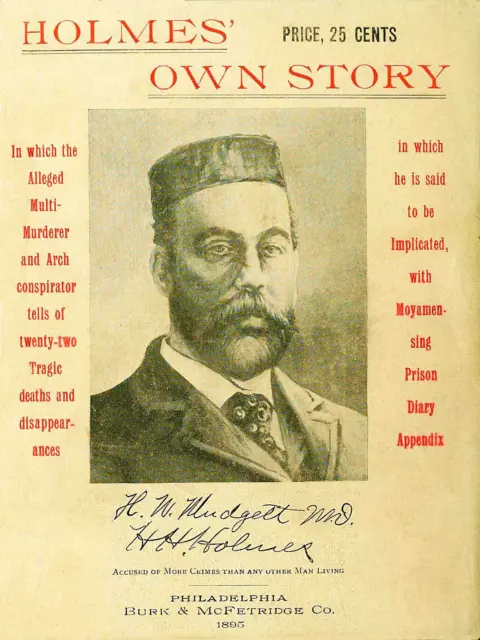
Herman W. Mudgett
Harriet Monroe
Daniel Dulany Addison
Charles Lanman
Harold Rosher