THE CLASSIC COLLECTION✦ByronCLASSIC FREE BOOKS
Byron
John Nichol
THE CLASSIC COLLECTION · 1894
"Thomas Carlyle" by John Nichol is a biographical account written in the early 20th century. The book explores the life and influence of the notable 19th-century Scottish historian and essayist Thomas Carlyle, delving into his intellectual legacy and the cultural context of his work. The narrative likely discusses his significant contributions to literature and philosophy, as well as his complex personality and relationships—particularly focusing on his connections with other prominent figures of the time. The opening of the work establishes a comprehensive framework for understanding Carlyle's significance in British literature. It begins with a contextual overview, highlighting Carlyle's contemporaries and how each represented different currents of thought during their respective eras. Nichol describes Carlyle's character as a reflection of the Scottish spirit—intrepid, independent, and fiercely critical of his society. The introduction also touches on Carlyle's tumultuous personal life, including his relationships and struggles, suggesting a nuanced portrait of the man behind the influential writings, setting the stage for a detailed exploration of his thoughts and contributions in the chapters to follow.
Introduction adapted from the source catalogue; source summaries may be automatically generated.
Free to read · English · 81,539 words · No account needed
MAKE TIME FOR A GOOD BOOK
On by default. Untick to stop anonymous reading totals. Each page counts after 10 seconds in view. How this works.
Anonymous counting is on unless you have switched it off.
If the poor and humble toil that we have food, must not the high and glorious toil for him in return, that he may have guidance, freedom, immortality? These two in all degrees I honour; all else is chaff and dust, which let the wind blow whither it listeth. Doubt, desire, sorrow, remorse, indignation, despair itself--all these like hell-hounds lie beleaguering the souls of the poor day worker as of every man; but he bends himself with free valour against his task, and all these are stifled--all these shrink murmuring far off in their caves.
Against this we have to set innumerable tirades on the crime of worthless
writing, e.g.--
No mortal has a right to wag his tongue, much less to wag his pen, without saying something; he knows not what mischief he does, past computation, scattering words without meaning, to afflict the whole world yet before they cease. For thistle-down flies abroad on all winds and airs of wind.... Ship-loads of fashionable novels, sentimental rhymes, tragedies, farces ... tales by flood and field are swallowed monthly into the bottomless pool; still does the press toil,... and still in torrents rushes on the great army of publications to their final home; and still oblivion, like the grave, cries give! give! How is it that of all these countless multitudes no one can ... produce ought that shall endure longer than "snowflake on the river? Because they are foam, because there is no reality in them. . . ." Not by printing ink alone does man live. Literature, as followed at present, is but a species of brewing or cooking, where the cooks use poison and vend it by telling innumerable lies.
These passages owe their interest to the attestation of their sincerity by the writer's own practice. "Do not," he counsels one of his unknown correspondents, "take up a subject because it is singular and will get you credit, but because you love it;" and he himself acted on the rule. Nothing more impresses the student of Carlyle's works than his thoroughness. He never took a task in hand without the determination to perform it to the utmost of his ability; consequently when he satisfied himself that he was master of his subject he satisfied his readers; but this mastery was only attained, as it is only attainable, by the most rigorous research. He seems to have written down his results with considerable fluency: the molten ore flowed freely forth, but the process of smelting was arduous. The most painful part of literary work is not the actual composition, but the accumulation of details, the wearisome compilation of facts, weighing of previous criticisms, the sifting of the grains of wheat from the bushels of chaff. This part of his task Carlyle performed with an admirable conscientiousness. His numerous letters applying for out-of-the-way books to buy or borrow, for every pamphlet throwing light on his subject, bear testimony to the careful exactitude which rarely permitted him to leave any record unread or any worthy opinion untested about any event of which or any person of whom he undertook to write. From Templand (1833) he applies for seven volumes of Beaumarchais, three of Bassompierre, the Memoirs of Abbe Georgel, and every attainable account of Cagliostro and the Countess de la Motte, to fuse into The Diamond Necklace. To write the essay on Werner and the German Playwrights he swam through seas of trash. He digested the whole of Diderot for one review article. He seems to have read through Jean Paul Richter, a feat to accomplish which Germans require a special dictionary. When engaged on the Civil War he routed up a whole shoal of obscure seventeenth-century papers from Yarmouth, the remnant of a yet larger heap, "read hundredweights of dreary books," and endured "a hundred Museum headaches." In grappling with Friedrich he waded through so many gray historians that we can forgive his sweeping condemnation of their dulness. He visited all the scenes and places of which he meant to speak, from St. Ives to Prague, and explored the battlefields. Work done after this fashion seldom brings a swift return; but if it is utilised and made vivid by literary genius it has a claim to permanence. Bating a few instances where his sense of proportion is defective, or his eccentricity is in excess, Carlyle puts his ample material to artistic use; seldom making ostentation of detail, but skilfully concentrating, so that we read easily and readily recall what he has written. Almost everything he has done has made a mark: his best work in criticism is final, it does not require to be done again. He interests us in the fortunes of his leading characters: first, because he feels with them; secondly, because he knows how to distinguish the essence from the accidents of their lives, what to forget and what to remember, where to begin and where to stop. Hence, not only his set biographies, as of Schiller and of Sterling, but the shorter notices in his Essays, are intrinsically more complete and throw more real light on character than whole volumes of ordinary memoirs.
Your reading position is saved on this browser. Take it to another device with a library code. Reading pages adapt to text, rather than matching a printed edition.
BEHIND THE BOOK
This eBook is for the use of anyone anywhere in the United States and most other parts of the world at no cost and with almost no restrictions whatsoever. You may copy it, give it away or re-use it under the terms of the Project Gutenberg License included with this eBook or online at www.gutenberg.org. If you are not located in the United States, you will have to check the laws of the country where you are located before using this eBook. Read the source licence.
The original source file, including credits and licence, is retained by this library. Request an original-format copy at no charge. Please include the book title and Project Gutenberg identifier #9784.
KEEP YOUR CURIOSITY GOING
John L. Ransom
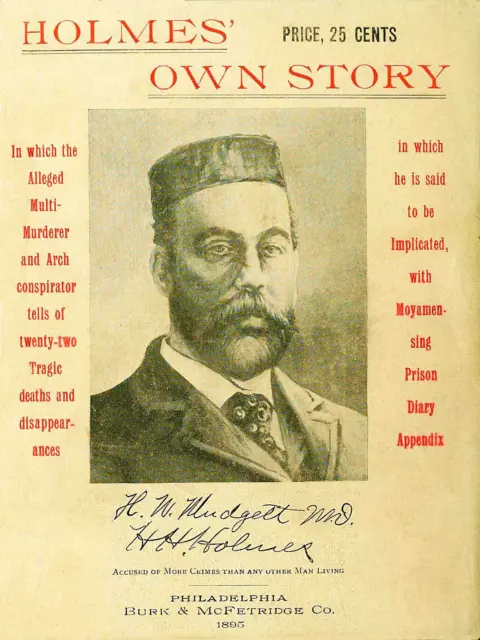
Herman W. Mudgett
Harriet Monroe
Daniel Dulany Addison
Charles Lanman
Harold Rosher