
The Poor Man
Stella Benson
THE CLASSIC COLLECTION · 1917
"This Is the End" by Stella Benson is a novel that was written during the early 20th century, specifically in the time of World War I. The book seems to explore themes of idealism and existential questioning through its central character, Jay, a bus conductor who challenges societal norms and her family's conventional expectations. Her journey embodies a quest for meaning amid chaos, particularly in a world turned upside down by war and personal conflicts. The opening of the novel introduces Jay as a unique character with a penchant for questioning everything around her. We see her political and philosophical outlook manifested in her refusal to accept societal conventions, which ultimately leads her to leave her family behind. As the narrative unfolds, we also meet her family, which includes various relatives characterized by their own quirks and less-than-perfect dynamics, each with differing views on life and morality. The beginning sets a rich atmosphere of introspection that hints at Jay's secret world, her desire for freedom, and the exploration of deep existential themes against the backdrop of an uncertain and changing society. The conflicts introduced promise a layered narrative filled with the struggle between individual desires and societal pressures.
Introduction adapted from the source catalogue; source summaries may be automatically generated.
Free to read · English · 43,185 words · No account needed
MAKE TIME FOR A GOOD BOOK
On by default. Untick to stop anonymous reading totals. Each page counts after 10 seconds in view. How this works.
Anonymous counting is on unless you have switched it off.
"Did you wish to speak to me?" she asked, as well as she could for the great lump of excitement that beat in her throat. Before her eyes visions of headlines danced: "LADY NOVELIST'S PLUCKY CAPTURE OF A SPY."
The man became dark red as she spoke. "Yes," he said. "I wanted to ask you what you were writing in that notebook?"
Anonyma paused for a moment, as she decided what she ought to do. Then she said in a hoarse voice: "I have detailed military information about this coast for twenty miles round in my notebook, with accurate reports as to the depth of the water. If you come to my lodgings in D----, I can show you a map that I have made."
A tremor ran through the stranger.
"A map?" he repeated.
"Yes, a map," said Anonyma; and then, as he did not move, she added on the spur of the moment, "Also a design for a new kind of bomb which I bought from a man in London."
"A bomb?" he said.
Anonyma thought that he was evidently a foreigner, though his accent was English. He seemed to find English rather difficult to understand.
"Why do you tell me all this?" he asked finally.
"Because I recognise your face as that of a sp--I mean a fellow-worker in the great brotherhood of espionage," said Anonyma.
"Come on, then," said the man.
So they walked off together.
"Why did you take up this--calling?" asked the man presently. "Are you
a German?"
"Well, more or less," said Anonyma. "At least, I have never been a Christian. I believe that one must take either War or Christianity seriously. Hardly both."
It was a good opportunity for a monologue. Obviously the stranger was not one who would resent a monopoly of the conversation.
"After all, men are only minor gods," said Anonyma, "and War is what gods were born for. Germany knows that. That's why, under the present circumstances, I'd rather take German money than English."
"Are we anywhere near D---- yet?"
Anonyma hoped that he still had no suspicions. His voice was distinctly nervous. To reassure him, she said, "Why did you take up espionage yourself?"
"Why, indeed?" said the stranger in an ardent voice. "Of course the pay was enormous. Twenty thousand francs if I could get an exact chart of the South Coast."
"Why francs?" asked Anonyma.
"Not francs. I find these various currencies so confusing, don't you? Of course I mean pfennigs."
"Twenty thousand pfennigs?" said Anonyma. "Look here, are you trying to
be funny?"
"Far from it," said the man. "To tell you the truth, I am awfully
nervous."
"Of me?"
Your reading position is saved on this browser. Take it to another device with a library code. Reading pages adapt to text, rather than matching a printed edition.
Stella Benson
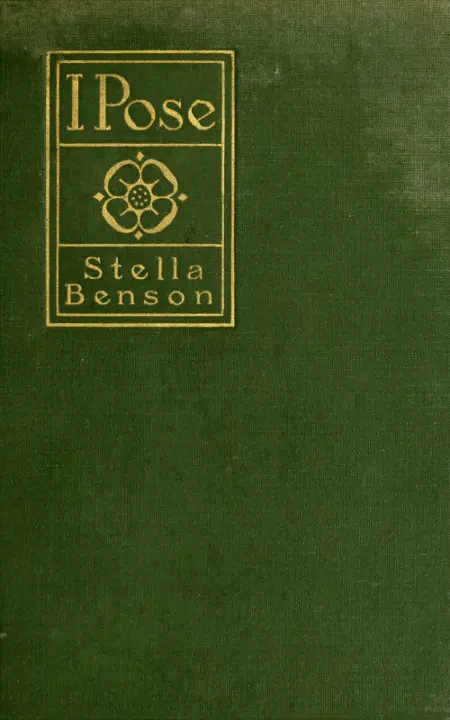
Stella Benson

Stella Benson
Stella Benson
BEHIND THE BOOK
This eBook is for the use of anyone anywhere in the United States and most other parts of the world at no cost and with almost no restrictions whatsoever. You may copy it, give it away or re-use it under the terms of the Project Gutenberg License included with this eBook or online at www.gutenberg.org. If you are not located in the United States, you will have to check the laws of the country where you are located before using this eBook. Read the source licence.
The original source file, including credits and licence, is retained by this library. Request an original-format copy at no charge. Please include the book title and Project Gutenberg identifier #11324.
KEEP YOUR CURIOSITY GOING
Coulson Kernahan

Maurice Baring
Frances Wright
Cécile Tormay

Frederic Jesup Stimson

W. H. P. (William Henry Pope) Jarvis