THE CLASSIC COLLECTION✦An outlaw’s diary: the CommuneCLASSIC FREE BOOKS
An outlaw’s diary: the Commune
Cécile Tormay
THE CLASSIC COLLECTION · 1905
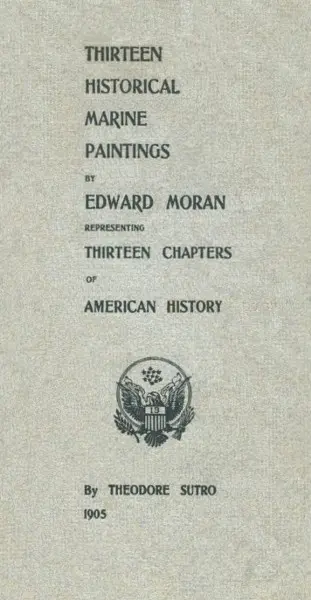
"Thirteen Chapters of American History" by Theodore Sutro is a historical account written in the early 20th century. The work focuses on the series of thirteen grand marine paintings created by Edward Moran, which depict significant events in American maritime history. Sutro aims to explain the artistic merit and historical significance of these paintings, while also providing insight into the life of Edward Moran, highlighting his dedication and contributions to American art. The opening of the book introduces the thirteen historical marine paintings and emphasizes their importance as representations of the "Marine History of the United States." Sutro describes how these paintings were meticulously crafted over fifteen years with a commitment to historical accuracy, showcasing moments like the landing of Lief Erickson, Columbus's voyages, and pivotal events in American naval history. He also explains the personal connection behind the series, revealing that Edward Moran dedicated this work to his wife, which leads to a significant legal battle over the ownership of the paintings, ultimately enhancing the narrative surrounding them.
Introduction adapted from the source catalogue; source summaries may be automatically generated.
Free to read · English · 18,473 words · No account needed
MAKE TIME FOR A GOOD BOOK
On by default. Untick to stop anonymous reading totals. Each page counts after 10 seconds in view. How this works.
Anonymous counting is on unless you have switched it off.
How doubly glorious will appear this splendid ovation to our heroes immortalized in this picture, if the war, from which they are shown returning as conquerors, shall result in a full realization of the noble motive, which inspired it, of liberation and not of conquest, and we may in patriotic pride address Columbia in the words of Timothy Dwight:
"To conquest and slaughter let Europe aspire; Whelm nations in blood, and wrap cities in fire; Thy heroes the rights of mankind shall defend, And triumph pursue them, and glory attend!"
With this picture the artist closes the commemoration of our naval achievements in the four great periods of our history, the War of the Revolution, the War of 1812, the Civil War, and the Spanish-American War of 1898, to which the last six pictures of the series are devoted, as the preceding six illustrate the dawn of our history from the first landing of the white man to the settlement of the Pilgrim Fathers--preceding all of which is the mysterious and unfathomable past symbolized by the trackless "Ocean," the first of these paintings.
From the time that Eirek the Red sailed to the bleak shores of Greenland down to the brilliant exploit of Admiral Dewey in the Philippine Islands, how true it is, in view of each and every one of the events immortalized in this unequalled series of paintings, that, in the words of Bishop Berkeley,
"Westward the course of empire takes its way!"
Agreement of Confederation, written on board "Mayflower," 61, 62
America, Early Discoveries of, 33, 34
American Flag, First Recognition of, painting, description of, 68; Designing and Adoption of Present Form, 81.
Armaments:
"Armstrong," 79;
Modern Battleships, 68;
"Ranger," 68
"Armstrong," Brig, Engaging the British Fleet, painting, description of,
82, 83
Bainbridge, Captain, 73
"Baltimore," Cruiser, 95
Braine, Admiral, 96
Brig "Armstrong" Engaging the British Fleet, painting, description of,
82, 83
"Brooklyn," Cruiser, 106, 107
Buchanan, Commodore, 88, 89
Burning of Frigate "Philadelphia," painting, description of, 75, 76
Byron, Lord, quotation from, 29
Caravels, 40, 105
Castelar, Emilio, quotation from, 41, 42
Cervera, Admiral, 105, 107
Chicago, Columbian Exposition, 40, 80
Columbus, Christopher, 39 to 43;
Death, 42;
Transfer of Remains, 43
Columbus, Debarkation of, painting, description of, 41, 42; "Santa Maria," "Nina" and "Pinta," painting, description of, 41, 42
Compact of Pilgrim Fathers, 61, 62
"Congress," Frigate, 88, 89, 90
Constitution of United States, Preamble, 62
Cowper, quotation from, 69
"Cumberland," The, 87 to 92, 95, 97; Sinking of, by the "Merrimac," painting, description of, 90, 91
Debarkation of Columbus, painting, description of, 41, 42
Decatur, Stephen, 10, 74, 106;
Birth, Death, 75;
Sword, 74;
Toast to our Country, 74
De Soto, Ferdinand, 47 to 49;
Birth, Death, 47;
Expedition of, 47 to 49;
Midnight Mass over the Body of, painting, description of, 48, 49
Dewey, George, Admiral, 10, 105, 106, 107, 109
Drake, quotation from, 67
Drakkars, 35, 105
Eirek the Red, 33, 34, 109
Embarkation of Pilgrims, painting, description of, 60
Ericsson, John, Birth, Death, 95;
"Monitor," 92, 97 to 101;
White Squadron's Farewell Salute to body of, painting, description
of, 95, 96
Erickson, Lief, Landing in New World, 33, 34;
painting, description of, 35, 36, 101
Esquimos, 34
Your reading position is saved on this browser. Take it to another device with a library code. Reading pages adapt to text, rather than matching a printed edition.
BEHIND THE BOOK
This eBook is for the use of anyone anywhere in the United States and most other parts of the world at no cost and with almost no restrictions whatsoever. You may copy it, give it away or re-use it under the terms of the Project Gutenberg License included with this eBook or online at www.gutenberg.org. If you are not located in the United States, you will have to check the laws of the country where you are located before using this eBook. Read the source licence.
The original source file, including credits and licence, is retained by this library. Request an original-format copy at no charge. Please include the book title and Project Gutenberg identifier #24990.
KEEP YOUR CURIOSITY GOING
Cécile Tormay

Moritz Busch
John L. Ransom
Frances Wright
Cécile Tormay

Mabel Potter Daggett