
Lalla Rookh
Thomas Moore
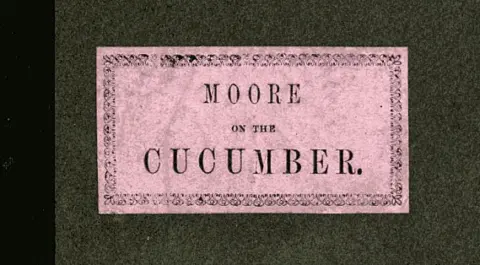
THE CLASSIC COLLECTION · 1847
"Theory and Practice, Applied to the Cultivation of the Cucumber in the Winter Season" by Thomas Moore is a scientific publication written in the mid-19th century. The work primarily focuses on the methods and principles of growing cucumbers during the winter season, offering insights into horticultural practices and advancements at the time. It aims to provide guidance to both novice and experienced gardeners by emphasizing the scientific approach to successful cultivation. The opening of the treatise lays the groundwork for understanding cucumber cultivation, discussing the plant's botanical classification, historical context, and its significance in gardening. Moore introduces the key elements that influence plant growth, such as light, temperature, and soil composition, thereby encouraging readers to apply scientific principles to their gardening practices. This section highlights the importance of a balanced approach to horticulture, advocating for a deeper understanding of the natural processes affecting plant health and productivity.
Introduction adapted from the source catalogue; source summaries may be automatically generated.
Free to read · English · 21,664 words · No account needed
MAKE TIME FOR A GOOD BOOK
On by default. Untick to stop anonymous reading totals. Each page counts after 10 seconds in view. How this works.
Anonymous counting is on unless you have switched it off.
A seeming error in the engraving, at p. 18, has been pointed out to me. In the description of the sketch it is stated that, "a series of pipes attached to the same boiler [which heats the tank] would supply the requisite heat to the atmosphere." The sketch itself shows these pipes to be considerably above the level of the water in the tank, and where they could not, consistently with the other arrangements, be thus employed. This may be explained thus:--the sketch was introduced rather for the purpose of illustrating certain proposed arrangements, as regards bottom heat and ventilation, than as furnishing an exact and detailed design for a model structure; and thus it happened that the pipes were merely shown to be placed at the front part of the house, to indicate that this was their proper relative position. There would be no practical difficulty in placing the pipes lower down, and nearly close to the front wall, so as to admit of the proposed connection; all that would be required to effect this, being to fix the slab, on which they rest--and which prevents the air from rushing upwards into the atmosphere of the house at this point--in a sloping position, instead of a horizontal one.
The principle involved in the plan proposed for aeration or ventilation, is no doubt a sound one; and though the plan which is more particularly described may be modified and varied, yet it is believed to be efficient for its intended purpose.
There can be no doubt that the admission of cold air to a structure in which tender plants are being forced, either during winter or early spring, is materially hurtful to the plants, in proportion to the tenderness of their constitution; and the Cucumber being, under those circumstances, a plant of a very tender and delicate nature, is especially susceptible of harm from this source. As a consequence resulting from this fact, there can be little hesitation in affirming that whatever fresh or external air it may be necessary to admit, during the period referred to, should be warmed before it reaches the plants, and in being warmed not burned, but supplied with the additional moisture its increased heat capacitates it to take up, and which, to be congenial to vegetation, it requires. This is provided for by the plan already recommended, where the cold air is made to pass through the tank containing the heated water which warms the soil. By a perfectly practicable modification of this arrangement, not only may this result be secured, but also the continual circulation of the internal atmosphere may at pleasure be assisted and accelerated, during the time when it might not be necessary to admit fresh air. This would be an additional advantage. The arrangement proposed to effect this, is to conduct the cold external air through a heated chamber containing the tanks--these latter being covered, but also admitting of being opened to any extent to supply moisture or steam in the proportion required. The cold air, after passing upwards through the chamber, escapes at the front of the house, and ascends to the upper part of the house, from whence it finds its way downwards near the back wall, and there again enters the chamber, through openings provided for the purpose. The circulation of the internal atmosphere would be thus facilitated and accelerated, even without the admission of any current of external air, for, of course, there is more or less of this kind of movement going on in the atmosphere, wherever and in whatever form a source of artificial heat is present. Another mode of combining internal atmospheric motion, with ventilation, and by which the cold air is warmed before it reaches the plants, has been practised with very marked success, in a vinery at Park-hill, Streatham, Surrey; and I have described it in the Journal of the Horticultural Society[1] as follows:--"This plan consists in passing a zinc pipe, thickly perforated with small holes, from end to end of the vinery, and exactly beneath the range of hot water pipes, which heat the structure. In the outer [end] wall, communicating with this perforated pipe by means of a kind of broad funnel, a register valve is fixed, by which the admission of air can be regulated with the utmost nicety, or the supply be shut off altogether: this valve is fixed a little below the level of the perforated pipe. The action of this contrivance was evident enough from the motion communicated to the foliage of the vines; and its effects were apparent in the unusually healthy and vigorous appearance they bore, until their period of ripening. In this case, sufficient moisture was kept up by syringing the walls and pipes, wetting the pathway, and by the use of evaporating troughs, placed on the metal pipes, and kept constantly filled with water."
Your reading position is saved on this browser. Take it to another device with a library code. Reading pages adapt to text, rather than matching a printed edition.
Thomas Moore
Thomas Moore
BEHIND THE BOOK
This eBook is for the use of anyone anywhere in the United States and most other parts of the world at no cost and with almost no restrictions whatsoever. You may copy it, give it away or re-use it under the terms of the Project Gutenberg License included with this eBook or online at www.gutenberg.org. If you are not located in the United States, you will have to check the laws of the country where you are located before using this eBook. Read the source licence.
The original source file, including credits and licence, is retained by this library. Request an original-format copy at no charge. Please include the book title and Project Gutenberg identifier #32818.
KEEP YOUR CURIOSITY GOING

John Muir

Asa Gray
Asa Gray

Florence Nightingale
Elizabeth Robins Pennell
Denison Olmsted