
Last letters from the living dead man
David Patterson (Spirit) Hatch
THE CLASSIC COLLECTION · 1897
"Theoretical Ethics" by Milton Valentine is a philosophical discourse on moral philosophy written in the late 19th century. This work aims to provide a comprehensive overview of ethical theories, particularly in light of modern scientific and philosophical developments. The text explores foundational concepts in ethics, including moral distinctions, the nature and authority of conscience, and the connections between ethics, psychology, and theology. The opening of the work sets the stage for an in-depth examination of moral distinctions as fundamental to ethical understanding. Valentine articulates ethics as the science of right and duty, investigating how moral judgments arise in individual consciousness and how they are expressed socially and historically. The initial chapters lay the groundwork for distinguishing between theoretical and practical ethics, emphasizing the psychological and metaphysical elements involved in discerning moral truths. Through this exploration, Valentine seeks to assert the objective nature of moral laws and the innate capacity of humans to recognize and respond to ethical imperatives.
Introduction adapted from the source catalogue; source summaries may be automatically generated.
Free to read · English · 57,503 words · No account needed
MAKE TIME FOR A GOOD BOOK
On by default. Untick to stop anonymous reading totals. Each page counts after 10 seconds in view. How this works.
Anonymous counting is on unless you have switched it off.
Absolutism, Divine, 149-151.
Actions, objects of moral judgment, 183-187.
Affections, benevolent, not supreme, 90-92.
Agnostic tendencies, 81-83, 120-124.
Aim, ethical, in Christianity, 197-198.
Altruism, 154, 161.
Analogy, supports relational theory, 176-177.
Anthropological testimony, 34.
Applicatory moral judgments, 51-52, 67-68, 92-97, 128.
Arnold, Matthew, quoted, 25.
Aristotle, 16, 18, 33, 152.
Assyria, 43.
Assurance of success, quickening to moral endeavor, 220-222.
Aurelius, Marcus, 33.
Authority, moral, belongs not to utility or pleasure, 158-160; nor to "the beautiful," 144; but to "the right," supremely, 79-80, 87-88, 126-136, 158-159, 178-191; to conscience, as discerning the right, 57-58, 86-99, 104.
Bain, Alexander, 121, 154.
Benevolent affections, not supreme, 90-92.
Bentham, Jeremy, 154.
Book of the Dead, 33.
Bowne, Prof. Borden P., 29, 36, 62, 153, 170, 186.
Brahmanism, 32, 142.
Buckle, 43.
Buddhism, 32, 126, 142, 221-222.
Butler, Bishop, 110-111, 154.
Calderwood, 167.
Cato, 33.
Christ, personal embodiment of his own teaching, 203-204.
Christian ethics, completes the ethical view, 198-200;
sources of, 200-205;
special features of, 205-217.
Christianity, relation of, to rational ethics, 26-27, 196-198; its distinctive teachings, 205-217; affords power for the moral task, 218-227.
Cicero, 16, 33.
Clarke, Samuel, 166.
Cocker, B. D., quoted, 173.
Coleridge, 167.
Confucianism, 32.
Confucius, 141.
Conscience, simple or complex, 37-39; its existence proved, 39-55;
its psychological place, 59-62;
its nature determined, 62-83;
theistic, 79-80, 86-88;
supremacy of, 83-92;
acts of necessity, 78-80;
educable, 104, 199-200;
conceivably formed through theistic evolution, 83-85;
enlightened by Christian teaching, 198-217;
becomes efficient through Christian forces, 218-227.
Consciousness, testimony as to freedom, 108-110; Christian, source for formulation of ethics, 204-205.
Cudworth, 167.
Demerit, import and measure of, 70-72.
Deontology, 16 (note).
Des Cartes, René, 150.
Dividing line between true and false ethical theories, 130-132.
Diversity of moral judgments, 48, 173.
Dorner, Dr., quoted, 150.
Druidism, 32.
Duty defined, 65.
Dynamic, moral, 198, 218-227.
Education of conscience, 74, 104.
Egypt, 43, 126.
Epictetus, 148.
Ethics, defined, 15-17;
historically sketched, 17-20;
how divided, 21-23;
relation to psychology, 23;
to natural theology, 24;
to Christian theology, 25;
partly psychological, 21-22, 59;
partly metaphysical, 21-22, 119-120;
relation of evolution to, 54-55, 83-85, 132-137;
illuminated by Christianity, 196-217;
task of, under Christianity, 218-227.
Eudæmonism, 144-153.
Evolution, in relation to conscience, 54-55, 83-85, 132; to objective moral law, 132-137, 154-155.
Fact, the primary ethical, 28-36.
Faculty, as applied to the conscience, 37-38;
psychologically described, 62-80.
Failure of utilitarianism, 155-160.
Fallibility of conscience, 52, 92-94, 103-105.
Fatalism, in Stoic virtue, 147.
Feelings, moral, a part of conscience, 72-77;
feelings, objects of moral judgment, 187-189.
Flint, Prof., quoted, 218.
Freedom, personal, abridged in ancient nations, 17-18.
Free-will, necessary to moral agency, 66, 105-106;
alternative choice, 106-107, 159;
proof of, 107-112;
excluded by materialism, 112-113.
God, existence of required by moral law, 79-80, 87-88, 135; relation to moral law, 126, 135-136, 149-151, 158, 169, 172, 178-181, 208-215; moral duties due to Him, 169-170, 222-223.
Good, the chief, 143, 145, 146, 148.
Greece, 17, 43, 143-148.
Gregory, Dr. D. S., 166.
Grote, 123.
Grotius, Hugo, 149-150.
Your reading position is saved on this browser. Take it to another device with a library code. Reading pages adapt to text, rather than matching a printed edition.
BEHIND THE BOOK
This eBook is for the use of anyone anywhere in the United States and most other parts of the world at no cost and with almost no restrictions whatsoever. You may copy it, give it away or re-use it under the terms of the Project Gutenberg License included with this eBook or online at www.gutenberg.org. If you are not located in the United States, you will have to check the laws of the country where you are located before using this eBook. Read the source licence.
The original source file, including credits and licence, is retained by this library. Request an original-format copy at no charge. Please include the book title and Project Gutenberg identifier #43062.
KEEP YOUR CURIOSITY GOING
David Patterson (Spirit) Hatch
Coulson Kernahan

Ralph Waldo Emerson
Frances Wright
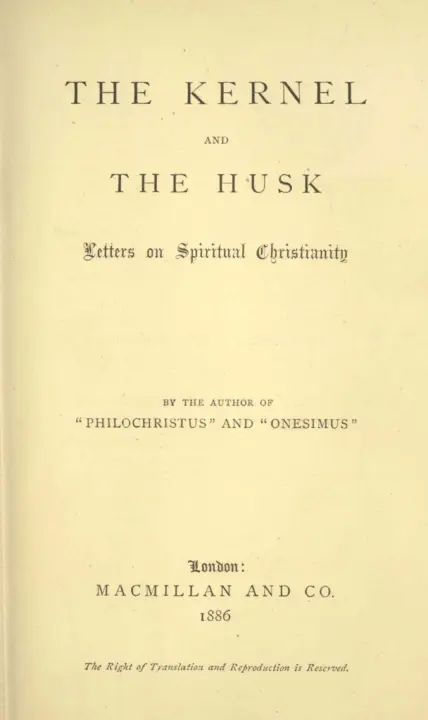
Edwin Abbott Abbott
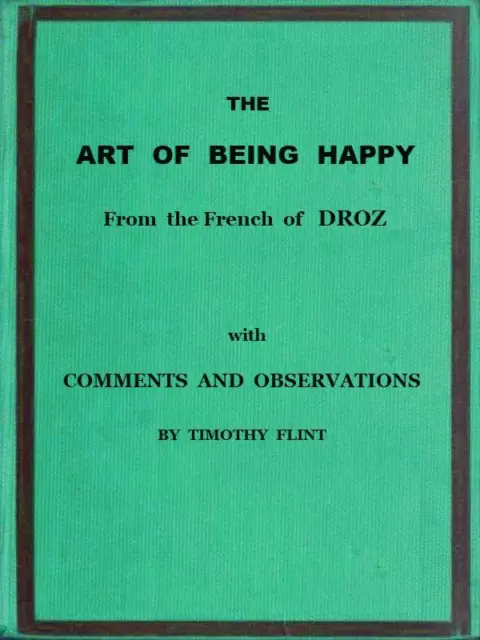
Joseph Droz