
Last letters from the living dead man
David Patterson (Spirit) Hatch
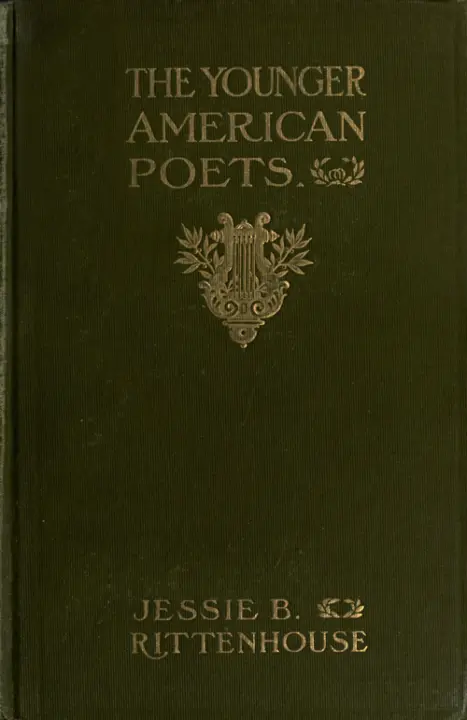
THE CLASSIC COLLECTION · 1904
"The Younger American Poets" by Jessie Belle Rittenhouse is a collection of literary studies written in the early 20th century. This work delves into the poetry of a selection of younger American poets, exploring their contributions and distinct styles within the broader context of contemporary poetry. Rittenhouse offers insight into the thematic elements and individual characteristics of these poets, likely focusing on their artistic approaches and the socio-cultural conditions of their time. The beginning of this collection introduces Richard Hovey, characterizing him as a poet grounded in convictions and comradeship rather than mere whimsies of rhyme. Hovey is depicted as an artist deeply engaged with the essence of life, capturing the vibrancy of nature alongside themes of human connection and national pride. Rittenhouse highlights specific works and ideas from Hovey, noting his Whitmanesque influence while asserting his unique voice that emphasizes a harmonious relationship with the world around him. This opening segment sets the stage for further explorations of the varied styles and themes represented by the younger poets discussed in the subsequent chapters.
Introduction adapted from the source catalogue; source summaries may be automatically generated.
Free to read · English · 71,656 words · No account needed
MAKE TIME FOR A GOOD BOOK
On by default. Untick to stop anonymous reading totals. Each page counts after 10 seconds in view. How this works.
Anonymous counting is on unless you have switched it off.
“A Wild Iris” is in the later and finer manner, but although love is the spirit of the song, it is embodied chiefly in terms of nature, and would not reveal a different phase of his work from that already shown. This, too, is the case with the two lighter lyrics, “Love In A Day” and “In The Lane,” each with a most taking measure; the second a rural song lilting into this note:
When the hornet hangs in the hollyhock,
And the brown bee drones i’ the rose,
And the west is a red-streaked four-o’-clock,
And summer is near its close—
It’s—Oh, for the gate and the locust lane
And dusk and dew and home again!
Mr. Cawein has frequent poems in celebration of the farm, not only its picturesque cheer, but its dignity and finer idealism. “A Song For Labor” is one of the best; also “Old Homes,” an idyllic picture of the Southern plantation, with its gentle haze of reminiscence:
Old homes among the hills! I love their gardens, Their old rock-fences, that our day inherits; Their doors, ’round which the great trees stand like wardens; Their paths, down which the shadows march like spirits; Broad doors and paths that reach bird-haunted gardens.
I see them gray among their ancient acres,
Severe of front, their gables lichen-sprinkled,—
Like gentle-hearted, solitary Quakers,
Grave and religious, with kind faces wrinkled,—
Serene among their memory-hallowed acres.
Their gardens, banked with roses and with lilies— Those sweet aristocrats of all the flowers— Where Springtime mints her gold in daffodillies, And Autumn coins her marigolds in showers, And all the hours are toilless as the lilies.
Old homes! old hearts! Upon my soul forever Their peace and gladness lie like tears and laughter; Like love they touch me, through the years that sever, With simple faith; like friendship, draw me after The dreamy patience that is theirs forever.
Mr. Cawein blends the mood and the picture in the simple tenderness of these lines, with their unstriving felicity. Kentucky’s more strenuous side also finds a chronicler in his verse: the tragedies of its mountains are told in one of the earlier volumes in such poems as “The Moonshiner,” “The Raid,” and “Dead Man’s Run;” and in Weeds by the Wall, in that graphic poem “Feud,” sketching with the pencil of a realist the road to the spot
… where all the land
Seems burdened with some curse,
and where, sunk in obliterative growth of briers, burrs, and ragweed,
stands the
… huddled house
Where men have murdered men,
and where a terrified silence still broods, for
Your reading position is saved on this browser. Take it to another device with a library code. Reading pages adapt to text, rather than matching a printed edition.
BEHIND THE BOOK
This eBook is for the use of anyone anywhere in the United States and most other parts of the world at no cost and with almost no restrictions whatsoever. You may copy it, give it away or re-use it under the terms of the Project Gutenberg License included with this eBook or online at www.gutenberg.org. If you are not located in the United States, you will have to check the laws of the country where you are located before using this eBook. Read the source licence.
The original source file, including credits and licence, is retained by this library. Request an original-format copy at no charge. Please include the book title and Project Gutenberg identifier #55447.
KEEP YOUR CURIOSITY GOING
David Patterson (Spirit) Hatch

David Patterson (Spirit) Hatch

David Patterson (Spirit) Hatch
Cécile Tormay

Moritz Busch
John L. Ransom