
Last letters from the living dead man
David Patterson (Spirit) Hatch
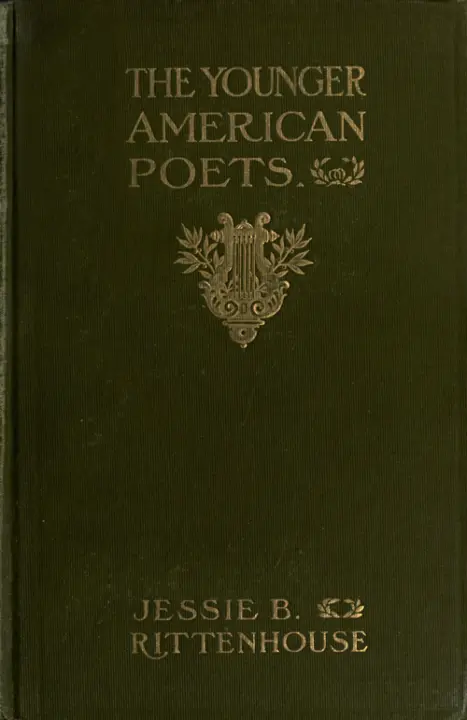
THE CLASSIC COLLECTION · 1904
"The Younger American Poets" by Jessie Belle Rittenhouse is a collection of literary studies written in the early 20th century. This work delves into the poetry of a selection of younger American poets, exploring their contributions and distinct styles within the broader context of contemporary poetry. Rittenhouse offers insight into the thematic elements and individual characteristics of these poets, likely focusing on their artistic approaches and the socio-cultural conditions of their time. The beginning of this collection introduces Richard Hovey, characterizing him as a poet grounded in convictions and comradeship rather than mere whimsies of rhyme. Hovey is depicted as an artist deeply engaged with the essence of life, capturing the vibrancy of nature alongside themes of human connection and national pride. Rittenhouse highlights specific works and ideas from Hovey, noting his Whitmanesque influence while asserting his unique voice that emphasizes a harmonious relationship with the world around him. This opening segment sets the stage for further explorations of the varied styles and themes represented by the younger poets discussed in the subsequent chapters.
Introduction adapted from the source catalogue; source summaries may be automatically generated.
Free to read · English · 71,656 words · No account needed
MAKE TIME FOR A GOOD BOOK
On by default. Untick to stop anonymous reading totals. Each page counts after 10 seconds in view. How this works.
Anonymous counting is on unless you have switched it off.
The poem follows simple, but no less picturesque phrase, as becomes Saint Kavin, and is, from the technical side, quaint and artistic. On the philosophical, it develops at first the initial thought that one shall “keep his soul”
Joyous and sane and whole
by obeying the word
That bade the earth take form, the sea subside,
and that
When we have laid aside
Our truculence and pride,
Craven self-seeking, turbulent self-will,—
we shall have found the boon of our ultimate striving,—room to live and let our spirits grow, and give of their growth and higher gain to another. Here is the giving that turns to one’s own enrichment:
And if I share my crust,
As common manhood must,
With one whose need is greater than my own,
Shall I not also give
His soul, that it may live,
Of the abundant pleasures I have known?
And so, if I have wrought,
Amassed or conceived aught
Of beauty, or intelligence or power,
It is not mine to hoard;
It stands there to afford
Its generous service simply as a flower.
The poem then broadens into a dissertation upon the complexities of life, one’s servitude to custom and “vested wrong,” the lack of individual courage to
Live by the truth each one of us believes,
and turns, for illustration of the nobler development and poise, back to nature, and the evolutionary round of life through which one traces his course and kinship. These stanzas are among the finest spoken by the wise Brother of the Word. After citing the strength and serenity of the fir-trees, and what a travesty upon man’s ascent it were, did one bear himself less royally than they, he adverts to the creature kin-fellows whose lot we have borne:
I, too, in polar night
Have hungered, gaunt and white,
Alone amid the awful silences;
And fled on gaudy fin,
When the blue tides came in,
Through coral gardens under tropic seas.
And wheresoe’er I strove,
The greater law was love,
A faith too fine to falter or mistrust;
There was no wanton greed,
Depravity of breed,
Malice nor cant nor enmity unjust.
Nay, not till I was man,
Learned I to scheme and plan
The blackest depredation on my kind,
Converting to my gain
My fellow’s need and pain
In chartered pillage, ruthless and refined.
Therefore, my friends, I say
Back to the fair sweet way
Our Mother Nature taught us long ago,—
The large primeval mood,
Leisure and amplitude,
The dignity of patience strong and slow.
Your reading position is saved on this browser. Take it to another device with a library code. Reading pages adapt to text, rather than matching a printed edition.
BEHIND THE BOOK
This eBook is for the use of anyone anywhere in the United States and most other parts of the world at no cost and with almost no restrictions whatsoever. You may copy it, give it away or re-use it under the terms of the Project Gutenberg License included with this eBook or online at www.gutenberg.org. If you are not located in the United States, you will have to check the laws of the country where you are located before using this eBook. Read the source licence.
The original source file, including credits and licence, is retained by this library. Request an original-format copy at no charge. Please include the book title and Project Gutenberg identifier #55447.
KEEP YOUR CURIOSITY GOING
David Patterson (Spirit) Hatch

David Patterson (Spirit) Hatch

David Patterson (Spirit) Hatch
Cécile Tormay

Moritz Busch
John L. Ransom