
Last letters from the living dead man
David Patterson (Spirit) Hatch
THE CLASSIC COLLECTION · 1904
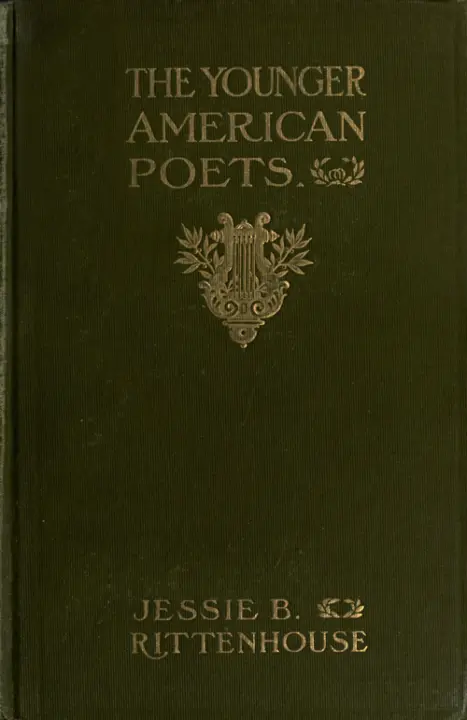
"The Younger American Poets" by Jessie Belle Rittenhouse is a collection of literary studies written in the early 20th century. This work delves into the poetry of a selection of younger American poets, exploring their contributions and distinct styles within the broader context of contemporary poetry. Rittenhouse offers insight into the thematic elements and individual characteristics of these poets, likely focusing on their artistic approaches and the socio-cultural conditions of their time. The beginning of this collection introduces Richard Hovey, characterizing him as a poet grounded in convictions and comradeship rather than mere whimsies of rhyme. Hovey is depicted as an artist deeply engaged with the essence of life, capturing the vibrancy of nature alongside themes of human connection and national pride. Rittenhouse highlights specific works and ideas from Hovey, noting his Whitmanesque influence while asserting his unique voice that emphasizes a harmonious relationship with the world around him. This opening segment sets the stage for further explorations of the varied styles and themes represented by the younger poets discussed in the subsequent chapters.
Introduction adapted from the source catalogue; source summaries may be automatically generated.
Free to read · English · 71,656 words · No account needed
MAKE TIME FOR A GOOD BOOK
On by default. Untick to stop anonymous reading totals. Each page counts after 10 seconds in view. How this works.
Anonymous counting is on unless you have switched it off.
Then hoy and rip, with a rolling hip,
He makes for the nearest shore;
And God, who sent him a thousand ship,
Will send him a thousand more;
But some he’ll save for a bleaching grave,
And shoulder them in to shore,—
Shoulder them in, shoulder them in,
Shoulder them in to shore.
How the swing of the lines befits the action, and how it puts on grace
in this stanza,
Oh, the ships of Greece and the ships of Tyre
Went out, and where are they?
In the port they made, they are delayed
With the ships of yesterday.
The remaining strophes tempt one beyond what he is able, especially
this characterization,
Oh, a loafing, idle lubber to him
Is the sexton of the town;
but we must take a glance at the ballads, at the “Nancy’s Pride,” that
went out
On the long slow heave of a lazy sea,
To the flap of an idle sail,
and
… faded down
With her creaking boom a-swing,
Till a wind from the deep came up with a creep,
And caught her wing and wing.
She lifted her hull like a breasting gull
Where the rolling valleys be,
And dipped where the shining porpoises
Put ploughshares through the sea.
They all may home on a sleepy tide
To the sag of an idle sheet;
But it’s never again the Nancy’s Pride
That draws men down the street.
But the fishermen on the Banks, in the eerie watches of the moon,
behold this apparition:
When the light wind veers, and the white fog clears,
They see by the after rail
An unknown schooner creeping up
With mildewed spar and sail.
Her crew lean forth by the rotting shrouds,
With the Judgment in their face;
And to their mates’ “God save you!”
Have never a word of grace.
Then into the gray they sheer away,
On the awful polar tide;
And the sailors know they have seen the wraith
Of the missing Nancy’s Pride.
There have been spectral ships since visions were, but few conjured so vividly that one may almost see the
crew lean forth by the rotting shrouds
With the Judgment in their face,
and watch them as
into the gray they sheer away
On the awful polar tide.
The poem illustrates Mr. Carman’s gift of putting atmosphere into his work. A line may give the color, the setting, for an entire poem,—a very simple line, as this,
With her creaking boom a-swing,
or, “To the sag of an idle sheet,” which fixes at once the impression of a sultry, languorous air, one of those, half-veiled, “weather-breeder” days one knows so well.
Your reading position is saved on this browser. Take it to another device with a library code. Reading pages adapt to text, rather than matching a printed edition.
BEHIND THE BOOK
This eBook is for the use of anyone anywhere in the United States and most other parts of the world at no cost and with almost no restrictions whatsoever. You may copy it, give it away or re-use it under the terms of the Project Gutenberg License included with this eBook or online at www.gutenberg.org. If you are not located in the United States, you will have to check the laws of the country where you are located before using this eBook. Read the source licence.
The original source file, including credits and licence, is retained by this library. Request an original-format copy at no charge. Please include the book title and Project Gutenberg identifier #55447.
KEEP YOUR CURIOSITY GOING
David Patterson (Spirit) Hatch

David Patterson (Spirit) Hatch

David Patterson (Spirit) Hatch
Cécile Tormay

Moritz Busch
John L. Ransom