The young reporter
William Drysdale
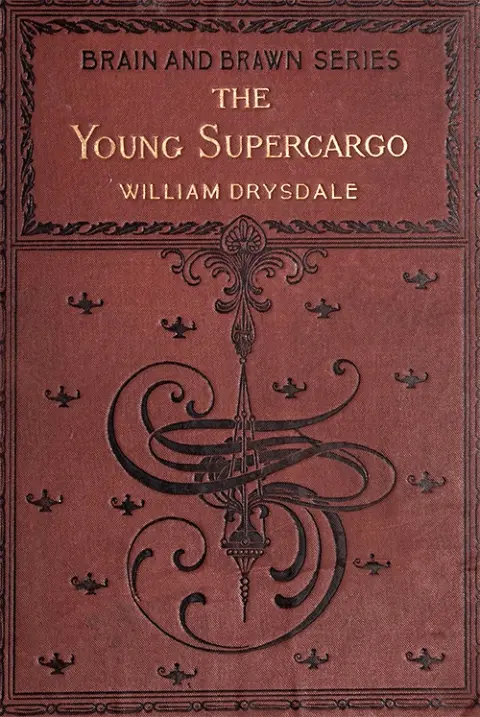
THE CLASSIC COLLECTION · 1898
"The Young Supercargo: A Story of the Merchant Marine" by William Drysdale is a novel written in the late 19th century. The story centers around Christopher "Kit" Silburn, a young and ambitious boy who seeks adventure and a better life by venturing to sea as a cabin boy on the steamship "North Cape". This tale captures his journey from homelessness to finding a place aboard the ship, where he learns about responsibility, maturity, and the challenges of maritime life. Kit’s character as a determined and honest boy is likely to resonate with readers who enjoy stories of personal growth against a backdrop of adventure. At the start of the narrative, Kit finds himself in Brooklyn, trying to escape his precarious life as a homeless boy. After a series of misunderstandings with a police officer, he is fortunate enough to be taken under the wing of Captain Griffith of the "North Cape", who offers him a position as a cabin boy. As Kit begins his adventure at sea, he reflects on his background, including his family and the disappearance of his father at sea. The initial chapters effectively set the stage, showcasing Kit's determination and positive outlook amidst adversity, while also introducing readers to the dynamics of life at sea in the late 1800s.
Introduction adapted from the source catalogue; source summaries may be automatically generated.
Free to read · English · 93,173 words · No account needed
MAKE TIME FOR A GOOD BOOK
On by default. Untick to stop anonymous reading totals. Each page counts after 10 seconds in view. How this works.
Anonymous counting is on unless you have switched it off.
“Say, avast there, now,” he cried; “you’ll have to take another tack. (I suppose you’ll expect me to talk sea talk, now I’m a sailor.) I know what you’re after, Vieve, and it won’t do. No going out to buy more things for supper. I’m not the prodigal calf, you know--the prodigal son, I mean. Whatever you were going to have for your own suppers is just what I want.”
“Just put yourself in that chair, Mr. Silburn,” Vieve laughed, pointing to her father’s armchair, that she had drawn up to the fire for him, “and don’t begin to interfere so soon;” and she was gone before he could stop her. And Mrs. Silburn brought her husband’s slippers, that were carefully laid away, and would have untied Kit’s shoes if he had let her.
“You’ve had a hard time of it, Kit,” she said, “and we must make you comfortable at home.”
“Indeed, I’ve not, mother,” he answered; “you mustn’t spoil me on that account. I’ve had a splendid time, and enjoyed every minute. I’ve made some good friends, too, since I went away.”
“I’m sure you would do that, Kit,” she answered, her face full of motherly pride. “And you’ve grown so, too!”
It was not long before supper was ready, for Vieve was both cook and errand girl while her mother was busy sewing.
“You’ll not mind eating in the kitchen, Kit?” his mother asked. “We eat there now, while we’re alone.”
“Mind it!” Kit exclaimed; “it’s just what I wanted to do. Oh, look here, Vieve!” he went on, as he took his mother by the arm and led her into the kitchen, “have you cooked all these things so quick? Beefsteak, and fried potatoes, and ham and eggs, and coffee? Why, we ought to have you for cook aboard ship.”
“Ah, you don’t know how good it all tastes!” he declared, when they had set to work at the eatables. “We have good fare on the ship, first rate; but it’s not like home. No such coffee as this, I tell you. Coffee is always bad at sea, they say.”
“And do you have to eat out of a little mess pan, like the other
sailors?” Vieve asked.
“Do I!” Kit laughed. “I guess you don’t know what a dignified position your big brother holds, my child. Why, I eat in the cabin, with silver forks and spoons, and a monogram on all the dishes. And in the evening I sit at the Captain’s desk and do my writing.”
Your reading position is saved on this browser. Take it to another device with a library code. Reading pages adapt to text, rather than matching a printed edition.
William Drysdale
BEHIND THE BOOK
This eBook is for the use of anyone anywhere in the United States and most other parts of the world at no cost and with almost no restrictions whatsoever. You may copy it, give it away or re-use it under the terms of the Project Gutenberg License included with this eBook or online at www.gutenberg.org. If you are not located in the United States, you will have to check the laws of the country where you are located before using this eBook. Read the source licence.
The original source file, including credits and licence, is retained by this library. Request an original-format copy at no charge. Please include the book title and Project Gutenberg identifier #66747.
KEEP YOUR CURIOSITY GOING
Wilfrid Scawen Blunt
Wilfrid Scawen Blunt

E. W. (Edgar Watson) Howe
Coulson Kernahan

Maurice Baring
Frances Wright