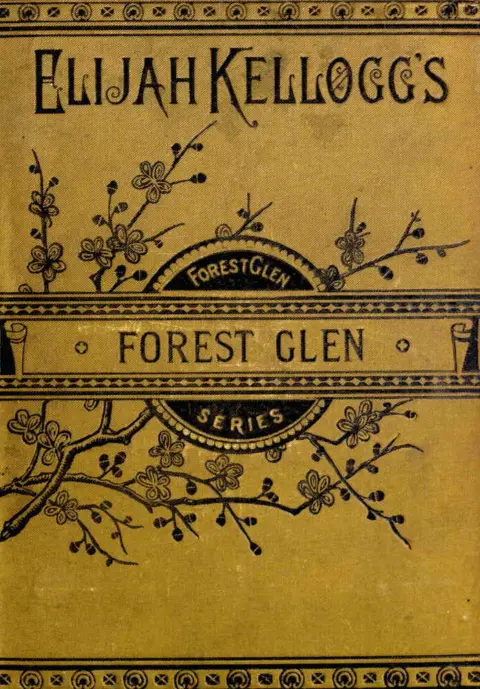
Forest Glen; or, The Mohawk’s Friendship
Elijah Kellogg
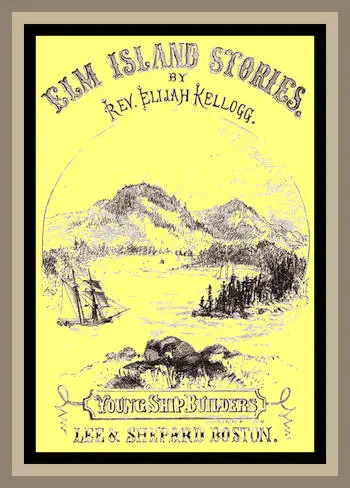
THE CLASSIC COLLECTION · 1870
"The Young Ship-Builders of Elm Island" by Elijah Kellogg is a novel written in the late 19th century. This story centers around young boys who are exploring the challenges of learning trades, specifically shipbuilding, in a vibrant seaside community. The book reflects themes of ambition, responsibility, and craftsmanship as the characters venture into undertaking building their own boat. At the start of the novel, we meet John Rhines, who is contemplating his future and the various trades he might pursue after a summer of hard work. His desire to learn a trade leads him to help a blacksmith, where he discovers a talent for making items. Alongside Charlie, his companion, they dream about crafting a significant project: a boat that could surpass canoes in design and performance. The opening portion sets the stage for their creative ideas and ambitions while introducing the supportive and industrious community around them, hinting at the trials and successes that lie ahead in their shipbuilding adventure.
Introduction adapted from the source catalogue; source summaries may be automatically generated.
Free to read · English · 63,594 words · No account needed
MAKE TIME FOR A GOOD BOOK
On by default. Untick to stop anonymous reading totals. Each page counts after 10 seconds in view. How this works.
Anonymous counting is on unless you have switched it off.
As they ran along seven or eight hundred yards from the wharf, Charlie, standing up to windward, waved his cap to Fred, and cheered. It was instantly returned by the whole crowd.
At that moment a hard flaw, striking over the high land, heeled her almost to upsetting; and as she rose again, she split in two, from stem to stern. Charlie, who was just waving his hat for a second cheer, went head foremost into the water. One half the boat, to which were attached the masts, bowsprit, and rudder, fell over to leeward; the cable, which was fastened into a thole-pin hole, running out, anchored that part, while the other half drifted off before the wind towards Elm Island.
John and Charlie clung to the half that was left, while the barrel of sugar, the corn, both their guns, powder and shot, went to the bottom.
It was but a few moments before Captain Rhines, with Flour and Fred Williams, came in a canoe, and took them off.
Every one felt sorry for the mishap, and Fred felt so bad that he cried.
It was the first boat that had ever been made or owned in the place, or even seen there, except once in a great while, when a whaleman or some large vessel came in for water, or lost their way; the inhabitants all using canoes, as did also the fishermen and coasters.
As the anchor held one half the boat, it furnished a mark to tell where the contents lay; and while Fred and Henry Griffin were towing back the other half, the rest grappled for and brought up the corn, guns, and sugar, not much of which was dissolved.
It was a bitter disappointment to Charlie and John, but they bore it manfully, and went up to Captain Rhines’s to put on dry clothes and spend the night, Fred walking along with them, striving to administer consolation.
“I wouldn’t feel so bad about it, Charlie,” said he; “we’ve got the other half; why couldn’t you fasten them together again?”
“So you could, Charlie,” said John, “and she would be as good as ever.”
“But what would she look like? No, I never want to touch her again; let her go; but I know one thing, that is, if I live long enough, I’ll build a boat that will sail as well as she did, and not split in two either.”
Uncle Isaac, hearing of the shipwreck, came in to Captain Rhines’s in the evening to see and comfort the boys.
“It’s not altogether the loss of the boat makes me feel so bad, Uncle Isaac,” said Charlie.
Your reading position is saved on this browser. Take it to another device with a library code. Reading pages adapt to text, rather than matching a printed edition.
Elijah Kellogg
Elijah Kellogg
Elijah Kellogg
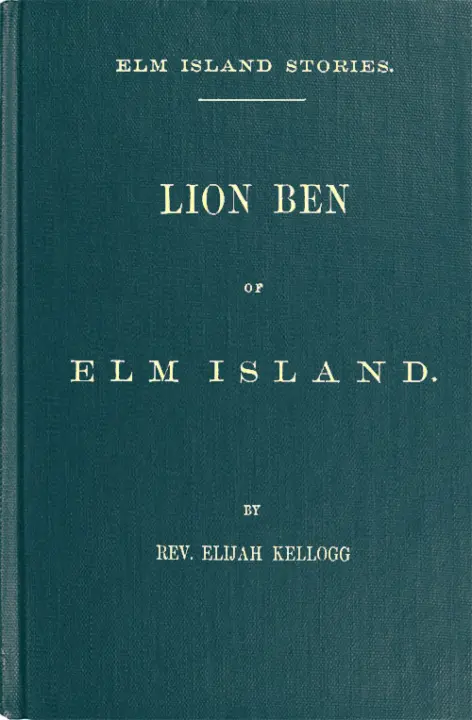
Elijah Kellogg
BEHIND THE BOOK
This eBook is for the use of anyone anywhere in the United States and most other parts of the world at no cost and with almost no restrictions whatsoever. You may copy it, give it away or re-use it under the terms of the Project Gutenberg License included with this eBook or online at www.gutenberg.org. If you are not located in the United States, you will have to check the laws of the country where you are located before using this eBook. Read the source licence.
The original source file, including credits and licence, is retained by this library. Request an original-format copy at no charge. Please include the book title and Project Gutenberg identifier #50475.
KEEP YOUR CURIOSITY GOING
Coulson Kernahan

Maurice Baring
Frances Wright
Cécile Tormay

Frederic Jesup Stimson

W. H. P. (William Henry Pope) Jarvis