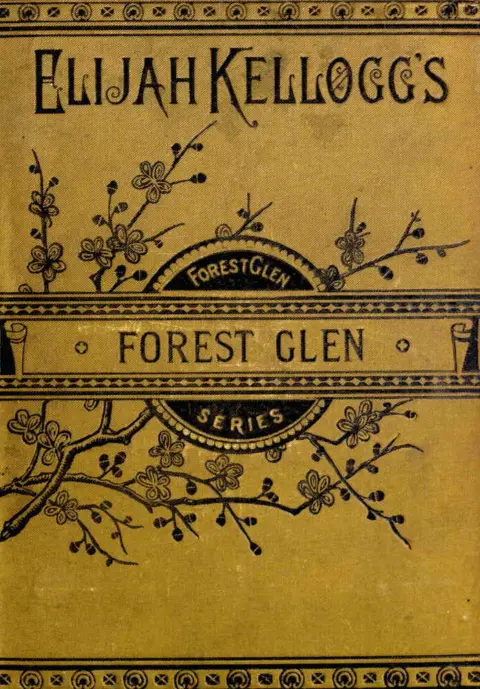
Forest Glen; or, The Mohawk’s Friendship
Elijah Kellogg
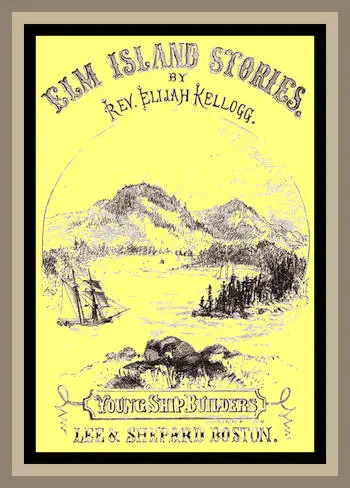
THE CLASSIC COLLECTION · 1870
"The Young Ship-Builders of Elm Island" by Elijah Kellogg is a novel written in the late 19th century. This story centers around young boys who are exploring the challenges of learning trades, specifically shipbuilding, in a vibrant seaside community. The book reflects themes of ambition, responsibility, and craftsmanship as the characters venture into undertaking building their own boat. At the start of the novel, we meet John Rhines, who is contemplating his future and the various trades he might pursue after a summer of hard work. His desire to learn a trade leads him to help a blacksmith, where he discovers a talent for making items. Alongside Charlie, his companion, they dream about crafting a significant project: a boat that could surpass canoes in design and performance. The opening portion sets the stage for their creative ideas and ambitions while introducing the supportive and industrious community around them, hinting at the trials and successes that lie ahead in their shipbuilding adventure.
Introduction adapted from the source catalogue; source summaries may be automatically generated.
Free to read · English · 63,594 words · No account needed
MAKE TIME FOR A GOOD BOOK
On by default. Untick to stop anonymous reading totals. Each page counts after 10 seconds in view. How this works.
Anonymous counting is on unless you have switched it off.
“I thought I was made,” said she, “when I got a sink, and especially a crane, instead of a birch withe, to hang my pot on. Now I’ve got a sink, a crane, porch, meal-room, cellar stairs, chamber stairs, milk cellar, and kitchen, all ceiled up.”
In the front room the work proceeded more slowly, as there was a good deal of panel-work, and this occupied a great deal of time.
There were then no planing mills, jig saws, circular saws, or mortising machines, but all was done by hand labor. There were no cut nails then, but all were wrought, with sharp points that split the wood, which made it necessary to bore a great deal with a gimlet.
A happy boy was Charlie Bell in these days, as Uncle Isaac and Atkins gave him all the instruction in their power; and to complete the sum of his enjoyment, after he had worked with them six weeks, Uncle Isaac set him to making the front and end doors of panel-work, under his immediate inspection. He also had an opportunity to talk about the Indians, and seemed to be a great deal more concerned to know about their modes of getting along, and manufacturing articles of necessity or ornament, without tools of iron, than about their murdering and scalping.
Uncle Isaac could not, from personal knowledge, give him much information in respect to these matters, as, at the time he was among them, they were, and had been for a long period, supplied, both by the French and English, with guns, knives, hatchets, needles, and files; but he could furnish Charlie with abundant information which he had obtained from his Indian parents; for, as they have no books, but trust to their memories, they, by exercise, become very accurate, and their traditions are, in this way, handed down from father to son.
“But,” said Charlie, who had heard about Indians having cornfields, “how could they cut down trees and clear land with stone hatchets?”
“They didn’t cut them down; they bruised the bark, and girdled them, and then the trees died, and they set them on fire.”
“I should think it would have taken them forever, most, to clear a piece of land in that way.”
“So it did; but they did not clear one very often. When they got a field cleared, they planted corn on it perhaps for a hundred years.”
“I should think it would have run out.”
“They always made these fields by the salt water, and put fish in the hills. They taught the white people how to raise corn.”
Your reading position is saved on this browser. Take it to another device with a library code. Reading pages adapt to text, rather than matching a printed edition.
Elijah Kellogg
Elijah Kellogg
Elijah Kellogg
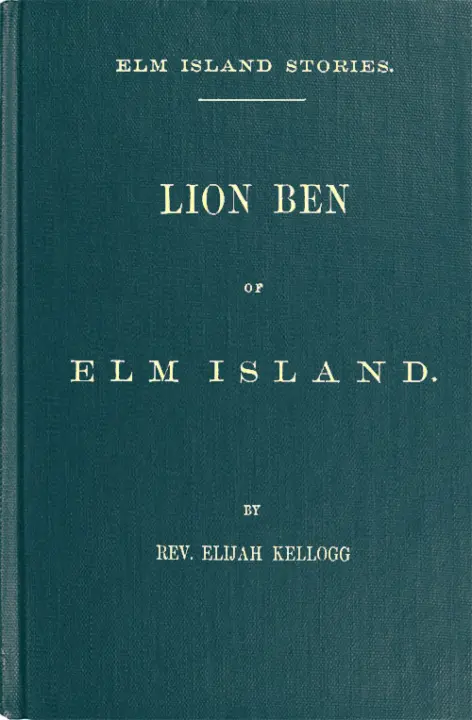
Elijah Kellogg
BEHIND THE BOOK
This eBook is for the use of anyone anywhere in the United States and most other parts of the world at no cost and with almost no restrictions whatsoever. You may copy it, give it away or re-use it under the terms of the Project Gutenberg License included with this eBook or online at www.gutenberg.org. If you are not located in the United States, you will have to check the laws of the country where you are located before using this eBook. Read the source licence.
The original source file, including credits and licence, is retained by this library. Request an original-format copy at no charge. Please include the book title and Project Gutenberg identifier #50475.
KEEP YOUR CURIOSITY GOING
Coulson Kernahan

Maurice Baring
Frances Wright
Cécile Tormay

Frederic Jesup Stimson

W. H. P. (William Henry Pope) Jarvis