
Portrait of a Man with Red Hair: A Romantic Macabre
Hugh Walpole
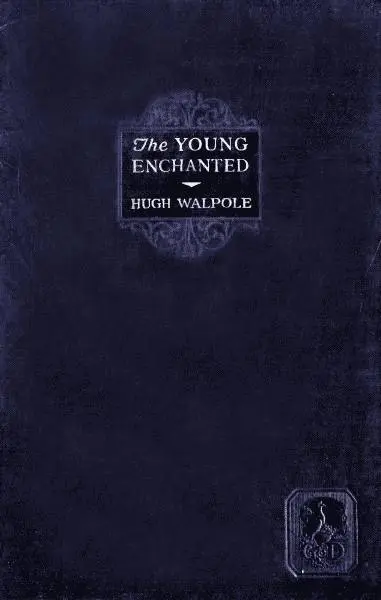
THE CLASSIC COLLECTION · 1921
"The Young Enchanted: A Romantic Story" by Hugh Walpole is a novel written in the early 20th century. It explores themes of youth, romance, and the enchantment of life through the experiences of the protagonist, Henry Trenchard, as he navigates his emotional and social journey in London. The narrative is filled with rich character dynamics and city life, particularly focusing on Henry's encounters and budding romance with Millie as they both seek independence. At the start of the story, Henry finds himself in a busy Piccadilly Circus on a spring afternoon in 1920, experiencing a mix of anxiety and enchantment as he awaits the right moment to cross the street. As he daydreams of grand adventures, his short-sightedness causes him to stumble through the bustling crowd, losing his hat and feeling a deep sense of loneliness. However, his fate appears to change when he catches sight of a girl adorned with a striking feather in her hat, followed by a stout woman. Intrigued and compelled by a sudden surge of romantic spirit, he follows them into the vibrant chaos of London's streets, setting the stage for an unexpected adventure that intertwines their fates. The beginning establishes Henry's character as sensitive and idealistic, yearning for connection in a world that feels unwelcoming.
Introduction adapted from the source catalogue; source summaries may be automatically generated.
Free to read · English · 113,221 words · No account needed
MAKE TIME FOR A GOOD BOOK
On by default. Untick to stop anonymous reading totals. Each page counts after 10 seconds in view. How this works.
Anonymous counting is on unless you have switched it off.
Very strange the part that Ellen played in all this. That odd woman made no further demonstrations of affection; she was always now ironically sarcastic, hurting Millie when she could, and she knew, as no one else in the place did, the way to hurt her. Because of her Bunny came now much less to the house.
"I can't stand that sneering woman," he said, "and she loathes me."
Millie tried to challenge her.
"Why do you hate Bunny?" she asked. "He's never done you any harm."
"Hasn't he?" Ellen answered smiling.
"No, what harm has he done you?"
"I'll tell you one day."
"I hate these mysteries," Millie cried. "Once you asked to be my
friend. Now----"
"Now?" repeated Ellen.
"You seem to want to hurt me any way you can."
Ellen had a habit of standing stiff against the wall, her heels
together, her head back as though she were being measured for her
height.
"Perhaps I don't like to see you so happy when I'm unhappy myself."
Millie came to her.
"Why are you unhappy, Ellen? I hate you to be. I do like you. I do want to be your friend if you'll let me. I offended you somehow in the early days. You've never forgiven me for it. But I don't even now know what I did."
Ellen walked away. Suddenly she turned.
"What," she said, "can people like you know about people like us, how we suffer, how we hate ourselves, how we are thirstier and thirstier and for ever unsatisfied. . . . No, I don't mean you any harm. I'll save you from Baxter, though. You're too pretty. . . . You can escape even though I can't."
There was melodrama in this it seemed to Millie. It was quite a relief to have a fierce quarrel with Bunny five minutes later. The quarrel came, of course, from nothing--about some play which was, Bunny said, at Daly's, and Millie at the Lyric.
They were walking furiously down Knightsbridge. An omnibus passed. The
play was at the Lyric.
"Of course I was right," said Millie.
"Oh, you're always right, aren't you?"
Millie turned.
"I'm not coming on with you if you're like that."
"Very well then." He suddenly stepped back to her with his charming air
of penitence.
"Millie, I'm sorry. Don't let's fight to-day."
"Well, then, take me to see your mother."
The words seemed not to be hers. At their sudden utterance Knightsbridge, the trees of the Park were carved in coloured stone.
His mouth set. "No, I can't."
"Why not?"
"She's not--she's not in London."
She knew that he was lying.
"Then take me to where she is."
Your reading position is saved on this browser. Take it to another device with a library code. Reading pages adapt to text, rather than matching a printed edition.
Hugh Walpole

Hugh Walpole
Hugh Walpole
Hugh Walpole
BEHIND THE BOOK
This eBook is for the use of anyone anywhere in the United States and most other parts of the world at no cost and with almost no restrictions whatsoever. You may copy it, give it away or re-use it under the terms of the Project Gutenberg License included with this eBook or online at www.gutenberg.org. If you are not located in the United States, you will have to check the laws of the country where you are located before using this eBook. Read the source licence.
The original source file, including credits and licence, is retained by this library. Request an original-format copy at no charge. Please include the book title and Project Gutenberg identifier #60324.
KEEP YOUR CURIOSITY GOING
Coulson Kernahan

Maurice Baring
Frances Wright
Cécile Tormay

Frederic Jesup Stimson

W. H. P. (William Henry Pope) Jarvis