
Portrait of a Man with Red Hair: A Romantic Macabre
Hugh Walpole
THE CLASSIC COLLECTION · 1921
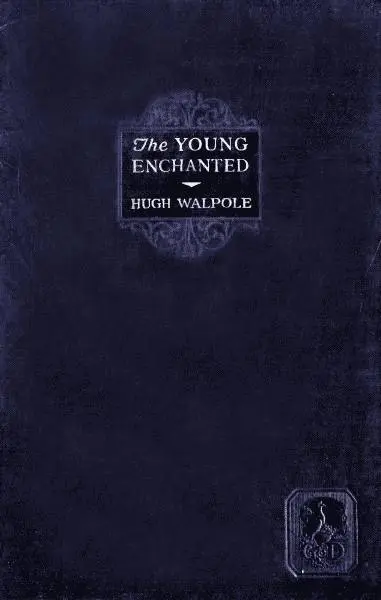
"The Young Enchanted: A Romantic Story" by Hugh Walpole is a novel written in the early 20th century. It explores themes of youth, romance, and the enchantment of life through the experiences of the protagonist, Henry Trenchard, as he navigates his emotional and social journey in London. The narrative is filled with rich character dynamics and city life, particularly focusing on Henry's encounters and budding romance with Millie as they both seek independence. At the start of the story, Henry finds himself in a busy Piccadilly Circus on a spring afternoon in 1920, experiencing a mix of anxiety and enchantment as he awaits the right moment to cross the street. As he daydreams of grand adventures, his short-sightedness causes him to stumble through the bustling crowd, losing his hat and feeling a deep sense of loneliness. However, his fate appears to change when he catches sight of a girl adorned with a striking feather in her hat, followed by a stout woman. Intrigued and compelled by a sudden surge of romantic spirit, he follows them into the vibrant chaos of London's streets, setting the stage for an unexpected adventure that intertwines their fates. The beginning establishes Henry's character as sensitive and idealistic, yearning for connection in a world that feels unwelcoming.
Introduction adapted from the source catalogue; source summaries may be automatically generated.
Free to read · English · 113,221 words · No account needed
MAKE TIME FOR A GOOD BOOK
On by default. Untick to stop anonymous reading totals. Each page counts after 10 seconds in view. How this works.
Anonymous counting is on unless you have switched it off.
"What is it?" he said, in a whisper. "Is that you, sir?" He could see very little, the afternoon light faint and green behind the rain-blurred panes, but the black figure of Duncombe was hunched up against the cab-corner.
"What is it? Oh, sir, what is it?"
Then very far away a voice came to him, the words faltering from
clenched teeth.
"It's nothing. . . . Pain bad for a moment----"
"Shall I stop the cab, sir?"
"No, no. . . . Don't wake my--sister."
The sound of agonizing pain behind the words was like something quite inhuman, unearthly, coming from the ground beneath the cab.
Henry, trembling with sympathy, and a blind eagerness to help, leant forward. Could he change seats? He had wished to sit with his back to the horses but Duncombe had insisted on his present place.
"Please . . . can't I do something?"
"No . . . nothing. It will pass in a moment."
A hand, trembling, came out and touched his, then suddenly clutched it, jumping from its weak quiver into a frantic grasp, almost crushing Henry's. The hand was hot and damp. For the moment in the contact with that trouble, the world seemed to stop--there was no sound, no movement--even the rain had withered away. . . . Then the hand trembled again, relaxed, withdrew.
Henry said nothing. He was shaking from head to foot.
Lady Bell-Hall awoke. "Oh, where am I? Who's that? Is that the bell? . . ." Then very stiffly: "Oh, I'm very sorry, Mr. Trenchard. I'm afraid I was dozing. Are we nearly there? Are you there, Charles?"
Very faintly the voice came back.
"Yes . . . another half-mile. We've passed Brantiscombe."
"Really, this cab. I wonder what Mortimers were doing, not sending us a taxi. On a day like this too."
There was silence again. The cab bumped along. Henry could think of nothing but that agonizing whisper. Only terrible suffering could have produced that and from such a man as Duncombe. The affection and devotion that had grown through these months was now redoubled. He would do anything for him, anything. Had he known? Memories came back to him of hours in the library when Sir Charles had sat there, his face white, his eyes sternly staring. Perhaps then. . . . But surely some one knew? He moved impatiently, longing for this horrible journey to be ended. Then there were lights, a gate swung back, and they were jolting down between an avenue of trees. Soon the cab stopped with a jerk before a high grey stone building that stood in the half-light as a veiling shadow for a high black doorway and broad sweeping steps. Behind, in front and on every side they were surrounded, it seemed, by dripping and sighing trees. Lady Bell-Hall climbed out with many little tweaks of dismay and difficulty, then Henry. He turned and caught one revealing vision of Sir Charles's face--white, drawn and most strangely aged--as he stood under the yellow light from a hanging square lantern before moving into the house.
Your reading position is saved on this browser. Take it to another device with a library code. Reading pages adapt to text, rather than matching a printed edition.
Hugh Walpole

Hugh Walpole
Hugh Walpole
Hugh Walpole
BEHIND THE BOOK
This eBook is for the use of anyone anywhere in the United States and most other parts of the world at no cost and with almost no restrictions whatsoever. You may copy it, give it away or re-use it under the terms of the Project Gutenberg License included with this eBook or online at www.gutenberg.org. If you are not located in the United States, you will have to check the laws of the country where you are located before using this eBook. Read the source licence.
The original source file, including credits and licence, is retained by this library. Request an original-format copy at no charge. Please include the book title and Project Gutenberg identifier #60324.
KEEP YOUR CURIOSITY GOING
Coulson Kernahan

Maurice Baring
Frances Wright
Cécile Tormay

Frederic Jesup Stimson

W. H. P. (William Henry Pope) Jarvis