THE CLASSIC COLLECTION✦A Christmas greetingCLASSIC FREE BOOKS
A Christmas greeting
Marie Corelli
THE CLASSIC COLLECTION · 1918
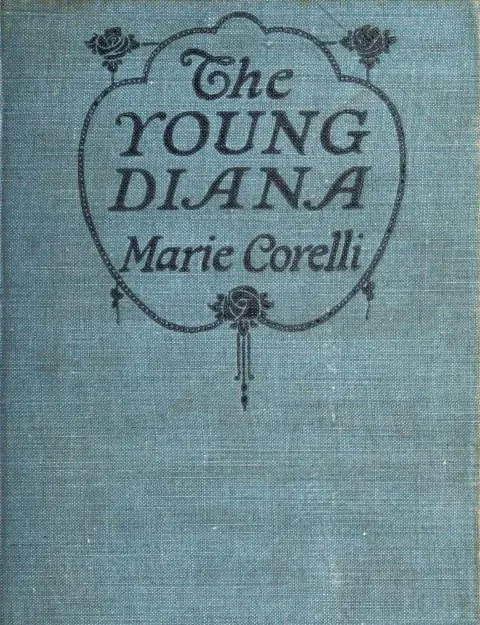
"The Young Diana: An Experiment of the Future" by Marie Corelli is a novel written in the late 19th century. The story centers on Diana May, a somewhat awkward, aging spinster who grapples with her own identity and purpose, feeling out of place in her family and society. Her parents, Mr. and Mrs. May, lead a complacent, conventional lifestyle, treating Diana as a burden rather than a beloved daughter, which amplifies her feelings of alienation and longing for love and purpose. At the start of the novel, we are introduced to Diana's discontented life with her wealthy but self-absorbed parents, who are oblivious to her aspirations and worth. The narrative delves into Diana's reflections on her life choices, her struggles with societal expectations, and the crushing disappointment of being overlooked and unloved. After a passing comment from her father about how she adds no value to their lives, Diana begins to consider her own freedom for the first time. The opening effectively sets the stage for her journey of self-discovery amid personal and societal constraints, hinting at transformative possibilities that may lie ahead.
Introduction adapted from the source catalogue; source summaries may be automatically generated.
Free to read · English · 112,101 words · No account needed
MAKE TIME FOR A GOOD BOOK
On by default. Untick to stop anonymous reading totals. Each page counts after 10 seconds in view. How this works.
Anonymous counting is on unless you have switched it off.
Diana held up a hand,--she smiled still, but a trifle austerely.
“That will do, Grace!”
Grace coughed discreetly and subsided.
“Is mother still lying down?” then asked Diana.
“Yes, miss. She’ll be on her bed till the dinner dressing bell rings. And Mr. May’s asleep over his newspaper in the garden.”
Again Diana laughed her clear, pretty laugh. The somnolent habits of her parents were so enlivening, and made home-life so cheerful!
“Well, all right, Grace,” she said. “If there’s nothing for me to do I shall go for a walk presently. So you’ll know what to say if I’m asked for.”
Grace assented, and then departed. Diana finished her cup of tea in meditative mood,--then, resolving to throw her retrospective thoughts to the winds, prepared to go out. It was an exceptionally fine afternoon, warm and brilliant, and instead of her navy linen gown which had seen considerable wear and tear, she put on a plain white one which became her much better than the indigo blue, and, completing her costume with a very simple straw hat and white parasol, she went downstairs and out of the house into the garden. She had meant to avoid her father, whom she saw on the lawn, under the spreading boughs of a cedar tree, seated in one rustic arm-chair, with his short legs comfortably disposed on another, and the day’s newspaper modestly spread as a coverlet over his unbuttoned waistcoat,--but an inquisitive wasp happening to buzz too near his nose he made a dart at it with one hand, and opening his eyes, perceived her white figure moving across the grass.
“Who’s that? What’s that?” he called out, sharply. “Don’t glide about like a ghost! Is it you, Diana?”
“Yes,--it’s me,” she replied, and came up beside him.
He gave her a casual look,--then sniffed and smiled sardonically.
“Dear me! How fine we are! I thought it was some young girl of the neighbourhood leaving cards on your mother! Why are you wearing white? Going to a wedding?”
Diana coloured to the roots of her pretty hair.
“It’s one of my washing frocks,” she submitted.
“Oh, is it? Well, I like to see you in dark colours--they are more suited to--to your age. Only very young people should wear white.”
He yawned capaciously. “Only very young people,” he repeated, closing his eyes. “Try and remember that.”
“Mrs. Ross-Percival wears white,” said Diana, quietly. “You are always holding her up to admiration. And she’s sixty, if she’s a day.”
Mr. Polydore May opened his eyes and bounced up in his chair.
Your reading position is saved on this browser. Take it to another device with a library code. Reading pages adapt to text, rather than matching a printed edition.
Marie Corelli
Marie Corelli

Marie Corelli

Marie Corelli
BEHIND THE BOOK
This eBook is for the use of anyone anywhere in the United States and most other parts of the world at no cost and with almost no restrictions whatsoever. You may copy it, give it away or re-use it under the terms of the Project Gutenberg License included with this eBook or online at www.gutenberg.org. If you are not located in the United States, you will have to check the laws of the country where you are located before using this eBook. Read the source licence.
The original source file, including credits and licence, is retained by this library. Request an original-format copy at no charge. Please include the book title and Project Gutenberg identifier #66320.
KEEP YOUR CURIOSITY GOING
Coulson Kernahan

Maurice Baring
Frances Wright
Cécile Tormay

Frederic Jesup Stimson

W. H. P. (William Henry Pope) Jarvis