THE CLASSIC COLLECTION✦A Christmas greetingCLASSIC FREE BOOKS
A Christmas greeting
Marie Corelli
THE CLASSIC COLLECTION · 1918
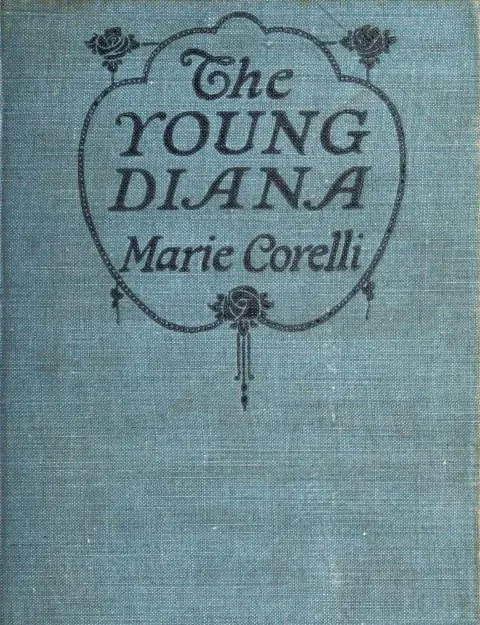
"The Young Diana: An Experiment of the Future" by Marie Corelli is a novel written in the late 19th century. The story centers on Diana May, a somewhat awkward, aging spinster who grapples with her own identity and purpose, feeling out of place in her family and society. Her parents, Mr. and Mrs. May, lead a complacent, conventional lifestyle, treating Diana as a burden rather than a beloved daughter, which amplifies her feelings of alienation and longing for love and purpose. At the start of the novel, we are introduced to Diana's discontented life with her wealthy but self-absorbed parents, who are oblivious to her aspirations and worth. The narrative delves into Diana's reflections on her life choices, her struggles with societal expectations, and the crushing disappointment of being overlooked and unloved. After a passing comment from her father about how she adds no value to their lives, Diana begins to consider her own freedom for the first time. The opening effectively sets the stage for her journey of self-discovery amid personal and societal constraints, hinting at transformative possibilities that may lie ahead.
Introduction adapted from the source catalogue; source summaries may be automatically generated.
Free to read · English · 112,101 words · No account needed
MAKE TIME FOR A GOOD BOOK
On by default. Untick to stop anonymous reading totals. Each page counts after 10 seconds in view. How this works.
Anonymous counting is on unless you have switched it off.
My heroine, Diana May, wondered. She was always wondering. She spent weeks, and months, and years, in a chronic state of wonder. She wondered about herself and several other people, because she thought both herself and those several other people so absurd. She found no use for herself in the general scheme of things, and tried, with much patient humility, to account for herself. But though she read books on science, books on psychology, books on natural and spiritual law, and studied complex problems of evolution and selection of species till her poor dim eyes grew dimmer, and the “lines from nose to chin” became ever longer and deeper, she could discover no way through the thick bog of her difficulties. She was an awkward numeral in a sum; she did not know why she came in or how she was to be got out.
Her father and mother were what are called “very well-to-do-people,” with a pleasantly suburban reputation for respectability and regular church attendance. Mr. James Polydore May,--this was his name in full, as engraved on his visiting card--was a small man in stature, but in self-complacency the biggest one alive. He had made a considerable fortune in a certain manufacturing business which need not here be specified, and he had speculated with it in a shrewd and careful manner which was not without a touch of genius, the happy result being that he had always gained and never lost. Now at the age of sixty, he was free from all financial care, and could rattle gold and silver in his trousers-pockets with a sense of pleasure in their clinking sound,--they had the sweetness of church-bells which proclaim the sure nearness of a prosperous town. He was not a bad-looking little veteran,--he had, as he was fond of saying of himself, “a good chest measurement,” and though his legs were short, they were not bandy. Inclined to corpulence, the two lower buttons of his waistcoat were generally left undone, that he might the more easily stretch himself after a full meal. His physiognomy was not so much intelligent as pugnacious--his bushy eyebrows, hair and moustache gave him at certain moments the look of an irascible old terrier. He had keen small eyes, coming close to the bridge of a rather pronounced Israelitish nose, and to these characteristics was added a generally assertive air,--an air which went before him like an advancing atmosphere, heralding his approach as a “somebody”--that sort of atmosphere which invariably accompanies nobodies. His admiration of the fair sex was open and not always discreet, and from his youth up he had believed himself capable of subjugating any and every woman. He had an agreeable “first manner” of his own on introduction,--a manner which was absolutely deceptive, giving no clue to the uglier side of his nature. His wife could have told whole stories about this “first manner” of his, had she not long ago given up the attempt to retain any hold on her own individuality. She had been a woman of average intelligence when she married him,--commonplace, certainly, but good-natured and willing to make the best of everything; needless to say that the illusions of youth vanished with the first years of wedded life (as they are apt to do), and she had gradually sunk into a flabby condition of resigned nonentity, seeing there was nothing else left for her. The dull, tame tenor of her days had once been interrupted by the birth of her only child Diana, who as long as she was small and young, and while she was being educated under the usual system of governesses and schools, was an object of delight, affection, amusement and interest, and who, when she grew up and “came out” at eighteen as a graceful, pretty girl of the freshest type of English beauty, gave her mother something to love and to live for,--but alas!--Diana had proved the bitterest of all her disappointments. The “coming-out” business, the balls, the race-meetings and other matrimonial traps had been set in vain;--the training, the music, the dancing, the “toilettes”--had failed to attract,--and Diana had not married. She had fallen in love, as most girls do before they know much about men,--and she had engaged herself to an officer with “expectations” for whom, with a romantic devotion as out of date as the poems of Chaucer, she had waited for seven long years in a resigned condition of alarming constancy,--and then, when his “expectations” were realised, he had promptly thrown her over for a fairer and younger partner. By that time Diana was what is called “getting on.” All this had tried the temper of Mrs. James Polydore May considerably--and she took refuge from her many vexations in the pleasures of the table and the consolations of sleep. The result of this mode of procedure was that she became corpulent and unwieldy,--her original self was swallowed up in a sort of featherbed of adipose tissue, from which she peered out on the world with protruding, lustreless eyes, the tip of her small nose seeming to protest feebly against the injustice of being well-nigh walled from sight between the massive flabby cheeks on either side of its never classic and distinctly parsimonious proportions. With oversleep and over-eating she had matured into a stupid and somewhat obstinate woman, with a habit of saying unmeaningly nice or nasty things:--she would “gush” affectionately to all and sundry,--to the maid who fastened her shoes as ardently as to a friend of many years standing,--yet she would mock her own guests behind their backs, or unkindly criticise the physical and mental defects of the very man or woman she had flattered obsequiously five minutes before. So that she was not exactly a “safe” acquaintance,--you never knew where to have her. But,--as is often the case with these placidly smiling, obese ladies,--everyone seemed to be in a conspiracy to call her “sweet,” and “dear” and “kind,” whereas in very truth she was one of the most selfish souls extant. Her charities were always carefully considered and bestowed in quarters where she was likely to get most credit for them,--her profusely expressed sympathy for other people’s troubles exhausted itself in a few moments, and she would straightway forget what form of loss or misfortune she had just been commiserating,--while, despite her proverbial “dear” and “sweet” attributes, she had a sulky temper which would hold her in its grip for days, during which time she would neither speak nor be spoken to. Her chief interest and attention were centred on eatables, and she always made a point of going to breakfast in advance of her husband, so that she might select for herself the most succulent morsels out of the regulation dish of fried bacon, before he had a chance to look in. Husband and wife were always arguing with each other, and both were always wrong in each other’s opinion. Mrs. James Polydore May considered her worser half as something of a wayward and peevish child, and he in turn looked upon her as a useful domestic female--“perfectly simple and natural,” he was wont to say, a statement which, if true, would have been vastly convenient to him as he could then have deceived her more easily. But “deeper than ever plummet sounded” was the “simplicity” wherewith Mrs. James Polydore May was endowed, and the “natural” way in which she managed to secure her own comfort, convenience and ease while assuming to be the most guileless and unselfish of women; indeed there were times when she was fairly astonished at herself for having “arranged things so cleverly,” as she expressed it. Whenever a woman of her type admits to having “arranged things cleverly” you may be sure that the most astute lawyer alive could never surpass her in the height or the depth of duplicity.
Your reading position is saved on this browser. Take it to another device with a library code. Reading pages adapt to text, rather than matching a printed edition.
Marie Corelli
Marie Corelli

Marie Corelli

Marie Corelli
BEHIND THE BOOK
This eBook is for the use of anyone anywhere in the United States and most other parts of the world at no cost and with almost no restrictions whatsoever. You may copy it, give it away or re-use it under the terms of the Project Gutenberg License included with this eBook or online at www.gutenberg.org. If you are not located in the United States, you will have to check the laws of the country where you are located before using this eBook. Read the source licence.
The original source file, including credits and licence, is retained by this library. Request an original-format copy at no charge. Please include the book title and Project Gutenberg identifier #66320.
KEEP YOUR CURIOSITY GOING
Coulson Kernahan

Maurice Baring
Frances Wright
Cécile Tormay

Frederic Jesup Stimson

W. H. P. (William Henry Pope) Jarvis