THE CLASSIC COLLECTION✦A Christmas greetingCLASSIC FREE BOOKS
A Christmas greeting
Marie Corelli
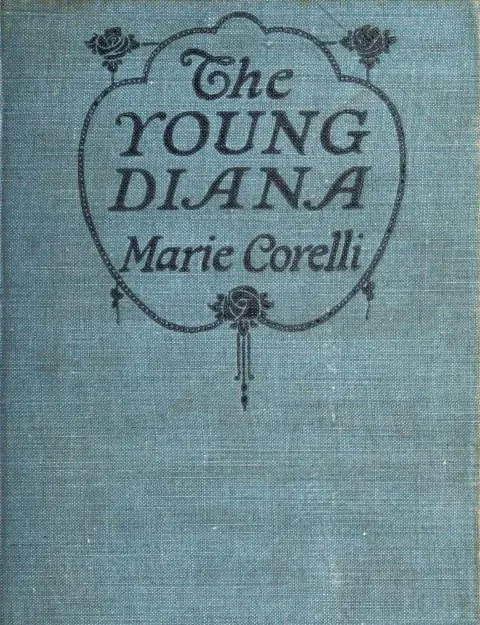
THE CLASSIC COLLECTION · 1918
"The Young Diana: An Experiment of the Future" by Marie Corelli is a novel written in the late 19th century. The story centers on Diana May, a somewhat awkward, aging spinster who grapples with her own identity and purpose, feeling out of place in her family and society. Her parents, Mr. and Mrs. May, lead a complacent, conventional lifestyle, treating Diana as a burden rather than a beloved daughter, which amplifies her feelings of alienation and longing for love and purpose. At the start of the novel, we are introduced to Diana's discontented life with her wealthy but self-absorbed parents, who are oblivious to her aspirations and worth. The narrative delves into Diana's reflections on her life choices, her struggles with societal expectations, and the crushing disappointment of being overlooked and unloved. After a passing comment from her father about how she adds no value to their lives, Diana begins to consider her own freedom for the first time. The opening effectively sets the stage for her journey of self-discovery amid personal and societal constraints, hinting at transformative possibilities that may lie ahead.
Introduction adapted from the source catalogue; source summaries may be automatically generated.
Free to read · English · 112,101 words · No account needed
MAKE TIME FOR A GOOD BOOK
On by default. Untick to stop anonymous reading totals. Each page counts after 10 seconds in view. How this works.
Anonymous counting is on unless you have switched it off.
He was a trifle vexed. He hardly cared to hear that going away from him altogether was “a delightful experience.” She was rapidly recovering from her trance-like condition, and swept back her hair from her brows with a relieved, yet puzzled gesture.
“So it’s all over!” she said. “I’m here just the same as ever! I was sure I had gone away!”
“Where?” he asked.
“Oh, ever so far!” she answered. “I was carried off by people I couldn’t see--but they were kind and careful, and it was quite easy going. And then I came to a garden--oh!--such an exquisite place, full of the loveliest flowers--somebody said it was mine! I wish it were!”
“You were dreaming,” he said, impatiently. “There’s nothing in dreams! The chief point to me is that you have not suffered any pain. You have nothing to complain of?”
She thought a minute, trying to recall her sensations.
“No,” she answered, truthfully, “nothing.”
“Good! Then I can proceed without fear,” he said. “Enough for
to-night--we will go.”
Her eyes were fixed on the revolving Wheel.
“It goes slowly because the sunshine has gone, I suppose?” she asked. “And all the light it produces now is from the interior stores it has gathered up in the day?”
He was surprised at the quickness of her perception.
“Yes--that is so,” he said.
“Then it never stops absolutely dead?”
“Never.”
She smiled.
“Wonderful Dimitrius! You have built up a little mechanical universe of your own and you are the god of it! You must be very pleased with yourself!”
“I am equally pleased with you,” he said. “You surpass all my
expectations.”
“Thanks so much!” and she curtsied to him playfully. “May I say good-night? Will not your mother wonder where we are?”
“My mother is too sensible a woman to question my movements,” he replied. “Come! You are sure you feel strong and well?”
“Quite sure!” she said, then paused, surprised at the intense way he
looked at her.
“Have you ever heard these lines?” he asked, suddenly:
“O, she doth teach the torches to burn bright!
Her beauty hangs upon the cheek of night,
Like a rich jewel in an Ethiop’s ear--
Beauty too rich for use, for earth too dear!”
Diana smiled happily.
“Of course! Shakespeare’s utterance! Who else has ever written or could
write such lines?”
“I’m glad you know them!” he said, musingly. “They occurred to me just
now--when----”
He broke off abruptly.
“Come!” he repeated. “We shall not see this place again for a couple of months--perhaps longer. And--the sooner we get away the better!”
“Why?” asked Diana, surprised.
Your reading position is saved on this browser. Take it to another device with a library code. Reading pages adapt to text, rather than matching a printed edition.
Marie Corelli
Marie Corelli

Marie Corelli

Marie Corelli
BEHIND THE BOOK
This eBook is for the use of anyone anywhere in the United States and most other parts of the world at no cost and with almost no restrictions whatsoever. You may copy it, give it away or re-use it under the terms of the Project Gutenberg License included with this eBook or online at www.gutenberg.org. If you are not located in the United States, you will have to check the laws of the country where you are located before using this eBook. Read the source licence.
The original source file, including credits and licence, is retained by this library. Request an original-format copy at no charge. Please include the book title and Project Gutenberg identifier #66320.
KEEP YOUR CURIOSITY GOING
Coulson Kernahan

Maurice Baring
Frances Wright
Cécile Tormay

Frederic Jesup Stimson

W. H. P. (William Henry Pope) Jarvis