THE CLASSIC COLLECTION✦A Christmas greetingCLASSIC FREE BOOKS
A Christmas greeting
Marie Corelli
THE CLASSIC COLLECTION · 1918
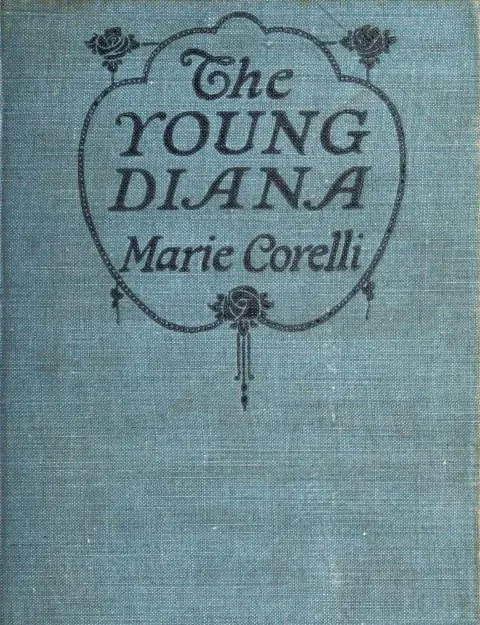
"The Young Diana: An Experiment of the Future" by Marie Corelli is a novel written in the late 19th century. The story centers on Diana May, a somewhat awkward, aging spinster who grapples with her own identity and purpose, feeling out of place in her family and society. Her parents, Mr. and Mrs. May, lead a complacent, conventional lifestyle, treating Diana as a burden rather than a beloved daughter, which amplifies her feelings of alienation and longing for love and purpose. At the start of the novel, we are introduced to Diana's discontented life with her wealthy but self-absorbed parents, who are oblivious to her aspirations and worth. The narrative delves into Diana's reflections on her life choices, her struggles with societal expectations, and the crushing disappointment of being overlooked and unloved. After a passing comment from her father about how she adds no value to their lives, Diana begins to consider her own freedom for the first time. The opening effectively sets the stage for her journey of self-discovery amid personal and societal constraints, hinting at transformative possibilities that may lie ahead.
Introduction adapted from the source catalogue; source summaries may be automatically generated.
Free to read · English · 112,101 words · No account needed
MAKE TIME FOR A GOOD BOOK
On by default. Untick to stop anonymous reading totals. Each page counts after 10 seconds in view. How this works.
Anonymous counting is on unless you have switched it off.
“Oh, you have a sailing boat on the lake?” exclaimed Diana, clasping her hands in well-affected ecstasy. “How enchanting! Like Lord Byron, when he lived at the Villa Diodati!”
“Ah!” put in Professor Chauvet. “So you know your Byron! Then you are not one of the moderns?”
Diana smiled.
“No. I do not prefer Kipling to the author of ‘Childe Harold.’”
“Then you are lost--irretrievably lost!” said the Professor. “In England, at any rate. In England, if you are a true lover of literature, you must sneer at Byron because it’s academic to do so--Oxford and Cambridge have taken to decrying genius and worshipping mediocrity. Byron is the only English poet known and honoured in other countries than England--your modern verse writers are not understood in France, Italy or Russia. Half a dozen of Byron’s stanzas would set up all the British latter-day rhymers with ideas,--only, of course, they would never admit it. I’m glad I’ve met an Englishwoman who has sense enough to appreciate Byron.”
“Thank you!” said Diana in a small, meek voice. “You are most kind!”
Here Farnese rushed in again upon his argument.
“That glass dome----”
Diana smothered a tiny yawn.
“Oh, that’s an astronomical place!” she said, indifferently. “You know the kind of thing! Telescopes, globes, mathematical instruments--all those sort of objects.”
The Marchese looked surprised,--then incredulous.
“An astronomical place?” he repeated. “Are you sure? Have you seen it?”
“Why, yes, of course!” and she laughed. “Haven’t you?”
“Never! He allows no visitors inside it.”
“Ah, I expect you’re too inquisitive!” and she looked at him with a bland and compassionate tolerance. “You see, being a woman, I don’t care about difficult studies, such as astronomy. Women are not supposed to understand the sciences,--they never can grasp anything in the way of mathematics, can they?”
Farnese hesitated.
Chauvet interposed quickly.
“They can,--but to my mind they cease to be women when they do. They become indifferent to the softer emotions----”
“What emotions?” queried Diana, unfurling a little fan and waving it
slowly to and fro.
“The emotions of love,--of tenderness,--of passion----”
“Ah, yes! You mean the emotions of love, of tenderness, of passion--for what? For man? Well, of course!--the most surface knowledge of mathematics would soon put an end to that sort of thing!”
“Dear English madame, you are pleased to be severe!” said Chauvet. “Yet the soft emotions are surely ‘woman’s distinguishing charm’?”
She laughed.
Your reading position is saved on this browser. Take it to another device with a library code. Reading pages adapt to text, rather than matching a printed edition.
Marie Corelli
Marie Corelli

Marie Corelli

Marie Corelli
BEHIND THE BOOK
This eBook is for the use of anyone anywhere in the United States and most other parts of the world at no cost and with almost no restrictions whatsoever. You may copy it, give it away or re-use it under the terms of the Project Gutenberg License included with this eBook or online at www.gutenberg.org. If you are not located in the United States, you will have to check the laws of the country where you are located before using this eBook. Read the source licence.
The original source file, including credits and licence, is retained by this library. Request an original-format copy at no charge. Please include the book title and Project Gutenberg identifier #66320.
KEEP YOUR CURIOSITY GOING
Coulson Kernahan

Maurice Baring
Frances Wright
Cécile Tormay

Frederic Jesup Stimson

W. H. P. (William Henry Pope) Jarvis