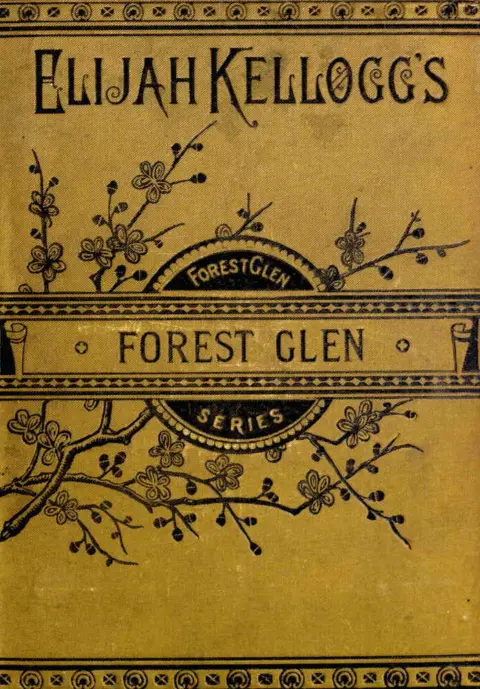
Forest Glen; or, The Mohawk’s Friendship
Elijah Kellogg
THE CLASSIC COLLECTION · 1871
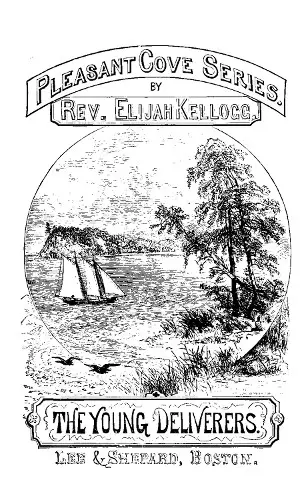
"The Young Deliverers of Pleasant Cove" by Elijah Kellogg is a historical novel written in the late 19th century. The book follows the adventures of young protagonists, particularly focusing on Arthur Brown and his companions as they embark on daring voyages amidst the backdrop of historical maritime challenges and personal tribulations. Themes of camaraderie, courage, and the exploration of new lands are prominent as the characters engage with their environments and face various moral dilemmas. The opening of the narrative introduces readers to key characters and sets the stage for their upcoming adventures. Arthur Brown, a young man recently appointed captain of the brigantine named after his father, is joined by his friend Ned Gates, a smaller but determined sailor. The chapter establishes their camaraderie and introduces secondary characters, including Jacques, a local Frenchman knowledgeable about the coastline, and James Peterson, who is remembered fondly despite his struggles with alcohol. The narrative captures the boys' mixed feelings about their maritime duties and the profound impact of loss, particularly the death of Uncle Isaac. As preparations for another voyage to Marseilles begin, the young deliverers engage in tasks that reveal their ingenuity and resilience, laying the groundwork for the adventures and challenges that await them in the surrounding unfamiliar territories.
Introduction adapted from the source catalogue; source summaries may be automatically generated.
Free to read · English · 57,850 words · No account needed
MAKE TIME FOR A GOOD BOOK
On by default. Untick to stop anonymous reading totals. Each page counts after 10 seconds in view. How this works.
Anonymous counting is on unless you have switched it off.
Captain Rhines had proceeded but a little way after leaving Dick, when, just before him, a man was pushed out of the door of a sailor boarding-house, and fell his whole length on the sidewalk. He rose with difficulty to his feet as the captain came along, and addressed him by name. He was covered with filth, his face bruised and bloody, a battered tarpaulin on his head, a beard of three weeks' growth, clothed in a red shirt, canvas trousers, and barefoot. He trembled like a man with the fever and ague, evidently being in that state expressively termed by sailors the "horrors," and could scarcely stand.
"Cap'n," he cried, "don't you know me?"
"No," he replied, after looking at him a moment, "and don't want to."
"I'm Percival, William Percival, that went mate of your ship with
Captain Aldrich."
"Your own mother wouldn't know you, Percival. How came you in this
condition?"
"I've had hard luck, cap'n: been cast away; lost everything but what I
stood in."
The captain was the last man to be imposed upon. He had always believed that Percival and Aldrich both were two precious rascals, saw in an instant what had reduced him to his present state, and that the story of shipwreck was manufactured at the spur of the moment.
"You've cast yourself away," was the reply. "You might have been master of a ship if you had behaved yourself, and had any principle. Don't lie to me. You've got the shakes on you this blessed minute."
"That's so, cap'n," said the poor wretch, making a virtue of necessity; "but I only drank to drown misery. O, cap'n," he cried, stretching out his hands, which trembled like an aspen leaf, "give me a quarter, just to get a little rum to taper off with."
"Not a cent. You've had too much now."
"O, cap'n, dear cap'n, do," cried the miserable wretch; "only a
fourpence ha'pp'ny, cap'n."
"No."
"Three cents, then, just to get one glass to taper off with."
"Why don't you go and ship?"
"No cap'n will have me as I look now, when men are plenty."
"I will give you victuals."
"I can't eat, nor I can't sleep."
"If I give you clothes, you'll sell them for rum."
The captain was turning to leave him, when he said, "I could tell you something that would make you shell out the chink."
The captain, paying no attention, kept on, when he cried, "I can tell you what became of that nigger you thought so much of."
The captain whirled on his heel in an instant. "What nigger?"
"Why, that was pilot in the Casco."
"James Peterson?"
"Ay."
Your reading position is saved on this browser. Take it to another device with a library code. Reading pages adapt to text, rather than matching a printed edition.
Elijah Kellogg
Elijah Kellogg
Elijah Kellogg
Elijah Kellogg
BEHIND THE BOOK
This eBook is for the use of anyone anywhere in the United States and most other parts of the world at no cost and with almost no restrictions whatsoever. You may copy it, give it away or re-use it under the terms of the Project Gutenberg License included with this eBook or online at www.gutenberg.org. If you are not located in the United States, you will have to check the laws of the country where you are located before using this eBook. Read the source licence.
The original source file, including credits and licence, is retained by this library. Request an original-format copy at no charge. Please include the book title and Project Gutenberg identifier #49745.
KEEP YOUR CURIOSITY GOING
Cécile Tormay

Moritz Busch
Coulson Kernahan
John L. Ransom

Maurice Baring
Frances Wright