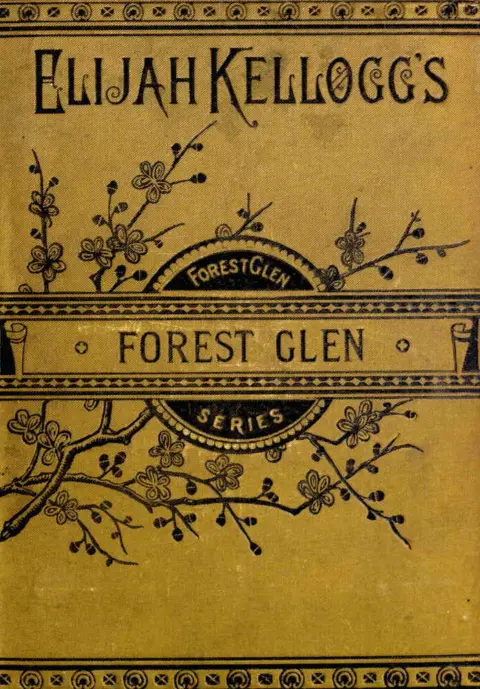
Forest Glen; or, The Mohawk’s Friendship
Elijah Kellogg
THE CLASSIC COLLECTION · 1871
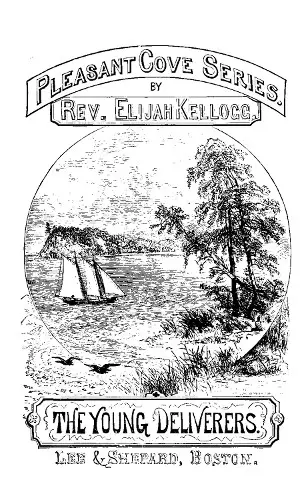
"The Young Deliverers of Pleasant Cove" by Elijah Kellogg is a historical novel written in the late 19th century. The book follows the adventures of young protagonists, particularly focusing on Arthur Brown and his companions as they embark on daring voyages amidst the backdrop of historical maritime challenges and personal tribulations. Themes of camaraderie, courage, and the exploration of new lands are prominent as the characters engage with their environments and face various moral dilemmas. The opening of the narrative introduces readers to key characters and sets the stage for their upcoming adventures. Arthur Brown, a young man recently appointed captain of the brigantine named after his father, is joined by his friend Ned Gates, a smaller but determined sailor. The chapter establishes their camaraderie and introduces secondary characters, including Jacques, a local Frenchman knowledgeable about the coastline, and James Peterson, who is remembered fondly despite his struggles with alcohol. The narrative captures the boys' mixed feelings about their maritime duties and the profound impact of loss, particularly the death of Uncle Isaac. As preparations for another voyage to Marseilles begin, the young deliverers engage in tasks that reveal their ingenuity and resilience, laying the groundwork for the adventures and challenges that await them in the surrounding unfamiliar territories.
Introduction adapted from the source catalogue; source summaries may be automatically generated.
Free to read · English · 57,850 words · No account needed
MAKE TIME FOR A GOOD BOOK
On by default. Untick to stop anonymous reading totals. Each page counts after 10 seconds in view. How this works.
Anonymous counting is on unless you have switched it off.
"I didn't know olive trees grew so large," said Walter. "None of the others here are half as large as this. How brown the bark looks! and great furrows in it, just like an old willow, and the leaves look like willow leaves. It is hollow, too, and covered with warts."
"Yes, because it is so old."
"How old is it?"
"God only knows; perhaps as old as the world."
"As old as the world?"
"Yes, citizens, it might have been the first one made."
"The first one made!"
"Well, nobody ever knew one to die, except it was burnt, cut down, or killed by the frost. They can't bear the frost. A few years ago, most of the trees in the low ground were hurt by the frost, but this, being on higher ground, escaped. I don't believe they ever die of their own accord."
"How long is it," asked Walter, "after they are planted, before they
bear?"
"They bear a few olives in ten or twelve years, but not much of a crop till they are twenty-five or thirty."
"Don't they lose their leaves?"
"A part of the leaves turn yellow, as you see, in the fall, but they are never bare; and in the spring the new ones push off the old ones."
"Do they bear every year?"
"No, every other: they work one year for themselves, and one for the
owner."
"Do they yield much oil?"
"A hundred weight of clean olives makes about thirty or thirty-two
pounds of oil."
"How much oil will a big tree, like that we have clasped, make?"
"This year that tree has about one hundred and forty livres (pounds)."
"How much oil will they make?"
"About a barrel--twenty of your gallons."
"What is it worth?"
"Three francs (sixty cents) a gallon; but then we raise other crops
among the olives."
"But I suppose they are like our crops that we raise in the
orchards--rather light?"
"Yes; but the olive will grow on poor land, endure the drought, and
don't require much care."
"What do you dress them with?"
"The skins and stones that are left after pressing, are as good as
anything."
"How much do the other trees average? There are no others near as large
as this."
"About two gallons, take one year with another. The olives, however, come off after the grain harvest and the vintage are over, when there is not much else to do."
Your reading position is saved on this browser. Take it to another device with a library code. Reading pages adapt to text, rather than matching a printed edition.
Elijah Kellogg
Elijah Kellogg
Elijah Kellogg
Elijah Kellogg
BEHIND THE BOOK
This eBook is for the use of anyone anywhere in the United States and most other parts of the world at no cost and with almost no restrictions whatsoever. You may copy it, give it away or re-use it under the terms of the Project Gutenberg License included with this eBook or online at www.gutenberg.org. If you are not located in the United States, you will have to check the laws of the country where you are located before using this eBook. Read the source licence.
The original source file, including credits and licence, is retained by this library. Request an original-format copy at no charge. Please include the book title and Project Gutenberg identifier #49745.
KEEP YOUR CURIOSITY GOING
Cécile Tormay

Moritz Busch
Coulson Kernahan
John L. Ransom

Maurice Baring
Frances Wright