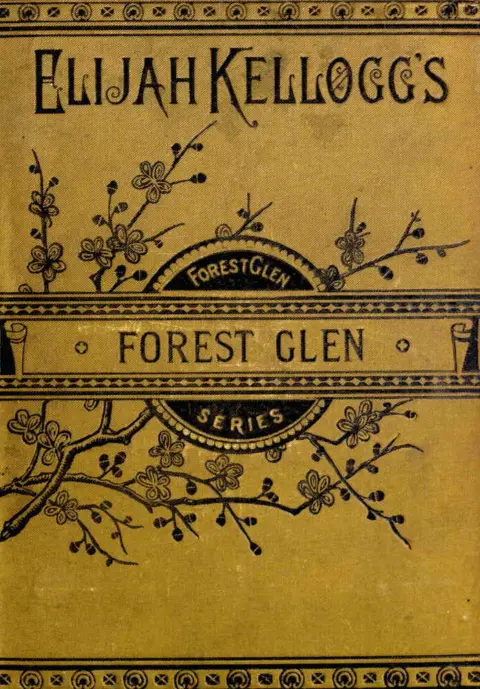
Forest Glen; or, The Mohawk’s Friendship
Elijah Kellogg
THE CLASSIC COLLECTION · 1871
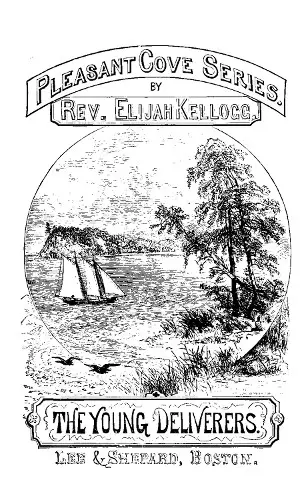
"The Young Deliverers of Pleasant Cove" by Elijah Kellogg is a historical novel written in the late 19th century. The book follows the adventures of young protagonists, particularly focusing on Arthur Brown and his companions as they embark on daring voyages amidst the backdrop of historical maritime challenges and personal tribulations. Themes of camaraderie, courage, and the exploration of new lands are prominent as the characters engage with their environments and face various moral dilemmas. The opening of the narrative introduces readers to key characters and sets the stage for their upcoming adventures. Arthur Brown, a young man recently appointed captain of the brigantine named after his father, is joined by his friend Ned Gates, a smaller but determined sailor. The chapter establishes their camaraderie and introduces secondary characters, including Jacques, a local Frenchman knowledgeable about the coastline, and James Peterson, who is remembered fondly despite his struggles with alcohol. The narrative captures the boys' mixed feelings about their maritime duties and the profound impact of loss, particularly the death of Uncle Isaac. As preparations for another voyage to Marseilles begin, the young deliverers engage in tasks that reveal their ingenuity and resilience, laying the groundwork for the adventures and challenges that await them in the surrounding unfamiliar territories.
Introduction adapted from the source catalogue; source summaries may be automatically generated.
Free to read · English · 57,850 words · No account needed
MAKE TIME FOR A GOOD BOOK
On by default. Untick to stop anonymous reading totals. Each page counts after 10 seconds in view. How this works.
Anonymous counting is on unless you have switched it off.
"As much again as one hundred."
"Den s'pose I be two hunder."
"No, you ain't two hundred, or one hundred. What makes you think you
are so old?"
"'Cause eberybody say, when come to de vessel, 'Dere come de old bumboat-man.' I go 'long de street: dey say, 'Dere go ole Quambo.' Eberybody gone I knowed; cap'ns all dead, vessels all dead, too; one, two, tree massas--all be dead. Last massa, he be sick; he say, 'Gib old Quambo his freedom; he ole nigger, all wear out; only fit eat plantin.' Dat one die; his chillen all die. Ole Quambo live yet, run de bumboat, buy de slush, sell plantin, bananas, eat fish Sunday. Yah, yah, yah! S'pose Gorra mighty forget all about ole Quambo. Yah, yah, yah!"
"How long have you been a bumboat-man?"
"Dunno, massa cap'n. S'pose half hunder year."
"O, pshaw! no, you haven't half of it. Captains that follow this trade don't live long, and perhaps the vessels you used to know are not worn out, but have gone to some other island. Do you board all the vessels that come here?"
"Yes, massa, ebery one. Dey lets me hab de slush. All de cap'n know ole
Quambo."
"Do you remember an American vessel, the Casco, that, came here last
year?"
"Bery big ship, massa. Nebber so big ship here, only men-o'-war."
"Yes; do you remember her?"
"Yes, massa. Bring great pile o' boards; goberment buy it all. Me hab her slush. Sell many tings to de crew; dey hab plenty ob money."
"Did you know the cook?"
"He black man; bery large; white on his hair. Me buy de slush ob him."
"What was his name?"
"Dunno, massa; old man no 'member. He lose part ob de small finger on
de right hand."
"Just so. He was drowned. Do you remember their trying to find him on
the bottom?"
"Dat man nebber drowned, massa; he libe now."
"How do you know that?"
"Sometime, when hurricane months come, no vessel. Me go to de houses, sell de candles me buy ob de 'Merican sailors; me go to Pierre Lallemont's house; hear him tell de wife dat man no dead; he sold to de Frenchman on de plantation."
"What Frenchman?"
"Dunno, massa; no 'member."
"Who is Pierre Lallemont?"
"He free nigger; cooper; make much money; hab niggers hisself.
Eberybody know Pierre."
"I guess that's a story, Solomon, that somebody got up to hear themselves talk. The captain and crew all said he was drowned. It is likely they knew best."
"S'pose so, massa."
Your reading position is saved on this browser. Take it to another device with a library code. Reading pages adapt to text, rather than matching a printed edition.
Elijah Kellogg
Elijah Kellogg
Elijah Kellogg
Elijah Kellogg
BEHIND THE BOOK
This eBook is for the use of anyone anywhere in the United States and most other parts of the world at no cost and with almost no restrictions whatsoever. You may copy it, give it away or re-use it under the terms of the Project Gutenberg License included with this eBook or online at www.gutenberg.org. If you are not located in the United States, you will have to check the laws of the country where you are located before using this eBook. Read the source licence.
The original source file, including credits and licence, is retained by this library. Request an original-format copy at no charge. Please include the book title and Project Gutenberg identifier #49745.
KEEP YOUR CURIOSITY GOING
Cécile Tormay

Moritz Busch
Coulson Kernahan
John L. Ransom

Maurice Baring
Frances Wright