THE CLASSIC COLLECTION✦The Silent BattleCLASSIC FREE BOOKS
The Silent Battle
George Gibbs
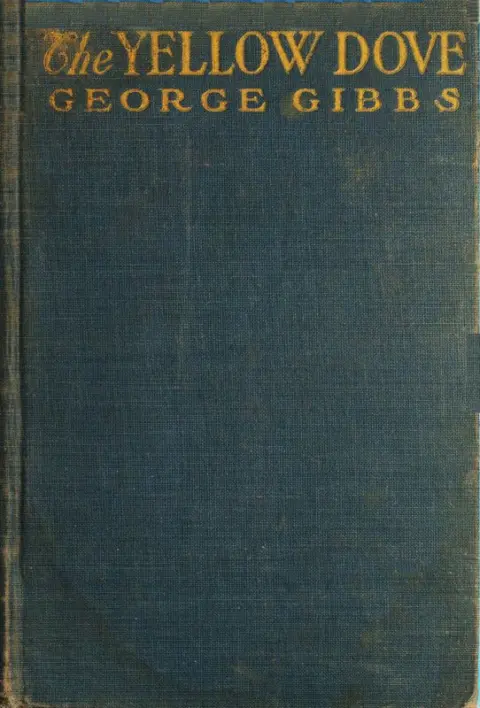
THE CLASSIC COLLECTION · 1915
"The Yellow Dove" by George Gibbs is a novel written in the early 20th century. Set against the backdrop of World War I, the story delves into themes of espionage and patriotism through a tangled web of relationships. The narrative primarily follows the character of Doris Mather as she navigates personal dilemmas amidst a larger conflict, highlighting the tension between loyalty to one's country and to one's love interests. The opening of the novel introduces a chaotic war scene, followed by a shift to Lady Betty Heathcote's sophisticated dinner gathering in London, where conversations revolve around the serious implications of the ongoing war. Among the guests is Cyril Hammersley, whose indecisiveness regarding enlisting in the war causes friction, especially with Doris, who feels passionately about contributing to the war effort. This tension is further compounded by Cyril's mysterious connections to a spy-related plot, foreshadowing conflict and suspense as the story unfolds. As the dynamic between the characters develops, the stakes rise with the revelation of espionage activity, culminating in the pivotal moment where Doris is confronted with the choice to protect Cyril or her country.
Introduction adapted from the source catalogue; source summaries may be automatically generated.
Free to read · English · 92,753 words · No account needed
MAKE TIME FOR A GOOD BOOK
On by default. Untick to stop anonymous reading totals. Each page counts after 10 seconds in view. How this works.
Anonymous counting is on unless you have switched it off.
“I kept away from Ben-a-Chielt and put up for the night at my cousin’s.”
“Who is that?”
“Lady Heathcote----”
“Oh, yes. It was at her house in London that the message passed to you.”
“Yes, Excellenz.”
Von Stromberg paused a moment and then spoke abruptly.
“Why did you not give the papers to Rizzio?”
Hammersley’s gaze met the General’s squarely.
“They were too important. I could not take the risk.”
“But his orders superseded yours.”
“I saw--but I could not take the risk.”
“Why?”
“Because I had reason to believe that Rizzio was acting for the English
Government.”
Von Stromberg’s burning gaze flickered and went out. He took a few paces across the room, his right hand tapping the back of his left. At last he came and stood before Hammersley, his hands behind his back.
“What were your reasons for believing that?”
“Maxwell learned it from Byfield.”
“Maxwell! You saw Maxwell--when?”
“The night I left London.”
“Has anything happened to him?” quickly.
“I do not know.”
The General frowned into the fire.
“It is strange,” he muttered. “Very strange. You did not realize then that I suspected you?”
Hammersley laughed.
“Not at once. I did later. That is your privilege, Excellenz. But I refused to be caught under the circumstances. I preferred to take the risk of failure. After all, you see, I succeeded.”
General von Stromberg was not immune from the frankness of Hammersley’s smile. He turned toward the table and scrutinized the papers with great care.
“These are the very papers you got from Herr Captain Byfield?”
Hammersley’s reply was startling.
“Unfortunately, no. The original papers were burned----”
“Burned!” cried the General, turning in his chair.
“But not before I had made this copy, which I put in a safe place.”
“Explain.”
“I was followed, leaving Lady Heathcote’s dinner party in an automobile, by agents of Scotland Yard. I had the slower machine and they caught me. But not before I had passed the original papers to my companion----”
“Your companion--a woman?”
“Yes, Excellenz, there was nothing else to do. She escaped while they were searching me and kept the papers----”
“Who was this woman?”
“My fiancée.”
“Her name?”
“Doris Mather.”
“English?”
“No, American.”
“And what happened then?”
“Excellenz, she read them. She is devoted to the English cause. I could do nothing. She learned that I was acting for Germany and, rather than let them fall into my hands, she burned them. It makes no difference to you or to the Vaterland, since I have brought the message here, except that my own utility in England is gone.”
“I should be sorry to be obliged to believe you.”
Your reading position is saved on this browser. Take it to another device with a library code. Reading pages adapt to text, rather than matching a printed edition.
BEHIND THE BOOK
This eBook is for the use of anyone anywhere in the United States and most other parts of the world at no cost and with almost no restrictions whatsoever. You may copy it, give it away or re-use it under the terms of the Project Gutenberg License included with this eBook or online at www.gutenberg.org. If you are not located in the United States, you will have to check the laws of the country where you are located before using this eBook. Read the source licence.
The original source file, including credits and licence, is retained by this library. Request an original-format copy at no charge. Please include the book title and Project Gutenberg identifier #55077.
KEEP YOUR CURIOSITY GOING
Cécile Tormay

Moritz Busch
Coulson Kernahan
John L. Ransom

Maurice Baring
Frances Wright