THE CLASSIC COLLECTION✦Ewing’s LadyCLASSIC FREE BOOKS
Ewing’s Lady
Harry Leon Wilson
THE CLASSIC COLLECTION · 1921
"The Wrong Twin" by Harry Leon Wilson is a novel written in the early 20th century. The story revolves around the misadventures of twin brothers, Wilbur and Merle Cowan, set against the backdrop of a changing small town. The narrative introduces a whimsical and adventurous spirit, primarily focusing on the boys as they navigate the complexities of childhood, daring exploits, and encounters with local characters. At the start of the novel, we are introduced to the Cowan twins and their life in Newbern Center, a quaint town in the throes of modernization. The setting leads them to a graveyard where they attempt to pick blackberries, setting off a chain of events that highlight their innocence and imaginative thinking. This excursion soon brings them into contact with Patricia Whipple, a young girl of their social circle who yearns for adventure and wishes to run away from home. The ensuing interactions between the children reflect the charm of their youthful escapades, blending humor and a hint of mischief that promises a delightful exploration of childhood dreams and realities as the story unfolds.
Introduction adapted from the source catalogue; source summaries may be automatically generated.
Free to read · English · 118,352 words · No account needed
MAKE TIME FOR A GOOD BOOK
On by default. Untick to stop anonymous reading totals. Each page counts after 10 seconds in view. How this works.
Anonymous counting is on unless you have switched it off.
"I want," he told the salesman, "something in a rough, coarse, common-looking suit--something such as a day labourer might wear."
The salesman was momentarily puzzled, yet seemed to see light.
"Yes, sir--right this way, sir," and he led his customer back between the lines of tables piled high with garments. He halted and spanned the chest of the customer with a tape measure. From halfway down a stack of coats he pulled one of the proper size.
"Here's a snappy thing, sir, fitted in at the back--belted--cuffs on the trousers, neat check----"
But the customer waved it aside impatiently.
"No, no! I want something common--coarse cloth, roughly made, no style; it mustn't fit too well."
The salesman deliberated sympathetically.
"Ah, I see--masquerade, sir?"
The customer again manifested impatience.
"No, no! A suit such as a day labourer might wear--a factory worker, one
of the poorer class."
The salesman heightened his manifestation of sympathy.
"Well, sir"--he deliberated, tapping his brow with a pencil, scanning the long line of garments--"I'm afraid we're not stocked with what you wish. Best go to a costumer, sir, and rent one for the night perhaps."
The customer firmly pushed back a pendent lock of hair and became
impressive.
"I tell you it is not for a masquerade or any foolishness of that sort. I wish a plain, roughly made, common-looking suit of clothes, not too well fitting--the sort of things working people wear, don't you understand?"
"But certainly, sir; I understand perfectly. This coat here is what the working people are buying; sold a dozen suits myself this week to some of the mill workers--very natty, sir, and only sixty-five dollars. If you'll look closely at the workers about town you'll see the same suits--right dressy, you'll notice. I'm afraid the other sort of thing has gone a little out of style; in fact, I don't believe you'll be able to find a suit such as you describe. They're not being made. Workers are buying this sort of garment." He picked up the snappy belted coat and fondled its nap affectionately. "Of course, for a fancy-dress party----"
"No, no, no! I tell you it isn't a masquerade!"
The salesman seemed at a loss for further suggestions. The customer's eye lighted upon a pile of coats farther down the line.
"What are those?"
"Those? Corduroy, sir. Splendid garments--suitable for the woods, camping, hunting, fishing. We're well stocked with hunting equipment. Will you look at them?"
"I suppose so," said the customer, desperately.
Your reading position is saved on this browser. Take it to another device with a library code. Reading pages adapt to text, rather than matching a printed edition.
Harry Leon Wilson
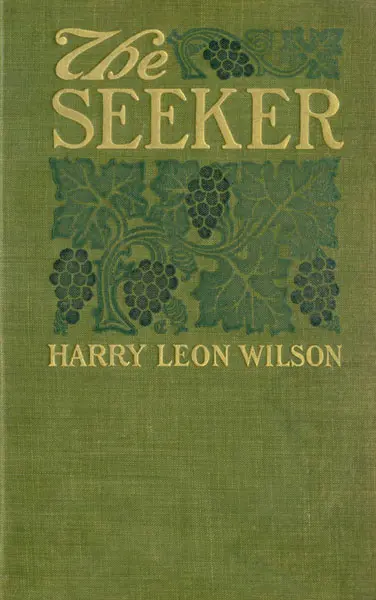
Harry Leon Wilson
Harry Leon Wilson
Harry Leon Wilson
BEHIND THE BOOK
This eBook is for the use of anyone anywhere in the United States and most other parts of the world at no cost and with almost no restrictions whatsoever. You may copy it, give it away or re-use it under the terms of the Project Gutenberg License included with this eBook or online at www.gutenberg.org. If you are not located in the United States, you will have to check the laws of the country where you are located before using this eBook. Read the source licence.
The original source file, including credits and licence, is retained by this library. Request an original-format copy at no charge. Please include the book title and Project Gutenberg identifier #11625.
KEEP YOUR CURIOSITY GOING
Coulson Kernahan

Maurice Baring
Frances Wright
Cécile Tormay

Frederic Jesup Stimson

W. H. P. (William Henry Pope) Jarvis