Southern Soldier Stories
George Cary Eggleston
THE CLASSIC COLLECTION · 1882
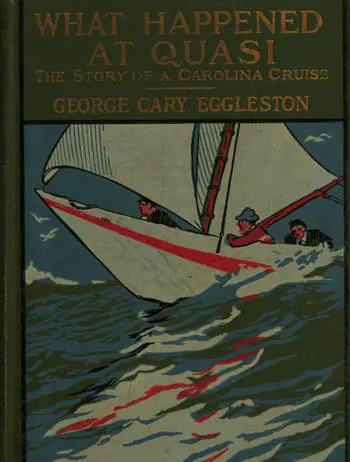
"The Wreck of the Red Bird: A Story of the Carolina Coast" by George Cary Eggleston is a novel written in the late 19th century. This coming-of-age tale centers around a group of boys, primarily featuring Ned Cooke, who embark on an adventurous journey during their summer on the Carolina coast. The narrative explores themes of friendship, nature, and the trials of youth amidst the robust backdrop of seaside life. At the start of the story, Ned and his friends arrive at Bluffton for what they expect to be a summer filled with fun and exploration. They are greeted by the affectionate and humorous Maum Sally while they revel in the joys of coastal living. However, their adventures take a turn when they learn that Ned's uncle and aunt are away, leaving the boys in charge of themselves. The boys quickly decide to embrace their freedom, leading to plans for sailing and exploring nearby islands, while their carefree days are colored by the blend of childish enthusiasm and the uncanny realities of their environment. Their initial light-hearted exploits evolve into more serious challenges, including the wreck of their boat, the loss of supplies, and the need to adapt to their unfolding situation.
Introduction adapted from the source catalogue; source summaries may be automatically generated.
Free to read · English · 40,544 words · No account needed
MAKE TIME FOR A GOOD BOOK
On by default. Untick to stop anonymous reading totals. Each page counts after 10 seconds in view. How this works.
Anonymous counting is on unless you have switched it off.
"Better call her 'axe, hatchet, and hunting-knife,'" said Jack, "because we are making her with those tools. But if we must be poetical and suggestive, why not call her Aphrodite? She, like that fabled goddess, is sprung from the foam of the sea."
"Aphrodite it is," shouted Jack's companions, and Charley added:
"You're the most classical and poetic youth of the party, Jack, if you do pretend to sneer at us for our sentimental fancy for an appropriate name."
"Very well," replied Jack, "you're welcome to think so; but just now I want my dinner worse than any thing else, and that isn't a mere sentiment I assure you."
Dinner over, the preparations for defence were begun.
"What plan have you thought of, Jack?" Charley asked.
"Let me hear from you and Ned first," answered Jack.
"Well, I've thought of earthworks," said Charley; "they say they are the
best fortifications."
"Against cannon, yes," said Ned; "but it's only because cannon can't batter them down as they can masonry. Our problem is a very different one, because our savages haven't any cannon. What we have got to do is not to make fortifications that can't be battered down by artillery, but to fence ourselves in in some way so that the negro squatters can't get at us."
"Well, what's your idea for that?" asked Charley.
"A stockade."
"Details?" queried Jack.
"My notion is," answered Ned, "to set a line of stockade around the camp, running it out into the water on each side, making a big 'C' of it. If we make it ten feet high and slope it outward, it will puzzle the squatters to get over it, and from the inside we can beat them off."
"But how shall we make the stockade?" asked Jack.
"Why, by digging a trench first, and setting timbers in it, sloping them at the proper angle, and filling in with earth."
"But couldn't a strong man pull a timber down by jumping up and hanging to it with his hands?" asked Charley.
"Perhaps so, if each timber stood alone," said Ned, "but we'll set a row of them in the ditch, and then roll a log in behind them before filling up. Then we'll set another row and roll in another log, and so on. Then, in order to pull down a post it will be necessary to lift the whole of the log that is behind it, together with all the earth that lies on top of the log, and that is more than any half dozen men can do."
Your reading position is saved on this browser. Take it to another device with a library code. Reading pages adapt to text, rather than matching a printed edition.
George Cary Eggleston
George Cary Eggleston
George Cary Eggleston
George Cary Eggleston
BEHIND THE BOOK
This eBook is for the use of anyone anywhere in the United States and most other parts of the world at no cost and with almost no restrictions whatsoever. You may copy it, give it away or re-use it under the terms of the Project Gutenberg License included with this eBook or online at www.gutenberg.org. If you are not located in the United States, you will have to check the laws of the country where you are located before using this eBook. Read the source licence.
The original source file, including credits and licence, is retained by this library. Request an original-format copy at no charge. Please include the book title and Project Gutenberg identifier #40941.
KEEP YOUR CURIOSITY GOING
Cécile Tormay

Moritz Busch
Coulson Kernahan
John L. Ransom

Maurice Baring
Frances Wright