Southern Soldier Stories
George Cary Eggleston
THE CLASSIC COLLECTION · 1882
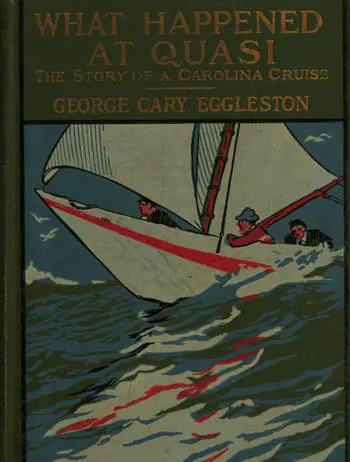
"The Wreck of the Red Bird: A Story of the Carolina Coast" by George Cary Eggleston is a novel written in the late 19th century. This coming-of-age tale centers around a group of boys, primarily featuring Ned Cooke, who embark on an adventurous journey during their summer on the Carolina coast. The narrative explores themes of friendship, nature, and the trials of youth amidst the robust backdrop of seaside life. At the start of the story, Ned and his friends arrive at Bluffton for what they expect to be a summer filled with fun and exploration. They are greeted by the affectionate and humorous Maum Sally while they revel in the joys of coastal living. However, their adventures take a turn when they learn that Ned's uncle and aunt are away, leaving the boys in charge of themselves. The boys quickly decide to embrace their freedom, leading to plans for sailing and exploring nearby islands, while their carefree days are colored by the blend of childish enthusiasm and the uncanny realities of their environment. Their initial light-hearted exploits evolve into more serious challenges, including the wreck of their boat, the loss of supplies, and the need to adapt to their unfolding situation.
Introduction adapted from the source catalogue; source summaries may be automatically generated.
Free to read · English · 40,544 words · No account needed
MAKE TIME FOR A GOOD BOOK
On by default. Untick to stop anonymous reading totals. Each page counts after 10 seconds in view. How this works.
Anonymous counting is on unless you have switched it off.
"Why, how can such things bite so? and especially how can they force their way through our blankets and clothes? I should think they'd tear themselves to pieces in the attempt."
"So should I, if I didn't know better; but as a matter of fact they do manage to get through without dulling their teeth, as we have proof."
"Have the creatures teeth?" asked Charley.
"No, of course not; but they have a sort of rasping apparatus which is just as bad. They have an acrid kind of saliva too, which they put into the wounds they make, and that is what smarts so. But come, this won't do. We must make a good smudge."
"What's a smudge?" asked Jack.
"I'll show you presently," answered Ned, while he began to build a small fire immediately in front of the tent. When it had burned a little, he smothered it with damp leaves and moss, so that it gave off a dense cloud of smoke which quickly filled the hut.
"Now the tent will soon be clear of them," said Ned.
"Sand-flies object to smoke, I suppose," said Jack.
"Very much indeed," answered Ned, "and it is customary here on the coast to have a pair of smudge boxes in front of every house."
"I don't blame them for objecting," grumbled Charley, coughing and wiping his smoke-inflamed eyes; "I can't say that I find smoke the most delightful atmosphere myself. But what is a 'smudge box,' Ned?"
"Simply a shallow box of earth set upon a post, to build a smudge upon."
"I say, Ned," asked Jack, "what do you mean by saying that sand-flies
aren't gnats?"
"Simply that they aren't," said Ned.
"What are they, then?"
"Flies."
"Well, what is a small fly but a gnat?"
"And what is a gnat but a small fly?" added Charley.
"The two are not at all the same thing," answered Ned. "That is a popular mistake. I have heard people say they could stand mosquitoes, but couldn't endure gnats; and yet the mosquito is a gnat, and what these people call gnats are not gnats at all, but simply small flies."
"What constitutes the exact difference?"
"The shape of the body. All flies are two-winged insects, and gnats are flies in that sense, of course; but gnats are those flies that have long bodies behind their wings, to balance themselves with. Mosquitoes are our best example of them. These sand flies, you see, have very short bodies."
"Yes, but very long bills, I fancy," said Charley.
"Well," said Jack, "all that is news to me."
Your reading position is saved on this browser. Take it to another device with a library code. Reading pages adapt to text, rather than matching a printed edition.
George Cary Eggleston
George Cary Eggleston
George Cary Eggleston
George Cary Eggleston
BEHIND THE BOOK
This eBook is for the use of anyone anywhere in the United States and most other parts of the world at no cost and with almost no restrictions whatsoever. You may copy it, give it away or re-use it under the terms of the Project Gutenberg License included with this eBook or online at www.gutenberg.org. If you are not located in the United States, you will have to check the laws of the country where you are located before using this eBook. Read the source licence.
The original source file, including credits and licence, is retained by this library. Request an original-format copy at no charge. Please include the book title and Project Gutenberg identifier #40941.
KEEP YOUR CURIOSITY GOING
Cécile Tormay

Moritz Busch
Coulson Kernahan
John L. Ransom

Maurice Baring
Frances Wright