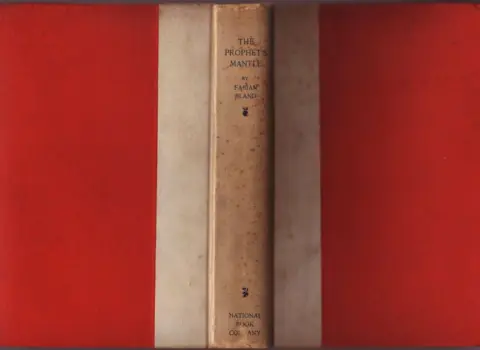
The Prophet’s Mantle
E. (Edith) Nesbit & Hubert Bland
THE CLASSIC COLLECTION · 1900
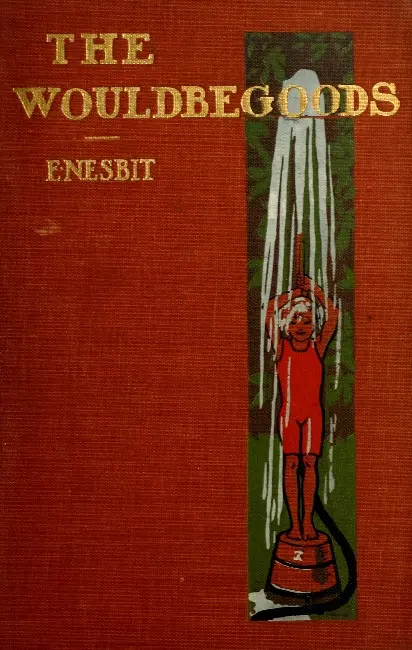
"The Wouldbegoods" by E. Nesbit is a novel published in 1901. After their garden adventures go disastrously wrong, the Bastable children are sent to spend summer in the countryside at Moat House. There, they earnestly attempt to perform good deeds—but their well-intentioned efforts consistently backfire with unintended and chaotic results. Narrated by young Oswald Bastable himself, this sequel follows the spirited siblings as they discover that being good is far more complicated than they imagined.
Introduction adapted from the source catalogue; source summaries may be automatically generated.
Free to read · English · 78,723 words · No account needed
MAKE TIME FOR A GOOD BOOK
On by default. Untick to stop anonymous reading totals. Each page counts after 10 seconds in view. How this works.
Anonymous counting is on unless you have switched it off.
About a fortnight after the erecting of the tombstone the girls were putting fresh wreaths on it when a soldier in a red coat came down the road, and he stopped and looked at us. He walked with a stick, and he had a bundle in a blue cotton handkerchief and one arm in a sling.
And he looked again, and he came nearer, and he leaned on the wall, so that he could read the black printing on the white paint.
And he grinned all over his face, and he said:
"Well, I am blessed!"
And he read it all out in a sort of half whisper, and when he came to the end, where it says, "and all such brave soldiers," he said:
"Well, I really am!" I suppose he meant he really was blessed.
Oswald thought it was like the soldier's cheek, so he said:
"I dare say you aren't so very blessed as you think. What's it to do with you, anyway, eh, Tommy?"
Of course Oswald knew from Kipling that an infantry soldier is called
that. The soldier said:
"Tommy yourself, young man. That's me!" and he pointed to the
tombstone.
We stood rooted to the spot. Alice spoke first.
"Then you're Bill, and you're not dead," she said, "Oh, Bill, I am so glad! Do let me tell your mother."
She started running, and so did we all. Bill had to go slowly because of his leg, but I tell you he went as fast as ever he could.
We all hammered at the soldier's mother's door, and shouted:
"Come out! come out!" and when she opened the door we were going to speak, but she pushed us away, and went tearing down the garden path like winking. I never saw a grown-up woman run like it, because she saw Bill coming.
She met him at the gate, running right into him, and caught hold of him, and she cried much more than when she thought he was dead.
And we all shook his hand and said how glad we were.
The soldier's mother kept hold of him with both hands, and I couldn't help looking at her face. It was like wax that had been painted pink on both cheeks, and the eyes shining like candles. And when we had all said how glad we were, she said:
"Thank the dear Lord for His mercies," and she took her boy Bill into the cottage and shut the door.
We went home and chopped up the tombstone with the wood-axe and had a blazing big bonfire, and cheered till we could hardly speak.
Your reading position is saved on this browser. Take it to another device with a library code. Reading pages adapt to text, rather than matching a printed edition.
E. (Edith) Nesbit & Hubert Bland
E. (Edith) Nesbit
E. (Edith) Nesbit

E. (Edith) Nesbit
BEHIND THE BOOK
This eBook is for the use of anyone anywhere in the United States and most other parts of the world at no cost and with almost no restrictions whatsoever. You may copy it, give it away or re-use it under the terms of the Project Gutenberg License included with this eBook or online at www.gutenberg.org. If you are not located in the United States, you will have to check the laws of the country where you are located before using this eBook. Read the source licence.
The original source file, including credits and licence, is retained by this library. Request an original-format copy at no charge. Please include the book title and Project Gutenberg identifier #32466.
KEEP YOUR CURIOSITY GOING
Coulson Kernahan

Maurice Baring
Frances Wright
Cécile Tormay

Frederic Jesup Stimson

W. H. P. (William Henry Pope) Jarvis