THE CLASSIC COLLECTION✦Little Guzzy, and other storiesCLASSIC FREE BOOKS
Little Guzzy, and other stories
John Habberton
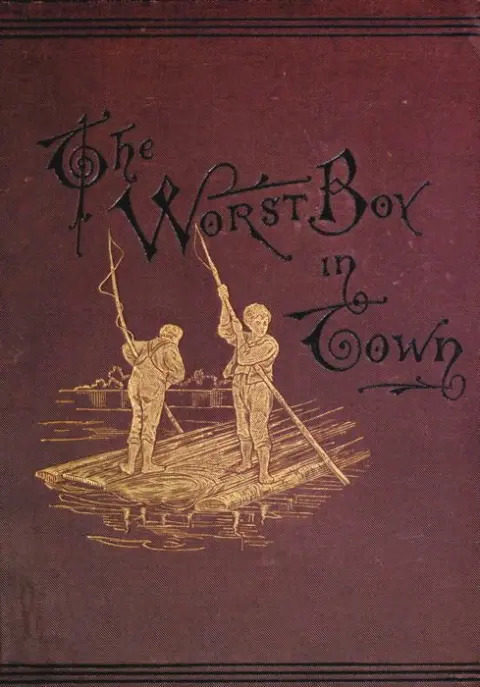
THE CLASSIC COLLECTION · 1880
"The Worst Boy in Town" by John Habberton is a novel written in the late 19th century. The story revolves around Jack Wittingham, a mischievous boy whose antics often earn him the title of "the worst boy in town." The book portrays his adventurous spirit and a blend of innocent mischief, which creates a delightful exploration of childhood whimsy and a quest for fun against the backdrop of small-town life. The opening of the novel introduces Jack as he interacts with Farmer Parkins, who affirms his notorious reputation. Jack’s day begins with a desire to go fishing rather than attend school, and he attempts to persuade his friend Matt to join him. They plot to give any fish they might catch to a widow and embark on a series of juvenile escapades, illustrating Jack's blend of good-heartedness and troublemaking. The chapter sets a playful tone, showcasing Jack's inner thoughts and justifications for his antics while hinting at the challenges he faces with authority figures and his own conscience.
Introduction adapted from the source catalogue; source summaries may be automatically generated.
Free to read · English · 42,334 words · No account needed
MAKE TIME FOR A GOOD BOOK
On by default. Untick to stop anonymous reading totals. Each page counts after 10 seconds in view. How this works.
Anonymous counting is on unless you have switched it off.
Jack was greatly affected by the information, and recurred to his wonder whether the devil in person might not have been helping the Pinkshaw twin after all. Certainly, they, the players, had struck no light. After a slight breakfast Jack hurried out to view the remains, but the doctor was on the ground before him, and was holding up a partly burned jacket, which he was inspecting with great care.
"Jack!" exclaimed the doctor.
"Sir?" answered Jack, most courteously.
"I threw this out of the window last night, having found it on the hay, just where the fire began. There are charred matches in the pockets. How did that jacket get there?"
"I left it there yesterday," said Jack. "I was up there yesterday, lying about, and it was so warm that I took off my jacket."
"And sat on it, I suppose, and wriggled around on it and ignited the matches, and burned down my stable. Couldn't you have set fire to the house, too, while you were about it, so as to have ruined me completely?"
Jack rightly considered this a very cruel speech, but he hung his
head.
Among the many bystanders, attracted by a rarity such a fire generally is in a village, was the gunsmith, and as he gazed upon the many bits of portable property which had been thrown from the burning stable, his eye fell upon something familiar, and he picked up the saw which Jack had used on the court-house gas pipe; examining it hastily, he exclaimed:
"Why, here is my own saw, which I had such a long hunt for yesterday
afternoon."
"I just borrowed it while you were out," explained Jack. "I was going to bring it back this morning and tell you about it."
"What did you want of such a tool?" demanded the doctor.
"I wanted to saw a piece of iron," said Jack, with downcast eyes.
"Who's been cutting the hose of my carriage sprinkler?" asked the doctor, suddenly espying the yard of rubber pipe, which Jack had fondly supposed would never be missed from the long coil from which he had cut it.
While Jack was casting about in his mind for some plausible excuse, he
heard, to his unspeakable relief, his mother shouting from the back
door:
"Doctor, doctor, come here right away! Don't wait a single minute."
The doctor obeyed the summons, and Jack was consoling himself with the thought that the monkey wrench, which belonged to the stable, could not tell tales about him, and the hen, if still alive, could not talk English, when the doctor's well-known voice struck terror to his soul by exclaiming loudly:
"Jack, come here!"
Your reading position is saved on this browser. Take it to another device with a library code. Reading pages adapt to text, rather than matching a printed edition.
John Habberton
John Habberton
John Habberton
John Habberton
BEHIND THE BOOK
This eBook is for the use of anyone anywhere in the United States and most other parts of the world at no cost and with almost no restrictions whatsoever. You may copy it, give it away or re-use it under the terms of the Project Gutenberg License included with this eBook or online at www.gutenberg.org. If you are not located in the United States, you will have to check the laws of the country where you are located before using this eBook. Read the source licence.
The original source file, including credits and licence, is retained by this library. Request an original-format copy at no charge. Please include the book title and Project Gutenberg identifier #55080.
KEEP YOUR CURIOSITY GOING
Coulson Kernahan

Maurice Baring
Frances Wright
Cécile Tormay

Frederic Jesup Stimson

W. H. P. (William Henry Pope) Jarvis