THE CLASSIC COLLECTION✦Little Guzzy, and other storiesCLASSIC FREE BOOKS
Little Guzzy, and other stories
John Habberton
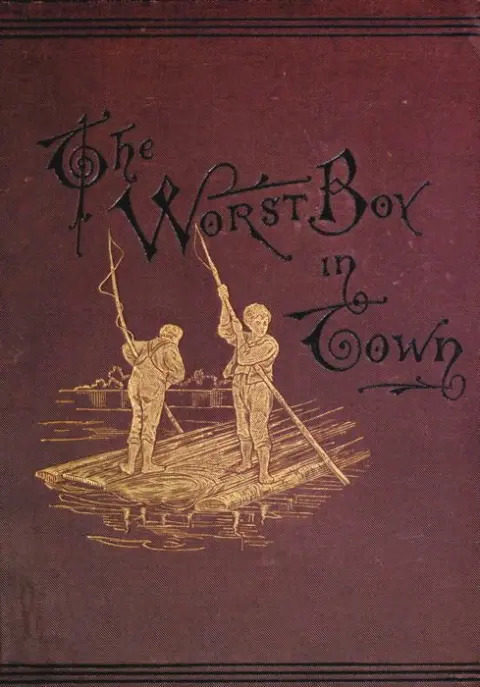
THE CLASSIC COLLECTION · 1880
"The Worst Boy in Town" by John Habberton is a novel written in the late 19th century. The story revolves around Jack Wittingham, a mischievous boy whose antics often earn him the title of "the worst boy in town." The book portrays his adventurous spirit and a blend of innocent mischief, which creates a delightful exploration of childhood whimsy and a quest for fun against the backdrop of small-town life. The opening of the novel introduces Jack as he interacts with Farmer Parkins, who affirms his notorious reputation. Jack’s day begins with a desire to go fishing rather than attend school, and he attempts to persuade his friend Matt to join him. They plot to give any fish they might catch to a widow and embark on a series of juvenile escapades, illustrating Jack's blend of good-heartedness and troublemaking. The chapter sets a playful tone, showcasing Jack's inner thoughts and justifications for his antics while hinting at the challenges he faces with authority figures and his own conscience.
Introduction adapted from the source catalogue; source summaries may be automatically generated.
Free to read · English · 42,334 words · No account needed
MAKE TIME FOR A GOOD BOOK
On by default. Untick to stop anonymous reading totals. Each page counts after 10 seconds in view. How this works.
Anonymous counting is on unless you have switched it off.
"What good can it do him?" asked the minister; "if he is in that frame of mind, the sole object of punishment is attained in advance."
"But he has done wrong; he has kept his mother and me in intolerable misery for twenty-four hours, and it seems to me that something should be done to him."
"Ah!" said the minister, "you're thinking about revenge, which is very different from punishment. And it is my duty, as your pastor, to urge you to give up the thought at once, for it is unchristian and brutal."
"Why," said the doctor, flushing angrily, "I don't want to punish him; I simply think it a matter of duty."
"Yes," sighed the minister, "revenge has generally been considered a duty, so great is the influence of inheritance even upon minds intentionally honest."
The doctor abruptly departed, muttering to himself:
"That's a point for the book, any how!"
Arrived at his office, the doctor found Jack still there. He picked the boy up in his arms, and as Jack mentally submitted to whatever was to be his fate, his father sat down, hugged the boy close, and said:
"My darling fellow, tell me what I can do to keep you out of further mischief and trouble. That shall be your punishment."
The exquisite sarcasm of the potter questioning his clay did not strike Jack, which is not very strange, as the doctor himself was unconscious of it. But Jack could only say:
"I don't know."
"I would sell everything I own, if money would do it," said the
doctor.
Jack was still unable to answer, but the doctor's assertion caused the boy to squeeze closer to his father's breast, which movement greatly comforted the old gentleman.
"I think if you'd always let me be with you, father, I would be a real good boy," said Jack. "I like you better than I do anybody—but Matt; yes, better than Matt either."
"Thank you, my boy," said the doctor, with some little coolness which
Jack detected.
"I've got to do something," said Jack, "and if I can't see things that's good to do, I have to do others."
The doctor remembered having had some such experience himself, in the days of his own mischief-making, but he answered gravely:
"I have to spend a great deal of time in sickrooms, my boy, where it would be inconvenient for you to be."
"Then let me be with you when you're at home," said Jack, "and," he continued, rather hesitatingly, "let me ask questions, and you try to answer so I can understand you."
Your reading position is saved on this browser. Take it to another device with a library code. Reading pages adapt to text, rather than matching a printed edition.
John Habberton
John Habberton
John Habberton
John Habberton
BEHIND THE BOOK
This eBook is for the use of anyone anywhere in the United States and most other parts of the world at no cost and with almost no restrictions whatsoever. You may copy it, give it away or re-use it under the terms of the Project Gutenberg License included with this eBook or online at www.gutenberg.org. If you are not located in the United States, you will have to check the laws of the country where you are located before using this eBook. Read the source licence.
The original source file, including credits and licence, is retained by this library. Request an original-format copy at no charge. Please include the book title and Project Gutenberg identifier #55080.
KEEP YOUR CURIOSITY GOING
Coulson Kernahan

Maurice Baring
Frances Wright
Cécile Tormay

Frederic Jesup Stimson

W. H. P. (William Henry Pope) Jarvis