THE CLASSIC COLLECTION✦An outlaw’s diary: the CommuneCLASSIC FREE BOOKS
An outlaw’s diary: the Commune
Cécile Tormay
THE CLASSIC COLLECTION · 1904
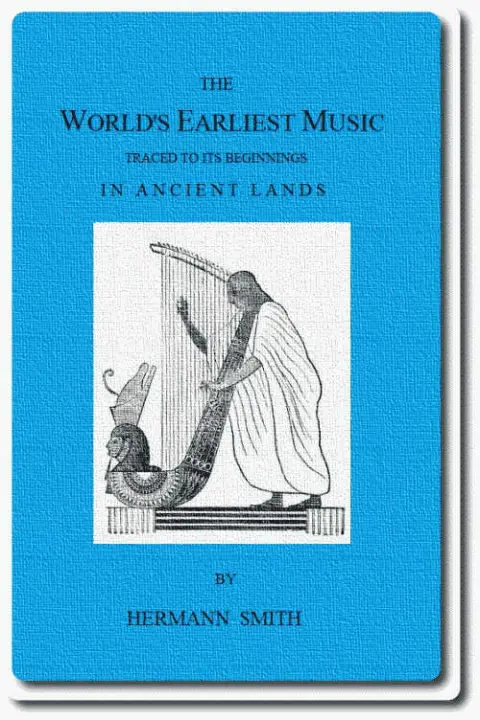
"The World's Earliest Music" by Hermann Smith is a historical account written in the early 20th century. This work explores the origins and evolution of music across ancient civilizations, particularly focusing on the evidence of musical instruments from regions like Greece, Egypt, China, Assyria, and Babylonia. The author aims to shed light on how these early cultures shaped the development of musical expression and the significance of music in their daily lives. At the start of the book, Smith introduces the idea of a "music-trail" that leads us through the remnants of ancient civilizations and their musical instruments. He contemplates the challenges in understanding ancient music due to the scarcity of intact artifacts and emphasizes the value of rock carvings, paintings, and archaeological findings in reconstructing musical history. The author also highlights the interconnectedness of music, culture, geography, and history, indicating that our current understanding of music is derived from the evolution and transmission of musical ideas over millennia, particularly from ancient Egypt and Greece. Smith invites readers to engage in this journey to explore how the nuances of ancient music continue to resonate through time.
Introduction adapted from the source catalogue; source summaries may be automatically generated.
Free to read · English · 91,887 words · No account needed
MAKE TIME FOR A GOOD BOOK
On by default. Untick to stop anonymous reading totals. Each page counts after 10 seconds in view. How this works.
Anonymous counting is on unless you have switched it off.
Lychanos, his added string, 335
Lyres.
Queen Hatasu’s three stringed, 13
at British Museum four stringed, 288
Upright form, 289
boated and cross bar, 289
in Paris Collection, 292
open frame lyre of the Stranger’s, 293, 294, 307
Abyssinian, 294
Magadis, 297
Hermes, 308, 312
Greek Chelys, 309
Act of Tuning, 316
subordinate to Voice, 333
Lesbian, 340
Apollo’s, 14, 318
by Praxiteles, 323, 336, 342, 350
Maclean, Dr., on Greek music, 153
Magadis lyre, 297
Mahaffy, J. P., on Delphic Tablet, 149
Mahillon, C. V., on Pompeian flutes, 99, 110, 112, 114, 116
Siamese scale of Phan, 211
Chinese Dragon flute, 240
Apollo lyre, 318
Maket, the Lady, her Egyptian flutes, 50
Malagasy braiding, 313
Malay pipes, 246
Mamms or Twin flutes, 47
Goddess Mama, 63
Man a measurer, 19
Mandarin’s College at Pekin, 190
Maneros, Song of, 64
Mantinea in Arcadia, 323
Marsyas, the elder, 330
Marsyas contest with Apollo, 323
Maspero, on bulb forming for flutes, 122, 123
flute found with eleven holes, 124
Measures of Organ pipes, 179-197
Medea founded by Mongols, 168
home of early races, 349
Meledosa the Muse, her flutes, 79
Memnon, Singing Statue of, at Thebes, 322
Mercury, scale of lyre, 331
Mese or middle note, Aristotle on, 103
called the Sun, 336
Mesopotamia, 167, 169, 308, 328
Midas the glorious, 126
statue of, 134
flutes, 134
brass reed, 138
Migrations of Chinese, 8
Milton on noise, 230
Minor tone of Didymus, 344
Monaulos, the single flute, 86
specimen in British Museum, 89
Mongolian race, 168
Mongols new home, 165
Monochord of Pythagoras, 103, 105, 347
Murray, A. S., on Tomb treasures, 43
his help, 88
Musæus, poet musician, 330
Museums.
Ashmolean, 41
Athens, 323
Berlin, 48, 299
British, 17, 33, 45, 59, 62, 70, 71, 86, 87, 134, 189, 246, 270,
287, 295, 298, 308, 310, 311
Brussels, 211
India, 59
Leyden, 48, 291, 299
Munich, 320
Naples, 99
Paris, 48, 292
South Kensington, 232, 240, 294
Musical Scale by Measures, 19, 20
by Vibrations, 347
Mycenœan Greece, 329
Napoleon, work on Egypt, 225
Nations, diagram of, 5
Nauman, History of Music, 317
Nay, Egyptian flute, 58
player on, 59
Nefer or lute, 299
player on, 300
dancers with, 301
Shepherd with, 351
Neith, the goddess Egyptian, 327
Nemesis, Hymn to, 146
Neuter Third, 53
Newton, Sir C., flute from Halikarnassos, 97
Nile, Leigh Hunt on, 24
Nineveh, slabs from, 304
Noah, era of, 163
Noise love of, 229
Milton on, 230
Notation, Greek method of, 144, 334
Nubian funeral wailing, 60
Kissirka lyre, 295
Olympos, his scale, 201, 216, 311, 330
Olympus Mountain, 325
procession of the Gods, 350
Olympus, the Phrygian, disjunct scale, 339
Orestes of Euripides, 151
Organ pipes, 16
measuring of, 179
Orpheus, cithara of, 311
hymn to, 330
Oscan people, 116, 142
Osiris Egyptian God, 23
Ouseley, Sir F. G., ear for pitch of Chinese Bells, 216
Outspread Phœnix, Chinese, 17
Oval holes of ancient pipes, 224
Panopolis, flute from, 122
Pan’s pipes, 16, 164, 201, 237, 246
Parnassus, 325
Parthenon, Friezes, 75
harps on, 298
Temple completed, 342
Pausanias on Greece, 321
on the Memnon, 322
on history, 326
Frazer on, 350
Pelasgians, 67
Persia fire worship, 8
Persian scale from the Greek fourth, 113
mountains, 6, 350
Pentatonic scale origin in the tetrachord, 248
Peruvian Pan’s pipes, 17-18
Stone Syrinx, 18
Petrie, J. Flinders, discovery of flutes, 27
specimen of Zummarah, 57
cross-string harps, 351
Phan, Siamese reeds, 208
Phideas, sculptor, 342
Phœnician Adonis, 33
Phœnix, 164, 201
Phorbia or Capistrum, 70, 140
Phrygian mode, 335
Phrynis, added string, 312
Pindar, Ode to Midas, 126
at Delphi, 109
city of Charites, 138
pipe of brass, 138
and Homer, 349
Pipes, pastoral, 34
primitive, 168
how played, 224, 248
Pitch pipes of Japanese, 214
Plagiaulos Greek pipe, 97, 133
Your reading position is saved on this browser. Take it to another device with a library code. Reading pages adapt to text, rather than matching a printed edition.
BEHIND THE BOOK
This eBook is for the use of anyone anywhere in the United States and most other parts of the world at no cost and with almost no restrictions whatsoever. You may copy it, give it away or re-use it under the terms of the Project Gutenberg License included with this eBook or online at www.gutenberg.org. If you are not located in the United States, you will have to check the laws of the country where you are located before using this eBook. Read the source licence.
The original source file, including credits and licence, is retained by this library. Request an original-format copy at no charge. Please include the book title and Project Gutenberg identifier #53039.
KEEP YOUR CURIOSITY GOING
Cécile Tormay

Moritz Busch
John L. Ransom
Frances Wright
Cécile Tormay

Mabel Potter Daggett